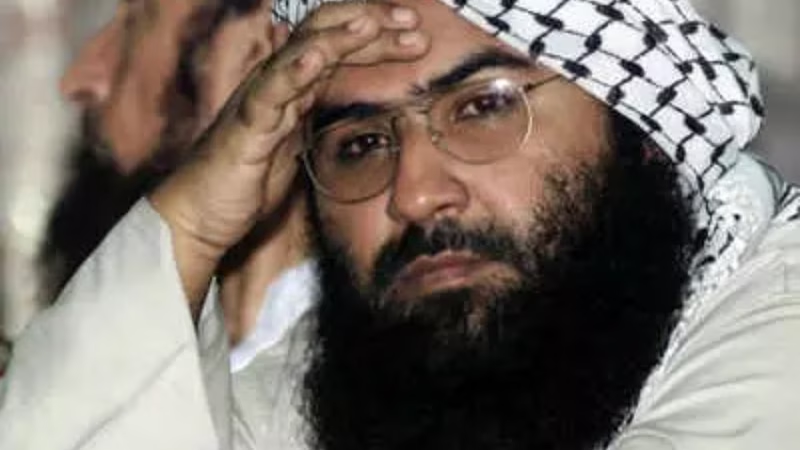
A new audio message from the leader of one of South Asia’s most notorious terrorist outfits has reignited fears—but also skepticism. Masood Azhar, the founder of Jaish-e-Mohammed (JeM), recently claimed in a recorded statement that his organization has “thousands of suicide bombers ready for martyrdom” and is prepared to launch attacks against India . The message, circulated on encrypted channels and fringe jihadist forums, uses fiery religious rhetoric and invokes past operations like the 2019 Pulwama attack.
Yet, despite its alarming tone, the statement has been met with widespread dismissal from intelligence agencies and terrorism experts alike. Many argue it’s less a genuine warning and more a desperate attempt by a weakened outfit to project relevance. So, what’s really behind this latest JeM suicide bombers threat? And should India—and the world—be worried?
Table of Contents
- What Did the JeM Chief Actually Say?
- The JeM Suicide Bombers Threat: Context and Credibility
- Why Experts Call It a ‘Hollow Threat’
- Current State of JeM Post-Pulwama Crackdown
- India’s Security Response and Preparedness
- Broader Implications for India-Pakistan Relations
- Conclusion: Rhetoric vs. Reality in Terror Propaganda
- Sources
What Did the JeM Chief Actually Say?
In the 8-minute audio clip, Masood Azhar—designated a global terrorist by the UN since 2019—urged followers to embrace “martyrdom” and vowed retaliation against India for “crimes in Kashmir.” He specifically referenced the revocation of Article 370 and alleged human rights violations, framing violence as a religious duty .
“We have thousands of fedayeen [suicide attackers] who are waiting for the command,” Azhar declared. “Their hearts burn for jihad… No force can stop them.” The language mirrors past JeM propaganda but notably lacks specific targets, timelines, or operational details—a red flag for analysts assessing threat levels.
The JeM Suicide Bombers Threat: Context and Credibility
To understand the weight of this claim, it’s crucial to examine JeM’s current capabilities. Once a formidable proxy of Pakistan’s Inter-Services Intelligence (ISI), the group has suffered severe setbacks since the Pulwama attack:
- Leadership decimated: Key operatives like Adnan Rashid and Qari Saifullah have been killed or arrested.
- Funding disrupted: Global financial sanctions and FATF grey-listing of Pakistan choked off traditional money flows.
- Recruitment decline: With increased surveillance in Punjab and Khyber Pakhtunkhwa, radicalization pipelines have dried up.
According to the South Asia Terrorism Portal (SATP), JeM has not claimed a single successful major attack on Indian soil since 2019 . This operational silence speaks volumes.
Why Experts Call It a ‘Hollow Threat’
Counterterrorism specialists point to several reasons why this threat is likely bluster:
- No recent attack capability: JeM hasn’t infiltrated a fidayeen squad into India in over five years due to heightened border security under the Comprehensive Integrated Border Management System (CIBMS).
- Propaganda timing: The message coincides with internal Pakistani political turmoil and upcoming elections—suggesting it may be aimed at influencing domestic narratives rather than planning real operations.
- Lack of technical sophistication: Modern suicide attacks require logistics, explosives expertise, and safe houses—all of which JeM struggles to maintain under constant surveillance.
“This is classic fear-mongering,” says Dr. Ajai Sahni, executive director of the Institute for Conflict Management. “Groups like JeM use such statements to maintain donor interest and morale among fringe supporters when they can’t deliver action.”
Current State of JeM Post-Pulwama Crackdown
Following the 2019 Pulwama bombing that killed 40 CRPF personnel, India launched surgical strikes and intensified diplomatic pressure. The result? Pakistan was forced to publicly crack down on JeM, albeit selectively. Azhar remains under house arrest in Bahawalpur, and the group’s headquarters in Bahawalpur was officially “sealed”—though satellite imagery suggests limited activity continues in peripheral areas .
Nonetheless, Indian intelligence confirms that while JeM retains ideological influence, its operational wing is fragmented. Most active cells now operate under aliases like “Al-Rehmat Trust” or merge with smaller factions like Hizbul Mujahideen.
India’s Security Response and Preparedness
Despite dismissing the immediate threat, Indian security forces aren’t taking chances. The Ministry of Home Affairs has issued an advisory to all state police and central agencies to heighten vigilance in sensitive areas, particularly Jammu & Kashmir, Delhi, and major metro hubs.
Key measures include:
- Enhanced drone surveillance along the Line of Control (LoC).
- Real-time intelligence sharing via the Multi-Agency Centre (MAC).
- Community policing initiatives to detect suspicious recruitment.
[INTERNAL_LINK:india-counterterrorism-strategy-2026] provides an in-depth look at India’s evolving anti-terror architecture.
Broader Implications for India-Pakistan Relations
While the threat may be hollow, the rhetoric risks escalating tensions at a fragile time. With backchannel talks reportedly underway, inflammatory statements from banned groups complicate diplomatic efforts. India maintains that any dialogue with Pakistan is contingent on verifiable action against terror infrastructure—a stance unlikely to change after this latest provocation.
Conclusion: Rhetoric vs. Reality in Terror Propaganda
The JeM suicide bombers threat serves as a stark reminder that while terrorist groups may be operationally weakened, their ability to spread fear through words remains potent. For now, evidence suggests this is more theater than strategy. But in the high-stakes game of national security, even hollow threats demand serious attention—not out of fear, but out of disciplined vigilance. As India continues to fortify its defenses, the real victory lies in denying terrorists the one thing they crave most: panic.
Sources
- Times of India: ‘Martyrdom’: JeM chief says thousands of suicide bombers ready to go; experts call it ‘hollow threat’
- South Asia Terrorism Portal (SATP): Jaish-e-Mohammed Profile and Activity Timeline