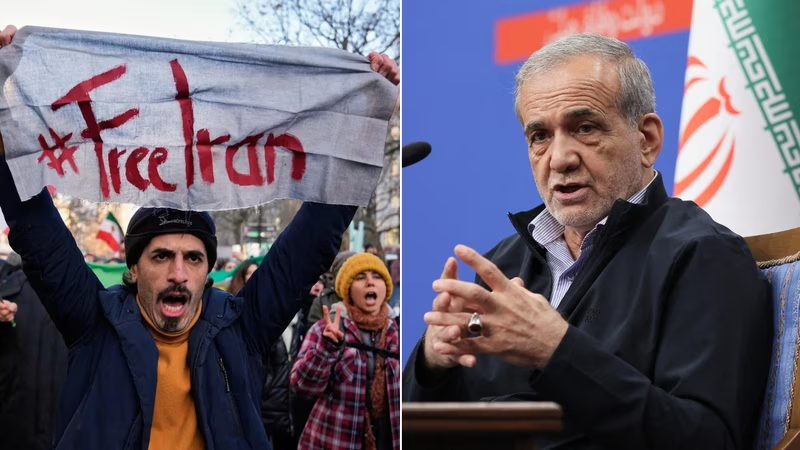
Iran Protests Enter Critical Phase: A Nation at a Crossroads
In a dramatic escalation of civil unrest, Iran is facing one of its most volatile domestic crises in years. What began as localized demonstrations over soaring food prices and unemployment has rapidly transformed into a nationwide movement directly questioning the legitimacy of the Islamic Republic’s theocratic rule. On Sunday, January 11, 2026, Iranian President Masoud Pezeshkian addressed the nation, accusing foreign powers—specifically the United States and Israel—of “ordering riots” to destabilize the country. Yet, in the same breath, he acknowledged public grievances and vowed to “listen to the protesters.” This contradictory stance comes amid chilling reports from human rights groups of a rising death toll, arbitrary arrests, and a near-total internet shutdown designed to stifle communication .
Table of Contents
- Timeline of the Iran Protests: From Bread to Revolution?
- Pezeshkian’s Dual Message: Blame Abroad, Reassure at Home
- The US and Israel Accusation: A Familiar Playbook?
- Internet Blackout and Human Rights Crisis
- Global Response: Condemnation and Calls for Restraint
- What Protesters Are Really Demanding
- Conclusion: Can Iran’s Leadership Navigate This Storm?
- Sources
Timeline of the Iran protests: From Bread to Revolution?
The current wave of unrest began in late December 2025 in the southeastern city of Zahedan, where vendors protested sudden price hikes on essential goods like bread and cooking oil. Within days, similar demonstrations erupted in Tehran, Isfahan, and Tabriz. But by early January 2026, chants shifted from “We want jobs!” to “Death to the Dictator!”—a clear signal that economic frustration had fused with deep-seated political anger.
Unlike previous protests, this movement appears less centralized and more youth-driven, with women playing a prominent role—a direct challenge to the regime’s strict gender policies. Social media clips (before the blackout) showed protesters tearing down posters of Supreme Leader Ayatollah Khamenei, an act previously considered unthinkable .
Pezeshkian’s Dual Message: Blame Abroad, Reassure at Home
President Pezeshkian, who assumed office in August 2025 on a platform of reform and dialogue, now faces his greatest test. In his televised address, he walked a tightrope: condemning “rioters and vandals” while distinguishing them from “peaceful citizens with legitimate concerns.” He insisted his government would “hear the voice of the people,” yet simultaneously authorized security forces to “restore order by any means necessary” .
This duality is not new in Iranian politics. Leaders have long used external scapegoats to deflect from internal failures. But with inflation exceeding 40% and youth unemployment near 25%, many Iranians are no longer buying the narrative .
The US and Israel Accusation: A Familiar Playbook?
Blaming foreign enemies is a decades-old tactic of the Islamic Republic. During the 2009 Green Movement and the 2019 fuel protests, similar claims were made against the CIA and Mossad. While the U.S. and Israel have openly criticized Iran’s human rights record, there is no credible evidence they are funding or directing the current protests.
In fact, the Biden administration has been cautious, urging restraint while avoiding direct intervention—a stark contrast to past rhetoric. Analysts at the Council on Foreign Relations note that these protests appear “organic and domestically rooted,” driven by generational disillusionment rather than foreign plots [INTERNAL_LINK:middle-east-geopolitics-analysis].
Internet Blackout and Human Rights Crisis
One of the most alarming aspects of the crackdown is the near-total internet shutdown. According to NetBlocks, a digital rights watchdog, Iran has restricted access to Instagram, WhatsApp, and even basic mobile data since January 9 . This blackout makes it extremely difficult to verify casualty figures, but rights groups report:
- At least 27 deaths, including three teenagers
- Over 1,200 detentions across 12 provinces
- Use of live ammunition against unarmed crowds in Karaj and Mashhad
Amnesty International has called for an immediate UN investigation, warning of a “potential massacre in the making” .
Global Response: Condemnation and Calls for Restraint
The international community has reacted with growing alarm. The European Union issued a joint statement urging Iran to “respect the right to peaceful assembly.” The United Nations High Commissioner for Human Rights expressed “deep concern” over the use of lethal force. Meanwhile, regional powers like Turkey and Qatar have offered to mediate, though Tehran has so far rejected all external involvement.
What Protesters Are Really Demanding
Beyond economic relief, the core demands emerging from protest slogans and underground manifestos include:
- End to compulsory hijab laws
- Free and fair elections without vetting by the Guardian Council
- Release of all political prisoners
- Accountability for past state violence (e.g., 2019, 2022 protests)
These are not calls for reform—they are demands for systemic change.
Conclusion: Can Iran’s Leadership Navigate This Storm?
The Iran protests of 2026 represent a pivotal moment. President Pezeshkian’s promise to “listen” rings hollow amid bullets and blackouts. If the regime continues to respond with repression while blaming foreign conspiracies, it risks accelerating its own delegitimization—especially among the very youth it needs to secure its future. The world is watching, but the real battle is being fought in Iran’s streets, where courage meets consequence.
Sources
- Times of India: Iran president accuses US, Israel as protests turn violent
- Amnesty International: Iran Country Page
- NetBlocks: Real-time Internet Monitoring
- Council on Foreign Relations: Middle East Analysis