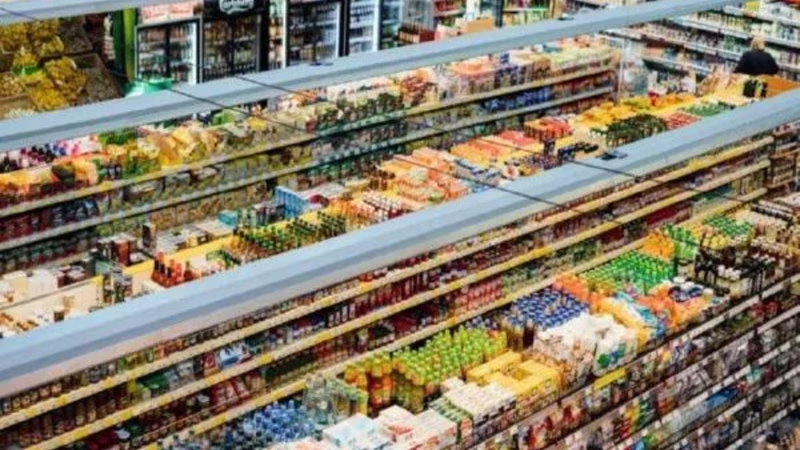
After weathering months of inflationary pressure and cautious consumer spending, India’s FMCG sector is finally showing clear signs of a healthy rebound. The latest earnings reports from industry giants aren’t just positive—they’re telling a story of a fundamental shift in how and where Indians are buying their everyday essentials. Forget price hikes; the real engine of this comeback is pure, unadulterated **volume-led growth**, supercharged by two unexpected heroes: the long-dormant rural markets and the ever-expanding world of e-commerce .
Table of Contents
- The FMCG Sector’s Turnaround Story
- Why Volume-Led Growth Is a Big Deal
- Rural Demand: The Sleeping Giant Awakens
- E-Commerce: The New Frontier for FMCG Brands
- Key Players Leading the Charge
- Challenges and Outlook for the FMCG Sector
- Conclusion: A Resilient Market Redefined
- Sources
The FMCG Sector’s Turnaround Story
For much of 2024 and 2025, the narrative around the FMCG sector was one of stagnation. Companies were forced to raise prices to combat soaring input costs, which in turn dampened consumer demand, especially in price-sensitive rural areas. Growth was largely “value-led,” meaning it came from higher prices, not more products sold.
However, the tide has turned dramatically in early 2026. With inflation cooling and a normal monsoon boosting agricultural incomes, consumers—particularly in the hinterlands—are opening their wallets again. This has allowed companies to shift their strategy from defending margins to aggressively chasing market share through volume .
Why Volume-Led Growth Is a Big Deal
In the world of fast-moving consumer goods, volume-led growth is the gold standard. It signals genuine, organic demand. It means more people are buying your product, not just paying more for the same amount. This type of growth is far more sustainable and scalable than value-led growth because it builds brand loyalty and market penetration.
For investors and analysts, a return to volume-led expansion is a strong indicator that the entire consumer ecosystem is on a healthier footing. It suggests that household budgets have some breathing room and that confidence in the economy is returning.
Rural Demand: The Sleeping Giant Awakens
Rural India, home to nearly two-thirds of the country’s population, is often described as the “sleeping giant” of consumption. Its revival is the single most important factor behind the current FMCG sector upswing. Several key developments have converged to make this happen:
- Improved Monsoon Rains: A good monsoon in 2025 has led to a bumper harvest, directly increasing farm incomes and disposable cash in rural households .
- Government Welfare Schemes: Continued direct benefit transfers (DBT) and rural employment programs have provided a stable income floor for millions.
- Lower Inflation: A significant drop in food and fuel inflation has eased the cost-of-living burden on rural families, freeing up money for discretionary and semi-discretionary FMCG items .
This renewed rural demand isn’t just for staples; there’s a noticeable uptick in purchases of personal care and packaged foods, indicating a broader-based recovery.
E-Commerce: The New Frontier for FMCG Brands
While rural roads are seeing more physical traffic, digital highways are experiencing an even bigger boom. E-commerce has emerged as a critical and high-growth channel for the FMCG sector. Platforms like Amazon, Flipkart, JioMart, and even social commerce apps are making it easier than ever for consumers in both urban and remote areas to access a wide variety of branded goods.
The convenience, competitive pricing, and frequent discounts offered online are driving trial and repeat purchases. For FMCG companies, this channel offers invaluable data on consumer preferences and allows for rapid product launches and targeted marketing campaigns. It’s no longer a supplementary sales avenue; it’s a core part of their go-to-market strategy .
Key Players Leading the Charge
Several major FMCG companies have reported stellar results that highlight this dual-engine growth model:
- Hindustan Unilever Ltd (HUL): Reported its strongest volume growth in over two years, with significant contributions from its portfolio in home care and beauty & personal care, driven by rural and semi-urban markets .
- Dabur India: Saw a sharp recovery in its health supplements and hair oil segments, crediting a strong rural push and a 35% year-on-year jump in its e-commerce sales .
- ITC Ltd: Its Foods and Personal Care businesses posted double-digit volume growth, with management specifically pointing to a “broad-based recovery in rural demand” as a key driver .
Challenges and Outlook for the FMCG Sector
Despite the optimistic outlook, the road ahead isn’t without bumps. Companies still face challenges like volatile raw material prices and intense competition, especially in the crowded personal care segment. Moreover, sustaining rural momentum will depend heavily on continued agricultural prosperity and stable government policies.
However, the overall trajectory is undeniably positive. With a large, young population and rising digital penetration, the long-term fundamentals for the Indian FMCG sector remain incredibly strong.
Conclusion: A Resilient Market Redefined
The current rebound of the FMCG sector, powered by genuine volume growth from both the heartland of rural India and the dynamic world of e-commerce, is more than just a quarterly win. It’s a testament to the underlying resilience of the Indian consumer. As these two powerful engines continue to work in tandem, they are not only driving the present recovery but also redefining the future landscape of consumer goods in the country.
Sources
- Times of India: FMCG firms report volume-led growth; rural demand and e-commerce shine
- Economic Times: [INTERNAL_LINK:indian-economy-news]
- Statista: Fast-Moving Consumer Goods (FMCG) in India – Statistics & Facts
- Business Standard: FMCG Q4 Results: Rural recovery, e-commerce drive volume growth