Table of Contents
- Storm Goretti Strikes a Deadly Blow
- Storm Goretti: The Devastating Toll in Numbers
- UK in Crisis: Travel Halted and Homes Darkened
- France Faces Massive Power Outages
- Wider European Impact: Schools Closed and Flights Cancelled
- Climate Context: Is This the New Normal?
- Conclusion: Resilience in the Face of Nature’s Fury
- Sources
A howling beast named Storm Goretti tore through Western Europe this week, leaving behind a grim legacy of loss, chaos, and widespread disruption. With wind gusts that shattered records and rain that overwhelmed infrastructure, the storm has become one of the most destructive weather events of early 2026. From a tragic death in a quiet English caravan park to nearly 100,000 homes without power in France, the human and economic cost is mounting—and it’s a stark reminder of nature’s raw, untamable power.
Storm Goretti Strikes a Deadly Blow
The most heartbreaking consequence of Storm Goretti came in southwest England, where a man lost his life when a towering tree, uprooted by ferocious gales, crashed onto his caravan . Emergency services responded immediately, but the force of the impact was fatal. This tragedy underscores the sudden and unpredictable danger posed by extreme weather, even in seemingly safe residential areas.
Beyond this single incident, authorities across Europe are investigating other potential weather-related fatalities. Preliminary reports suggest that at least 15 deaths across the continent this week may be linked to the severe conditions brought on by Storm Goretti and its associated weather systems .
Storm Goretti: The Devastating Toll in Numbers
The scale of the disruption caused by Storm Goretti is staggering. Here’s a snapshot of the immediate impact:
- Power Outages (UK): Tens of thousands of homes were left without electricity as high winds brought down power lines and damaged substations.
- Power Outages (France): Nearly 100,000 households experienced blackouts, primarily in the northern and western regions.
- Transport Disruption: Rail services across the UK were severely affected, with cancellations and delays plaguing major commuter routes. Eurostar and domestic French train services also faced significant interruptions.
- School Closures: Hundreds of schools in the worst-hit areas were forced to close as a safety precaution, disrupting education for thousands of children.
UK in Crisis: Travel Halted and Homes Darkened
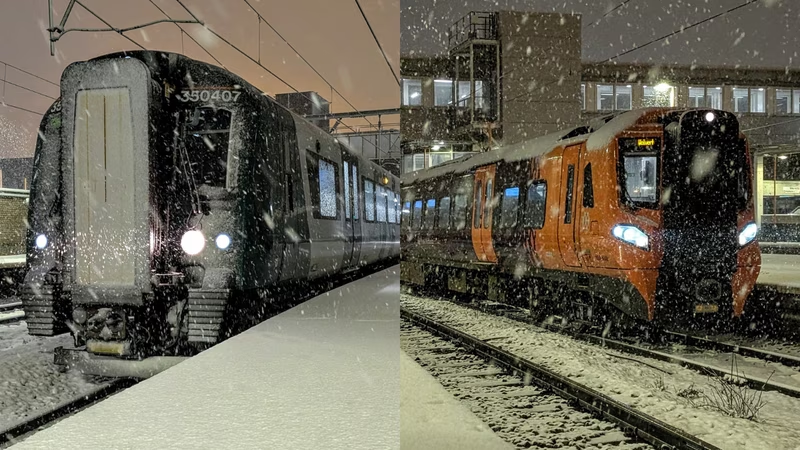
In the United Kingdom, the Met Office had issued rare red and amber weather warnings ahead of Storm Goretti’s arrival, urging the public to stay indoors. Their warnings proved prescient. Network Rail reported extensive damage to tracks and overhead lines, leading to a near-complete shutdown of services in some regions during the peak of the storm .
Commuters faced a nightmare morning, with many stranded at stations or forced to work from home. Local councils deployed emergency crews to clear fallen trees and debris from roads, but the sheer volume of incidents stretched resources thin. For residents without power, the ordeal meant no heating, lighting, or communication—a harsh reality in the middle of winter.
France Faces Massive Power Outages
Across the English Channel, France bore the brunt of Storm Goretti’s fury with equal severity. Utility company Enedis reported that approximately 100,000 customers were cut off from the grid . Restoration teams worked around the clock in challenging conditions to reconnect neighborhoods, but some rural communities remained in the dark for over 24 hours.
The French government activated its emergency response protocols, opening temporary shelters for those whose homes were deemed unsafe. The storm also disrupted air travel, with several flights cancelled at major hubs like Charles de Gaulle Airport due to high crosswinds.
Wider European Impact: Schools Closed and Flights Cancelled
While the UK and France were the hardest hit, the effects of Storm Goretti rippled across the continent. In Belgium and the Netherlands, similar weather warnings were in place, leading to preemptive school closures and the cancellation of outdoor events. Airlines across Europe issued travel waivers, anticipating a surge in passenger rebookings.
This level of coordinated disruption highlights how interconnected modern European infrastructure is—and how vulnerable it remains to extreme meteorological events.
Climate Context: Is This the New Normal?
Storm Goretti arrives amid growing scientific consensus that climate change is increasing the frequency and intensity of extreme weather events in Europe. Warmer ocean temperatures can fuel more powerful low-pressure systems, while changing jet stream patterns can steer them directly over densely populated areas.
According to the Copernicus Climate Change Service, the past decade has seen a marked uptick in severe winter storms across the North Atlantic region. While no single storm can be definitively attributed to climate change, the trend is undeniable—and deeply concerning for future preparedness.
Conclusion: Resilience in the Face of Nature’s Fury
As the winds from Storm Goretti finally begin to subside, the focus shifts from emergency response to recovery and reflection. Communities are counting their losses, both material and human, while governments assess the resilience of their critical infrastructure. This storm serves as a sobering wake-up call: in an era of intensifying climate volatility, robust emergency planning and investment in climate-adaptive infrastructure are not luxuries—they are necessities for survival.
Sources
- Times of India: Deaths & blackouts: Storm Goretti, howling gales hit UK, France; rail services affected
- Met Office (UK): Weather warnings and storm data.
- Enedis (France): Power outage reports .
- Copernicus Climate Change Service: https://climate.copernicus.eu/
- Various reports on transport disruptions and school closures across Europe .