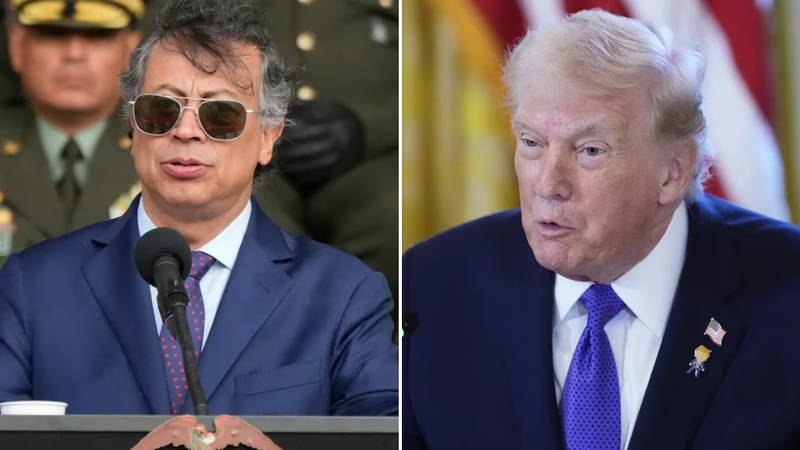
In a move that has electrified diplomatic circles and unsettled allies alike, Colombian President Gustavo Petro has issued a startling declaration: he intends to “stop a world war.” This bombshell came just days before his scheduled meeting with former U.S. President Donald Trump—a summit already laden with tension over migration, drug policy, and the future of U.S.-Colombia relations .
Petro’s comments, delivered with characteristic fervor during a public address, were not merely rhetorical flourish. They signal a deliberate attempt to position Colombia—and himself—as a central player in global peace efforts at a time of escalating conflicts in Europe, the Middle East, and beyond. But as Latin American nations watch closely, many wonder: is this visionary diplomacy or political theater?
Table of Contents
- The Warning: What Petro Actually Said
- Why the Petro-Trump Meeting Matters
- Latin America on Edge: Regional Reactions
- Gustavo Petro vs. Trump: Ideological Chasm
- Can Petro Really Influence Global Peace?
- Conclusion
- Sources
The Warning: What Petro Actually Said
Speaking to supporters in Bogotá, President Gustavo Petro stated plainly: “I am going to stop a world war.” He framed his upcoming dialogue with Trump not as a routine diplomatic exchange, but as a pivotal moment to “redirect humanity from the path of self-destruction” .
While vague on specifics, Petro tied his mission to broader critiques of U.S. foreign policy, militarism, and the global drug war—issues he has long championed since taking office in 2022 as Colombia’s first leftist president. His message was clear: Colombia, long seen as a U.S. ally in the region, is now asserting its own moral and geopolitical authority.
Why the Petro-Trump Meeting Matters
On the surface, a meeting between a sitting Latin American head of state and a former (but likely returning) U.S. president might seem symbolic. But given Trump’s expected 2026 presidential run and Petro’s radical policy shifts, this encounter carries real weight.
Key issues on the table include:
- Migration Crisis: Trump has repeatedly blamed Latin American leaders for unchecked migration to the U.S. Petro, meanwhile, argues that U.S. economic policies fuel displacement.
- Drug Policy: Petro has dismantled aerial fumigation and pushed for treating drug use as a public health issue—directly opposing Trump-era “war on drugs” tactics.
- Military Aid: Colombia has historically received billions in U.S. military aid. Petro’s pivot toward diplomacy over militarization could strain this partnership [INTERNAL_LINK:colombia-us-military-aid-history].
Latin America on Edge: Regional Reactions
Petro’s bold stance has resonated differently across the region. Progressive governments in Mexico, Chile, and Argentina have cautiously praised his anti-war messaging, seeing it as a break from decades of U.S. hegemony.
However, more conservative administrations—particularly in Brazil and parts of Central America—are wary. They fear Petro’s confrontation with Trump could destabilize U.S. support for regional security and economic initiatives. As one unnamed diplomat told Reuters, “This isn’t just about Colombia. It’s about whether Latin America speaks with one voice—or fractures under pressure” .
Gustavo Petro vs. Trump: Ideological Chasm
The clash between Petro and Trump represents more than personality—it’s a fundamental divide in worldview:
| Issue | Gustavo Petro | Donald Trump |
|---|---|---|
| Foreign Policy | Anti-imperialist, pro-multilateralism | “America First,” unilateral action |
| Climate Change | Urgent crisis; end fossil fuels | Downplayed; supports oil/gas expansion |
| Drug Policy | Decriminalization, health focus | Zero tolerance, law enforcement |
This ideological gulf makes their meeting not just difficult—but potentially explosive.
Can Petro Really Influence Global Peace?
Skeptics argue that Colombia, despite its strategic importance, lacks the global clout to single-handedly alter the trajectory of international conflict. The U.S., Russia, China, and NATO remain the primary actors in today’s geopolitical arena.
Yet Petro’s strategy may be more nuanced. By positioning himself as a moral voice—and leveraging Colombia’s role as a bridge between North and South America—he could influence discourse within multilateral forums like the UN or the Community of Latin American and Caribbean States (CELAC). His real goal may not be to “stop” war outright, but to shift the narrative away from militarism and toward dialogue—a stance increasingly popular among Global South nations .
Conclusion
Gustavo Petro’s claim that he will “stop a world war” is equal parts audacious and emblematic of a new era in Latin American leadership. Whether this is statesmanship or grandstanding will be tested in his meeting with Donald Trump. One thing is certain: Latin America is no longer content to be a passive recipient of U.S. policy. With Petro at the forefront, the region is demanding a seat at the table—and a say in the fate of global peace.