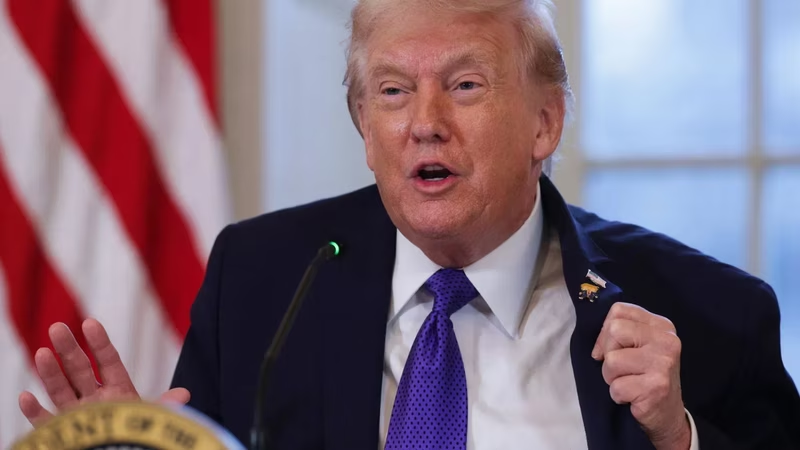
Presidents wear many hats—Commander-in-Chief, Chief Diplomat, Head of State—but their lapels? Those are usually reserved for one thing: the American flag. It’s a quiet symbol of unity, patriotism, and service above self. So when Donald Trump recently pinned a grinning cartoon caricature of himself labeled “Happy Trump” to his suit during a high-stakes White House meeting with oil executives, eyebrows weren’t just raised—they shot through the roof.
The moment, captured in official photos from a discussion about Venezuela’s oil production, instantly went viral. Critics called it narcissistic; supporters hailed it as classic Trumpian flair. But beyond the memes and hot takes lies a deeper story about presidential symbolism, evolving norms, and the blurring line between personal branding and public office. At the heart of it all is the now-infamous Happy Trump pin—a tiny piece of metal that says more than its wearer might realize .
Table of Contents
- What Is the ‘Happy Trump’ Pin?
- ‘Happy Trump’ Pin Breaks Presidential Lapel Tradition
- The Irony of ‘I’m Never Satisfied’
- Public and Political Reactions
- Merchandising the Presidency?
- How Other Presidents Have Used Lapel Pins
- Conclusion: Symbolism Matters in the White House
- Sources
What Is the ‘Happy Trump’ Pin?
The “Happy Trump” pin features a stylized, smiling cartoon version of Donald Trump with exaggerated features—blond hair, wide grin, and the words “HAPPY TRUMP” emblazoned below. It’s playful, almost toy-like, and distinctly un-presidential in tone.
Trump first debuted the pin at a campaign rally in late 2025, but its appearance in the Oval Office during an official policy meeting marks a significant escalation. Notably, the pin is also available for purchase on pro-Trump merchandise sites for around $12.99—turning a presidential accessory into a commercial product .
‘Happy Trump’ Pin Breaks Presidential Lapel Tradition
Since the 1980s, it has been standard practice for U.S. presidents and most federal officials to wear a small American flag lapel pin. The tradition solidified after 9/11, when President George W. Bush and others adopted it as a sign of national solidarity.
Every modern president—from Reagan to Biden—has adhered to this norm during official duties. Even during informal events, deviations are rare and usually tied to specific causes (e.g., a red ribbon for HIV/AIDS awareness). Wearing a self-referential cartoon pin in the White House isn’t just unconventional—it’s unprecedented.
As protocol expert Martha Kumar notes, “The flag pin signals that the officeholder serves the nation, not themselves. Replacing it with a branded image flips that message entirely” .
The Irony of ‘I’m Never Satisfied’
Adding another layer of irony, Trump has repeatedly stated, “I’m never satisfied”—a mantra he uses to convey relentless ambition. Yet he chose to wear a pin literally labeled “Happy Trump.”
The dissonance is striking. Is the pin aspirational? Satirical? Or simply a marketing gimmick? Whatever the intent, the contrast between his words and his accessory has fueled social media commentary, with users dubbing it “peak cognitive dissonance” and “the ego made wearable” .
Public and Political Reactions
Reactions split sharply along partisan lines:
- Critics: Called it “embarrassing,” “unpresidential,” and a sign of “vanity over duty.” Former White House staffers described it as “a carnival badge, not a symbol of leadership.”
- Supporters: Defended it as “fun,” “authentic,” and “a middle finger to stuffy Washington norms.” One MAGA influencer tweeted, “He’s happy because he’s winning!”
Even neutral observers noted the optics were poor—especially during a meeting about geopolitical energy strategy, where projecting gravitas matters.
Merchandising the Presidency?
The fact that the Happy Trump pin is for sale online raises ethical questions. While presidents have long had commemorative items, directly profiting from—or promoting—personal-branded goods while in office skirts close to self-dealing.
The Emoluments Clause of the Constitution prohibits federal officials from accepting gifts or profits from foreign or domestic entities without congressional approval. While a $13 pin may seem trivial, it’s part of a larger ecosystem: Trump’s name appears on everything from water bottles to NFTs, creating a blurred line between public service and private enterprise .
How Other Presidents Have Used Lapel Pins
To understand the magnitude of this break, consider historical context:
- Barack Obama: Always wore the U.S. flag pin; occasionally added a POW/MIA pin on Veterans Day.
- George W. Bush: Made the flag pin ubiquitous post-9/11 as a symbol of resilience.
- Ronald Reagan: Helped popularize the flag pin during the Cold War as a statement against communism.
None ever wore a pin bearing their own likeness—let alone a smiling cartoon version. For more on presidential symbolism, see the National Archives’ guide on [INTERNAL_LINK:white-house-protocol-and-traditions].
Conclusion: Symbolism Matters in the White House
The Happy Trump pin may seem like a small detail, but in the theater of politics, symbols carry weight. By replacing the American flag with a self-celebratory logo, Trump isn’t just making a fashion choice—he’s redefining what the presidency represents.
Love it or loathe it, this tiny pin encapsulates a broader shift: from institutional humility to personal branding, from national service to individual spectacle. Whether that’s progress or regression depends on who you ask—but one thing is certain: in the age of Trump, even a lapel tells a story.
Sources
- Times of India: ‘I’m never satisfied’: Donald Trump flaunts his ‘Happy Trump’ lapel pin
- Official White House Photo Archive (Jan 2026): Meeting with Energy Executives
- National Archives: Presidential Protocol and Symbols of Office
- Martha Kumar, Presidential Studies Quarterly: The Evolution of White House Decorum