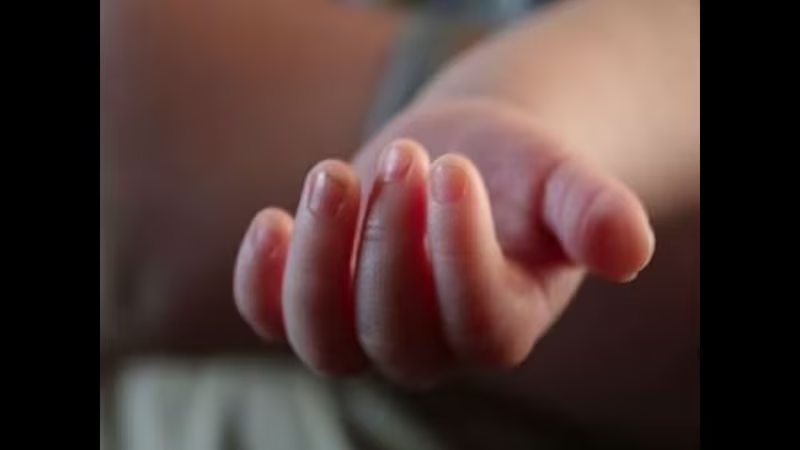
In a heart-wrenching case that has sent shockwaves across India’s medical community, a newborn baby in Indore lost his right thumb due to what authorities are calling a catastrophic procedural error by hospital staff. The incident, which occurred at a private healthcare facility in the city, has ignited public fury, prompted a high-level inquiry, and raised serious concerns about training, oversight, and patient safety in India’s rapidly expanding—but often under-regulated—private hospital sector.
Table of Contents
- What Happened: The Indore Infant Thumb Incident
- Hospital Response and Official Investigation
- Medical Experts React: How Could This Happen?
- Legal and Ethical Implications
- Broader Concerns About Private Hospital Oversight
- What Happens Next for the Family and Baby?
- Conclusion: A Call for Systemic Reform
- Sources
What Happened: The Indore Infant Thumb Incident
According to police and family accounts, the incident took place on January 8, 2026, at a private hospital in Indore, Madhya Pradesh. The newborn—a healthy male infant just hours old—was reportedly undergoing a minor procedure when a staff nurse mistakenly used surgical scissors or a similar sharp instrument near the baby’s hand. In a tragic split-second error, the infant’s right thumb was completely severed.
The family, who had come to the hospital for a routine delivery, were devastated. “We heard our baby cry differently… then the doctors told us his thumb was gone,” said the infant’s father in a statement to local media . The child was immediately shifted to a larger facility for emergency care, though reattachment was deemed impossible due to the nature of the injury.
Hospital Response and Official Investigation
The hospital initially issued a vague statement expressing “deep regret” but later confirmed that a “procedural lapse” had occurred. The nurse involved has been suspended pending investigation, and the hospital administration has promised full cooperation with authorities.
The Madhya Pradesh Health Department has launched a formal probe, while the Indore Police have registered a case of medical negligence under Section 338 (causing grievous hurt by act endangering life) of the Indian Penal Code. The National Human Rights Commission (NHRC) has also taken suo motu cognizance of the case, demanding a report within four weeks .
Medical Experts React: How Could This Happen?
Seasoned neonatologists and surgeons are baffled. “There is no standard neonatal procedure that involves using sharp instruments near a baby’s hands,” said Dr. Anjali Desai, a senior pediatrician at AIIMS Delhi. “This suggests either gross incompetence, lack of supervision, or a complete breakdown in protocol.”
Common newborn procedures—like cord clamping, vitamin K injection, or heel prick tests—do not require scissors near the extremities. Experts speculate the nurse may have been attempting to cut adhesive tape or bandage material and lost control, but even that scenario points to inadequate training or fatigue.
Legal and Ethical Implications
This case sits at the intersection of medical ethics and legal accountability:
- Informed Consent: Were parents properly briefed on any risks? Unlikely, since no such risk exists in standard care.
- Staff Qualification: Was the nurse certified for neonatal handling? Verification is now underway.
- Hospital Liability: Under the Consumer Protection Act, hospitals can be held liable for negligence by employees.
- Compensation: The family is expected to seek significant damages for lifelong disability and emotional trauma.
Past precedents, such as the 2019 Kolkata IV mix-up case, show courts often award substantial compensation in infant injury cases.
Broader Concerns About Private Hospital Oversight
This isn’t an isolated incident. India’s private healthcare sector—while often advanced in technology—faces criticism for inconsistent staffing standards and weak regulatory enforcement. The National Accreditation Board for Hospitals (NABH) guidelines mandate strict protocols for neonatal units, but compliance is voluntary for many small and mid-sized facilities.
“Accreditation should be mandatory, not optional,” argues Dr. Ramesh Kumar, former president of the Indian Medical Association. “Without it, profit motives can override patient safety.” Data from the Ministry of Health shows fewer than 15% of private hospitals in tier-2 cities like Indore are NABH-accredited .
What Happens Next for the Family and Baby?
The infant is currently stable but faces a lifetime of challenges. While prosthetic thumbs and reconstructive surgeries (using toe-to-thumb transfer) are possible later in childhood, the psychological and functional impact remains significant. The family has expressed interest in pursuing both criminal charges and civil compensation.
Meanwhile, the hospital has offered to cover all medical expenses—a gesture the family calls “too little, too late.” Community support groups have launched crowdfunding campaigns to assist with future rehabilitation needs.
Conclusion: A Call for Systemic Reform
The Indore infant thumb incident is more than a tragic accident—it’s a symptom of deeper systemic flaws. From inadequate staff training to lax oversight, the case underscores the urgent need for enforceable national standards in private healthcare. As India pushes toward universal health coverage, ensuring that every hospital—big or small—adheres to basic safety protocols must be non-negotiable. For more on patient rights and hospital accountability, see our guide on [INTERNAL_LINK:how-to-file-a-medical-negligence-complaint-in-india].
Sources
- Times of India: Nurse cuts off infant’s thumb at Indore hospital
- The Hindu: MP govt orders probe into Indore hospital incident
- National Human Rights Commission (NHRC): Official Website – Case Monitoring
- Ministry of Health and Family Welfare, India: Private Hospital Regulation Guidelines