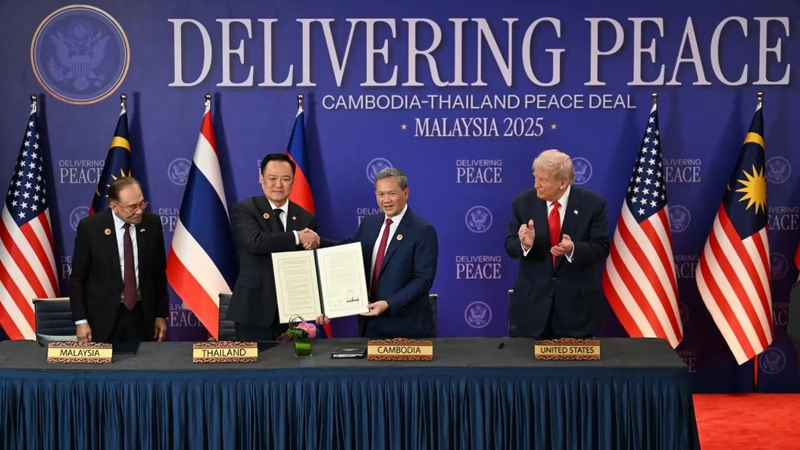
The dust hasn’t even settled on the latest deadly skirmishes along the Thai-Cambodian border, but a new player has entered the arena with a hefty financial commitment. On January 9, 2026, the United States announced a $45 million aid package aimed squarely at shoring up the fragile Thailand Cambodia ceasefire that hangs by a thread . This isn’t just charity; it’s a strategic investment in a region where chaos benefits no one—except perhaps rival powers and criminal syndicates.
Table of Contents
- Why the US is Stepping In
- Breaking Down the $45 Million Aid Package
- The Deep Roots of the Thailand-Cambodia Conflict
- Beyond Bullets: Tackling Modern Border Threats
- Is the Aid Enough? A Strategic Perspective
- Conclusion: A Fragile Hope for Peace
- Sources
Why the US is Stepping In
The timing of this announcement is anything but coincidental. The past year has seen a dangerous escalation in tensions between Thailand and Cambodia, with armed clashes in July and December 2025 shattering previous peace efforts [[4], [8]]. These conflicts, which have claimed dozens of lives, are rooted in century-old disputes over colonial-era borders, particularly around the Preah Vihear Temple area [[3], [6]].
For Washington, a stable Indo-Pacific is non-negotiable. A prolonged conflict between two key ASEAN nations creates a power vacuum that other actors could exploit, undermining the entire regional security architecture. This aid package is a clear signal of the US’s enduring commitment to its allies and partners in Southeast Asia, especially at a time when overall Western aid to the region is projected to fall by over $2 billion by 2026 .
Breaking Down the $45 Million Aid Package
This isn’t a blank check. The US State Department has outlined a clear, multi-pronged strategy for how these funds will be deployed to directly address the sources of instability and human suffering.
Support for Displaced Border Communities
The most immediate impact will be felt by civilians living in the conflict zone. Years of sporadic violence have displaced families, destroyed livelihoods, and left communities in a state of constant fear. A significant portion of the aid will go towards humanitarian assistance, rebuilding damaged infrastructure, and providing essential services like healthcare and education.
Accelerating Demining Efforts
One of the most insidious legacies of past conflicts is the landmines that still litter the border regions. These hidden killers pose a daily threat to farmers, children, and anyone who needs to traverse their own land. The US aid will provide crucial funding and technical expertise to speed up demining operations, a vital step towards making these areas safe for normal life to return—a key aspect of the Thailand Cambodia ceasefire agreement .
Combating Transnational Crime
Perhaps the most forward-looking part of the package targets modern threats: drug trafficking and, critically, the booming online scam industry. Criminal gangs have exploited the lawless nature of the border to set up large-scale scam centers, often using forced labor to defraud victims across Asia and beyond. The funds will support joint law enforcement initiatives, intelligence sharing, and capacity building for both Thai and Cambodian authorities to dismantle these networks .
The Deep Roots of the Thailand-Cambodia Conflict
To understand why a $45 million package is needed, you have to look back over a century. The core of the dispute lies in the ambiguous border demarcations drawn by French and Siamese officials during the colonial era. The status of the Preah Vihear Temple was a flashpoint as recently as 2011, and the underlying territorial disagreements have never been fully resolved .
These historical grievances are easily inflamed by domestic politics in both countries. Nationalist rhetoric can quickly turn a minor border incident into a major crisis, as we saw in the deadly clashes of 2025 . The ceasefire is therefore not just a military arrangement but a delicate political balancing act that requires constant nurturing from external partners.
Beyond Bullets: Tackling Modern Border Threats
While the world focuses on the exchange of artillery fire, a quieter, more insidious war is being waged along the same frontier. The border has become a haven for transnational criminal organizations.
- Online Scam Centers: These facilities, often disguised as legitimate businesses, are a massive human rights and security concern. They generate billions in illicit revenue and trap thousands in modern-day slavery.
- Narcotics Trafficking: The Golden Triangle remains a major source of opium and methamphetamine, with the porous border serving as a key transit route.
- Human Trafficking: Vulnerable populations from both sides of the border are at high risk of being trafficked for labor or sexual exploitation.
The US aid package’s focus on these issues shows a sophisticated understanding that true peace requires more than just silencing the guns. It requires building resilient, secure, and economically viable communities that are not easy prey for criminals. This approach aligns with broader US efforts to promote a secure and prosperous Indo-Pacific region.
Is the Aid Enough? A Strategic Perspective
$45 million is a substantial sum, but in the grand scheme of regional geopolitics and the scale of the problems, it’s a targeted down payment, not a final solution. Its success hinges entirely on the willingness of both Thailand and Cambodia to cooperate in good faith.
The real value of this package may lie less in its dollar amount and more in its symbolic weight. It demonstrates that the international community, led by the US, is watching and is invested in the success of the ceasefire. It provides a framework for cooperation on shared threats like crime and poverty, which can build trust and create positive momentum that spills over into the political and military spheres. For readers interested in the broader implications, our analysis on [INTERNAL_LINK:geopolitics-of-southeast-asia] offers deeper context.
Conclusion: A Fragile Hope for Peace
The US $45 million aid package is a beacon of hope for a region teetering on the edge. By directly addressing the humanitarian fallout of the conflict, the deadly legacy of landmines, and the modern scourge of transnational crime, it tackles the problem from multiple angles. The ultimate success of this initiative, however, rests on the shoulders of Thai and Cambodian leaders. Will they seize this opportunity to build a lasting peace, or will old animosities once again drown out the promise of a better future? The world is watching.