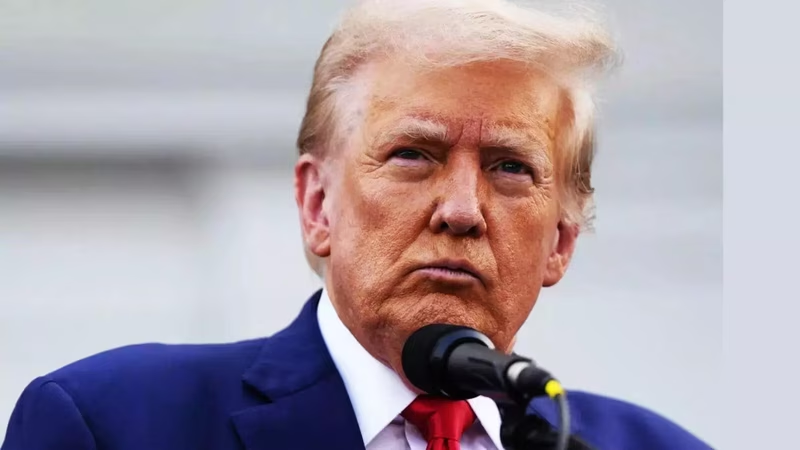
In a moment that blurred the lines between health, humor, and high-stakes politics, former President Donald Trump recently told The New York Times that he has never taken Ozempic—the blockbuster weight-loss drug that’s become a cultural obsession—but added with trademark bravado, “I probably should.”
Coming from one of the most scrutinized public figures in the world, this offhand remark isn’t just personal trivia. It’s a window into a much larger national debate: the soaring popularity of GLP-1 receptor agonists like Ozempic and Wegovy, their staggering costs, insurance battles, and their unexpected entry into the political arena. As these drugs reshape everything from Hollywood red carpets to Main Street pharmacies, even presidential candidates aren’t immune to the conversation.
Table of Contents
- What Trump Said—and Why It Matters
- The Rise of Ozempic: A Medical and Cultural Phenomenon
- The Cost Crisis: Who Pays for GLP-1 Drugs?
- Trump’s Drug Pricing Policies: A Complicated Legacy
- White House Officials and the Ozempic Revelation
- Conclusion: When Weight Loss Becomes Politics
- Sources
What Trump Said—and Why It Matters
During a wide-ranging interview, Trump was asked directly about rumors linking him to Ozempic, a drug originally developed for type 2 diabetes but now widely used off-label for weight loss. He flatly denied it: “No, I’ve never taken it.” But then came the punchline: “But I probably should!”
While seemingly lighthearted, the comment carries weight. Trump has long been sensitive about his appearance and health, often dismissing concerns with defiance. His willingness to joke about Ozempic signals a shift—acknowledging that these drugs are no longer fringe treatments but mainstream tools, even for someone who built his brand on vitality and strength.
The Rise of Ozempic: A Medical and Cultural Phenomenon
Manufactured by Novo Nordisk, Ozempic (semaglutide) belongs to a class of medications called GLP-1 receptor agonists. These drugs mimic a hormone that regulates blood sugar and appetite, leading to significant weight loss in many users.
Its success has been meteoric:
- Ozempic and its higher-dose sibling Wegovy generated over $21 billion in global sales in 2025 .
- Waitlists at clinics across the U.S. stretch for months due to overwhelming demand.
- Celebrities, influencers, and even politicians have fueled its mystique—often without disclosing use.
Yet, beneath the hype lies a serious medical reality: these drugs can be life-changing for people with obesity-related conditions, but they’re not magic pills—and they come with side effects and steep price tags.
The Cost Crisis: Who Pays for GLP-1 Drugs?
Here’s where politics enters the picture. A monthly supply of Ozempic can cost $900 to $1,400
This has sparked fierce debates in Congress and state legislatures:
- Should Medicare and Medicaid cover GLP-1 drugs for obesity?
- Are employers justified in excluding them from health plans?
- Is Novo Nordisk engaging in price gouging during a public health crisis?
These questions are now central to healthcare policy discussions—and will likely feature in the 2026 election cycle. For authoritative data on drug pricing trends, the Centers for Medicare & Medicaid Services (CMS) offers detailed reports on prescription drug expenditures.
Trump’s Drug Pricing Policies: A Complicated Legacy
Ironically, Trump’s administration took notable steps to lower drug prices. In 2020, he signed executive orders aimed at tying U.S. drug prices to lower international rates and allowing importation from Canada . While many of these initiatives were blocked or rolled back, they reflected a populist stance against Big Pharma.
Now, as GLP-1 drugs dominate headlines, his old policies are being re-evaluated. Could stronger price controls have made Ozempic more accessible? Or would innovation have suffered? It’s a tension between market freedom and public health equity—one that both parties are still grappling with.
White House Officials and the Ozempic Revelation
Adding another layer to the story, the original report notes that while Trump denies using Ozempic, a current White House official has reportedly taken the drug . This detail underscores how widespread GLP-1 use has become—even within the highest corridors of power.
It also highlights a double standard: while public figures may privately benefit from these medications, there’s still stigma around admitting it. Trump’s joke may be his way of normalizing the conversation—without actually confirming personal use.
Conclusion: When Weight Loss Becomes Politics
Donald Trump’s quip about Ozempic is more than a throwaway line. It’s a reflection of how deeply these drugs have penetrated American life—from medicine cabinets to campaign trails. As the nation debates affordability, access, and ethics, even former presidents can’t stay out of the conversation. Whether you see Ozempic as a medical breakthrough or a symbol of healthcare inequality, one thing is clear: in 2026, weight-loss drugs aren’t just health issues—they’re political ones too.
Sources
- Times of India: Trump says he has never taken the ‘fat drug’ Ozempic, but this White House official has…
- New York Times Interview with Donald Trump (January 2026)
- Novo Nordisk Annual Report 2025
- CMS.gov: Centers for Medicare & Medicaid Services
- [INTERNAL_LINK:glp-1-drugs-explained]
- [INTERNAL_LINK:history-of-us-drug-pricing-policy]