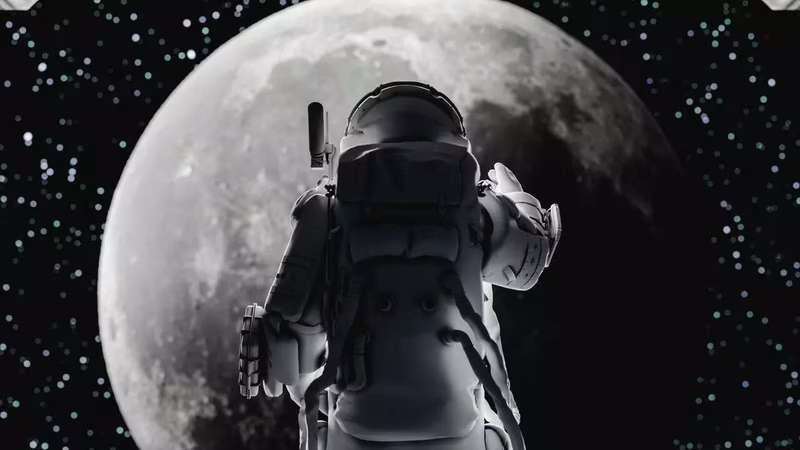
Space is unforgiving. It’s a vacuum of extreme temperatures, relentless radiation, and profound isolation. For decades, NASA and its international partners have engineered incredible systems to protect astronauts from these external threats. But sometimes, the most significant challenge comes from within—the human body itself. This week, that reality hit home when NASA was forced to NASA cancels ISS spacewalk after an astronaut on the International Space Station became ill .
The planned extravehicular activity (EVA), a complex and vital operation for station maintenance, was abruptly called off. Though the astronaut is reported to be in stable condition, the mere fact that a medical issue grounded a spacewalk is a powerful testament to the inherent fragility of human life in orbit. This isn’t just a scheduling hiccup; it’s a window into the high-stakes world of space medicine and the constant balancing act between mission objectives and crew safety.
Table of Contents
- The Incident: What We Know So Far
- Why Spacewalks Matter (And Why They’re Risky)
- The Hidden Dangers of Long-Term Spaceflight
- Impact on the Crew 11 Mission Timeline
- NASA Safety Protocols and Medical Readiness
- Conclusion: A Reminder of Human Vulnerability in Space
- Sources
The Incident: What We Know So Far
Details remain scarce, as is standard protocol to protect the privacy of the affected astronaut. NASA’s official statement confirmed that a “medical issue” arose with one of the crew members aboard the ISS, leading to the immediate cancellation of the scheduled spacewalk . The agency emphasized that the astronaut is “stable” and is receiving care from the onboard crew, which includes personnel trained in advanced medical procedures.
No specifics about the nature of the illness—whether it’s a minor infection, a more serious cardiovascular event, or a psychological issue—have been released. This lack of detail, while frustrating for the public, is a necessary part of maintaining crew morale and operational security during a sensitive time.
Why Spacewalks Matter (And Why They’re Risky)
Spacewalks are not casual outings. They are among the most dangerous activities an astronaut can undertake. An EVA requires an astronaut to don a complex, pressurized spacesuit that acts as a personal spacecraft. Any malfunction—a tear in the suit, a problem with the oxygen supply, or a communication failure—can become life-threatening within minutes.
These walks are essential for the ISS’s survival. They are used to install new scientific instruments, repair critical systems like solar arrays and cooling loops, and perform upgrades that keep the 25-year-old station functioning. Canceling one means that important maintenance is delayed, which can have a cascading effect on other mission objectives and the overall health of the orbital laboratory.
The Hidden Dangers of Long-Term Spaceflight
This incident highlights the less visible but equally serious health challenges of living in microgravity for months on end. The human body wasn’t designed for space, and it begins to change in profound ways:
- Muscle and Bone Loss: Without gravity, muscles atrophy and bones lose density at an alarming rate, increasing the risk of fractures.
- Fluid Shifts: Bodily fluids shift towards the head, which can cause vision problems and increased intracranial pressure.
- Radiation Exposure: Outside the protective shield of Earth’s atmosphere, astronauts are bombarded with cosmic radiation, raising their lifetime cancer risk.
- Psychological Stress: Confinement, isolation from family, and the constant pressure of a high-risk environment can lead to anxiety, depression, and sleep disorders.
For a deeper dive into the science of space medicine, the official research publications from NASA’s Human Research Program (HRP) offer invaluable insights into the ongoing efforts to mitigate these risks.
Impact on the Crew 11 Mission Timeline
The ripple effects of this medical event extend beyond the canceled spacewalk. The article notes that it has raised concerns about the duration of the current expedition, which includes the Crew 11 mission . If the astronaut’s recovery takes longer than expected, it could potentially affect handover schedules with the next crew or even necessitate an early return to Earth, a complex and risky maneuver in itself.
NASA’s planning is built on flexibility, with contingency plans for almost every scenario. However, an unexpected medical issue is one of the hardest variables to manage, as it directly impacts the core resource of any mission: the crew.
NASA Safety Protocols and Medical Readiness
Astronauts undergo some of the most rigorous medical screening on the planet before they are even selected for a mission. Onboard the ISS, they have access to a well-stocked medical kit and can consult with flight surgeons on the ground in real-time via telemedicine. In extreme cases, a Soyuz or Crew Dragon capsule can serve as a “lifeboat” for an emergency return.
The decision to cancel the spacewalk is a textbook example of NASA’s “safety-first” culture. No scientific objective or maintenance task is worth compromising the health of a crew member. This principle has been hard-learned through past tragedies and remains the bedrock of all human spaceflight operations. To understand more about astronaut training, see our feature on [INTERNAL_LINK:life-of-an-astronaut].
Conclusion: A Reminder of Human Vulnerability in Space
The NASA cancels ISS spacewalk announcement is more than just a news item; it’s a humbling reminder. As we dream of missions to Mars and beyond, this event underscores a fundamental truth: our journey into the cosmos is ultimately limited by the resilience of the human body and mind. Technology can shield us from the void, but it cannot eliminate our biological fragility. The bravery of these astronauts lies not just in their willingness to face the unknown, but in their daily battle against the subtle, internal toll that space exacts on them. Our support for their mission must include a continued investment in understanding and overcoming these very human challenges.
Sources
- Times of India: Original Article
- NASA Official Website: Mission Updates & Statements
- NASA Human Research Program (HRP): Research on Human Health in Space
- International Space Station National Lab: Information on ISS Operations