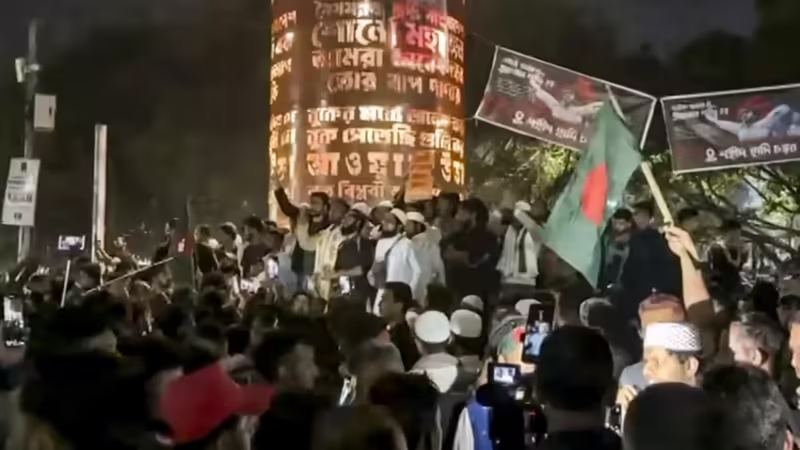
In a chilling reminder of the dangers of mob vigilantism and religious incitement, authorities in Bangladesh have arrested a local imam for allegedly inciting a crowd that brutally lynched a man named Dipu. The incident, which unfolded in broad daylight, has sent shockwaves across the country and drawn international condemnation. This case is now at the center of a heated national conversation about justice, freedom of speech, and the weaponization of blasphemy accusations.
Table of Contents
- What Happened: The Dipu Lynching Incident
- Who Is the Arrested Imam?
- The Role of Blasphemy Allegations in Mob Violence
- Public and Political Reaction in Bangladesh
- Legal Proceedings and Challenges Ahead
- Broader Implications for Religious Freedom
What Happened: The Dipu Lynching Incident
According to police reports and eyewitness accounts, the victim, identified only as Dipu, was accused of making derogatory remarks about Islam on social media. These unverified allegations quickly spread through local messaging groups and community networks, igniting public fury.
A local imam from a mosque in the area then delivered a fiery sermon during Friday prayers, explicitly calling on his congregation to “take action” against the alleged blasphemer. Within hours, an enraged mob gathered, located Dipu, and subjected him to a brutal and public lynching before law enforcement could intervene effectively .
The entire incident was captured on mobile phones and shared widely online, causing widespread horror and prompting immediate calls for justice from human rights organizations.
Who Is the Arrested Imam?
Police have since identified and apprehended the imam, whose name has not been officially released in all reports but is confirmed to be the religious leader of the local mosque where the inciting sermon took place. He has been charged under several sections of the Bangladesh Penal Code, including:
- Section 153A: Promoting enmity between different groups.
- Section 302: Punishment for murder (as an abettor).
- Section 120B: Criminal conspiracy.
Authorities stated that audio recordings of the sermon and digital evidence from social media platforms were instrumental in building the case against him . The arrest is seen as a critical step by the government to demonstrate its commitment to upholding the rule of law, though critics argue it often comes too late after such tragedies.
The Role of Blasphemy Allegations in Mob Violence
This tragic event is not isolated. In recent years, Bangladesh has witnessed a disturbing rise in mob lynchings triggered by blasphemy allegations, many of which are based on rumors or doctored content online. The speed at which these accusations spread—and the lethal consequences they can have—highlight a dangerous intersection of digital misinformation and religious sensitivities.
Human Rights Watch and other international bodies have repeatedly warned that vague blasphemy laws and the lack of swift state protection for the accused create a permissive environment for vigilante violence . The Bangladesh imam lynching case is a stark example of how a single inflammatory statement from a figure of authority can lead directly to fatal outcomes.
Why Blasphemy Accusations Are So Dangerous
- They are often impossible to disprove quickly.
- They trigger deep emotional and communal responses.
- Law enforcement is frequently slow to act, fearing backlash.
- Perpetrators of mob violence are rarely prosecuted.
Public and Political Reaction in Bangladesh
The lynching of Dipu has ignited fierce debate across Bangladesh. Civil society groups, student organizations, and secular activists have held protests demanding stronger legal protections for individuals falsely accused of blasphemy and harsher penalties for those who incite violence.
Meanwhile, some hardline religious factions have defended the imam’s actions, framing the lynching as a “spontaneous expression of faith.” This polarization underscores the deep societal divisions the country faces. The government, led by Prime Minister Sheikh Hasina, has condemned the killing and vowed to bring all involved to justice, but many remain skeptical given past inaction in similar cases .
Legal Proceedings and Challenges Ahead
While the arrest of the imam is a significant development, the path to justice remains fraught with challenges. Witnesses may be intimidated, evidence could be tampered with, and public pressure might influence the judicial process. For a conviction to stick, prosecutors will need to conclusively prove that the imam’s words directly incited the specific acts of violence that led to Dipu’s death—a high legal bar in any jurisdiction.
Moreover, addressing the root causes—such as digital literacy, hate speech regulation, and police training in handling blasphemy-related tensions—will be essential to prevent future tragedies. Without systemic reform, arrests like this one may serve as temporary appeasements rather than lasting solutions.
Broader Implications for Religious Freedom
This case also raises urgent questions about religious freedom and minority safety in Bangladesh. While the victim, Dipu, was reportedly Muslim, the climate of fear created by such incidents affects religious minorities—including Hindus, Christians, and atheists—who are disproportionately targeted in blasphemy-related violence.
As noted by the U.S. Commission on International Religious Freedom (USCIRF), Bangladesh continues to struggle with balancing respect for religious sentiment and the protection of fundamental rights . The Bangladesh imam lynching incident is a tragic testament to what happens when that balance tips toward mob rule.
Conclusion
The arrest of the imam in the Bangladesh imam lynching case marks a crucial, albeit belated, step toward accountability. However, true justice for Dipu will only be served if this case leads to broader reforms that prevent future mob violence fueled by rumor and religious incitement. The world is watching to see whether Bangladesh can uphold its constitutional promise of justice for all—or succumb to the chaos of vigilante extremism. For more on regional security trends, see our coverage on [INTERNAL_LINK:south-asia-religious-violence].