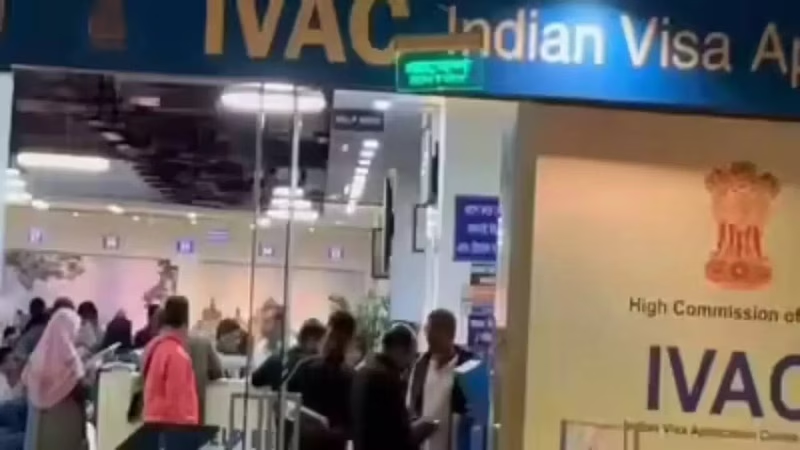
In a move that signals deepening distrust between two neighboring giants, **Bangladesh has officially halted all visa services** across its key diplomatic missions in India—including New Delhi, Kolkata, Agartala, and Guwahati. Citing “security concerns,” the interim government in Dhaka has effectively frozen a critical channel of people-to-people contact, trade, and tourism. This isn’t just bureaucratic friction; it’s a geopolitical red flag waving high over South Asia.
The decision comes amid rising reports of violence against religious minorities in Bangladesh and reciprocal restrictions imposed by India on Bangladeshi nationals. With both nations tightening borders and scrutinizing each other’s actions, the phrase **“Bangladesh halts visa services”** is now more than a headline—it’s a symptom of a relationship in distress.
Table of Contents
- What Exactly Has Been Suspended?
- Behind the “Security Concerns” Justification
- India’s Own Visa Restrictions on Bangladeshis
- Real-World Impact on Travelers, Students, and Families
- Broader Implications for India-Bangladesh Relations
- The U.S. Visa Bond Issue Adding Fuel to the Fire
- Conclusion: Can Trust Be Restored?
- Sources
Bangladesh Halts Visa Services: The Official Move
On January 8, 2026, Bangladesh’s Ministry of Foreign Affairs announced the immediate suspension of all visa processing for Indian applicants at its High Commission in New Delhi and its consulates in Kolkata, Agartala, and Guwahati . The notice, brief but firm, stated the action was taken “in view of the prevailing security situation.”
This means:
- No new tourist, business, or student visas will be issued.
- Existing visa applications are on indefinite hold.
- Emergency or humanitarian visa requests may be reviewed on a case-by-case basis—but with no guarantees.
Notably, the suspension does not affect Bangladeshi citizens seeking consular services in India, such as passport renewals or legal assistance. The focus is squarely on inbound travel from India—a clear signal of perceived threat from across the border.
Behind the “Security Concerns” Justification
While Dhaka hasn’t publicly detailed specific incidents, multiple credible sources suggest the decision stems from intelligence reports about potential threats to Bangladeshi diplomatic staff and facilities in India . Recent months have seen heightened rhetoric and sporadic protests near embassies following communal unrest in parts of Bangladesh.
More broadly, the interim government in Dhaka—led by Muhammad Yunus-backed technocrats—is under immense domestic pressure to protect national sovereignty. Suspending visa services is a low-cost, high-visibility way to demonstrate vigilance without resorting to full diplomatic rupture.
India’s Own Visa Restrictions on Bangladeshis
This isn’t a one-sided freeze. In late 2025, India quietly began imposing stricter scrutiny on Bangladeshi nationals applying for long-term visas, particularly for work and education . Reports indicate increased documentation requirements, longer processing times, and higher rejection rates—especially for applicants from certain districts.
While New Delhi hasn’t formally acknowledged a policy shift, the pattern suggests a tit-for-tat approach. [INTERNAL_LINK:india-bangladesh-border-security] experts argue this cycle of restriction breeds mistrust, making cooperation on critical issues like counterterrorism and water sharing even harder.
Real-World Impact on Travelers, Students, and Families
Beyond geopolitics, real people are caught in the crossfire:
- Students: Hundreds of Indian students planning to enroll in Bangladeshi medical and engineering colleges are now stranded.
- Businesses: Small traders who rely on cross-border permits for daily commerce face financial ruin.
- Families: Relatives separated by the border—especially in West Bengal and Assam—can no longer visit aging parents or attend weddings.
One Kolkata-based tour operator told us, “Bookings to Cox’s Bazar and Sylhet have dropped 90% overnight. This isn’t just politics—it’s livelihoods collapsing.”
Broader Implications for India-Bangladesh Relations
The visa suspension marks the lowest point in bilateral ties since the 2015 Land Boundary Agreement. Once hailed as a model of South Asian cooperation—with joint efforts on connectivity, energy, and counterterrorism—the relationship is now fraying at the edges.
Key areas at risk include:
- Trade: Bilateral trade worth $12 billion could face new non-tariff barriers.
- Security Coordination: Intelligence sharing on militant groups may slow down.
- Water Diplomacy: Negotiations over the Teesta River agreement remain stalled.
Analysts warn that if trust isn’t rebuilt soon, both nations could drift toward strategic isolation in a region increasingly influenced by China and the U.S.
The U.S. Visa Bond Issue Adding Fuel to the Fire
Compounding Dhaka’s frustration is a separate but related issue: the United States’ recent requirement that Bangladeshi visa applicants post a $10,000 bond to deter overstays. Dhaka has called this policy “certainly unfortunate and painful,” arguing it unfairly targets a developing nation .
While unrelated to India directly, this U.S. move has intensified Bangladesh’s sense of being diplomatically cornered. Some officials in Dhaka now view India’s visa scrutiny as part of a broader global trend of discrimination—further hardening their stance.
Conclusion: Can Trust Be Restored?
The suspension of visa services is more than an administrative pause—it’s a barometer of political health between India and Bangladesh. For decades, the two nations have navigated complex histories with pragmatism. But today, mutual suspicion is winning.
Restoring normalcy will require quiet diplomacy, confidence-building measures, and a shared commitment to protecting minorities on both sides. Until then, the phrase **“Bangladesh halts visa services”** will remain a stark reminder of how quickly goodwill can evaporate—and how much is at stake when neighbors turn away from each other.