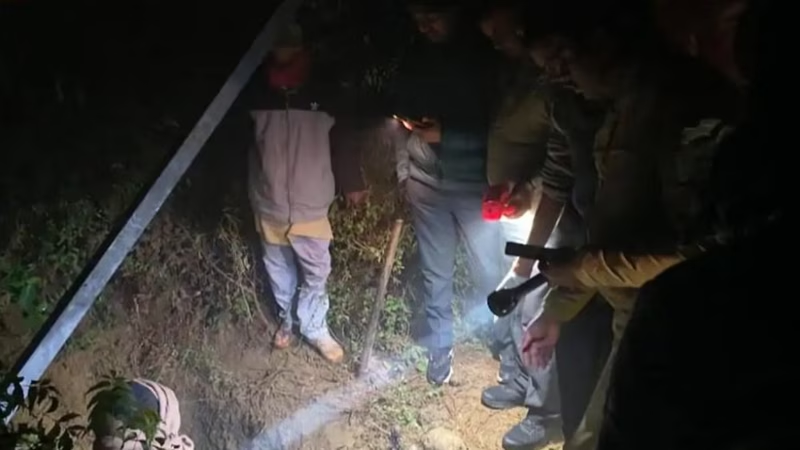
A Tragic Discovery: Woman’s Skeletal Remains Found Just Steps from Her Home
In a case that has sent shockwaves through the small community of Nagram in Uttar Pradesh, the skeletal remains of a 30-year-old woman, missing since December 2025, have been unearthed in a mustard field a mere 300 metres from her own residence . The grim find, made by locals on January 7, 2026, has turned what was a missing persons case into a potential homicide investigation, with the woman’s husband now at the center of a growing police probe .
Table of Contents
- The Discovery: A Sari Leads to a Heartbreaking ID
- The Investigation: Why the Husband is the Prime Suspect
- Post-Mortem and Forensic Analysis: What Comes Next
- Broader Implications: Domestic Violence and Women’s Safety in Rural India
- Community Reaction and Calls for Justice
- Sources
The Discovery: A Sari Leads to a Heartbreaking ID
The initial report came from a farmer tending to his mustard crop. He spotted what appeared to be human bones partially covered by the thick, yellow-flowered plants . Upon closer inspection, he also found a piece of a woman’s sari nearby. Alarmed, he immediately alerted the local police.
When authorities arrived and began their preliminary search, they recovered a full set of skeletal remains. The police then summoned local residents to see if anyone recognized the clothing. In a heartbreaking turn, the woman’s family was able to identify the sari as one that belonged to their daughter and sister, who had been reported missing just a month prior, in December 2025 . This crucial piece of evidence has become the linchpin of the entire case, transforming a routine missing persons inquiry into a far more sinister investigation.
The Investigation: Why the Husband is the Prime Suspect
Following standard procedure in cases of missing women, the police had already questioned the woman’s immediate family, including her husband. However, with the discovery of the remains so close to home and the family’s positive identification of the sari, the investigation has now focused intensely on him .
Law enforcement sources have indicated that the husband’s initial statements contained inconsistencies. Furthermore, the proximity of the body to the marital home is a classic red flag in domestic homicide cases. It suggests a crime of opportunity or passion, where the perpetrator had intimate knowledge of the local terrain and acted swiftly to dispose of the body .
The husband is not in custody yet, but he is now officially a “person of interest” and is being questioned regularly by a special investigative team. Police are also looking into his financial records, phone logs, and any potential history of domestic disputes. The community, meanwhile, is gripped by fear and speculation, with many residents whispering that they had noticed signs of trouble in the household.
Post-Mortem and Forensic Analysis: What Comes Next
The remains have been sent to the District Hospital for a comprehensive post-mortem examination. This medical-legal autopsy is critical for two main reasons :
- Confirming Identity: While the sari is a strong indicator, forensic experts will attempt to match dental records or use DNA analysis to provide a scientifically irrefutable identification.
- Determining Cause of Death: The state of the skeleton will be meticulously examined for any signs of trauma, such as fractures, cut marks, or bullet wounds, which would point to homicide. The absence of such marks doesn’t rule out murder, as death by strangulation or poisoning might not leave skeletal evidence.
The results of this post-mortem are expected within the next few days and will be the key piece of evidence that will either solidify the case against the husband or force the police to widen their search for a suspect. In the meantime, the crime scene in the mustard field has been cordoned off for a thorough forensic sweep.
Broader Implications: Domestic Violence and Women’s Safety in Rural India
This tragic incident in Nagram is not an isolated one. It reflects a disturbing and persistent pattern of violence against women in India, particularly in rural settings where social structures can often shield perpetrators and silence victims .
According to the National Crime Records Bureau (NCRB), a significant percentage of murder victims in India are women killed by their own family members, often in the context of domestic disputes . The fact that the remains were found so close to home underscores a terrifying reality for many women: that the greatest threat can come from within their own four walls.
This case should serve as a stark reminder of the urgent need for more robust community policing, better access to legal aid for women in distress, and a cultural shift that encourages neighbors and relatives to speak up when they suspect abuse. [INTERNAL_LINK:womens-safety-initiatives-in-india] could be a crucial resource for those looking to understand the systemic challenges and potential solutions.
Community Reaction and Calls for Justice
The local community in Nagram is in a state of shock and grief. Neighbors who described the missing woman as quiet and hardworking are now demanding swift and transparent justice. Local women’s rights groups have already begun organizing vigils and are pressuring the district administration to ensure that the investigation is not derailed.
The case has also sparked a wider online conversation, with social media users using hashtags like #JusticeForNagramWoman to keep the story in the public eye. In an environment where many such cases go unnoticed or are quickly forgotten, this public pressure can be a powerful tool to ensure the authorities remain accountable.
Conclusion: A Community Seeks Answers and Justice
The discovery of the woman’s skeletal remains found UP just a few hundred meters from her own home is a grim and deeply unsettling event. While the police work to confirm the identity and cause of death, a cloud of suspicion hangs over her husband. This case is a poignant and tragic reminder of the vulnerability many women face and the critical importance of a vigilant community and a responsive justice system. The people of Nagram, and indeed the nation, will be watching closely to see if justice is served.
Sources
Times of India
National Crime Records Bureau (NCRB)
Hindustan Times
India Today