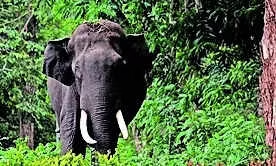
A state of emergency is unfolding in Jharkhand. In a horrifying 21-day stretch from late December 2025 to mid-January 2026, **22 people have lost their lives** in escalating encounters with wild elephants—a grim escalation of the long-standing human-elephant conflict Jharkhand has struggled to contain .
This isn’t just a series of isolated incidents. Officials confirm that a single rogue elephant in West Singhbhum district—currently in the aggressive, hormonally charged state known as *musth*—is responsible for at least 16 of those deaths since January 1 alone. Another violent incident in Ramgarh involved an elephant that turned aggressive after being attacked by villagers with stones and firecrackers . The situation has grown so dire that forest department operations to tranquilize or relocate these animals are being actively sabotaged—**IEDs (Improvised Explosive Devices)** have been found near elephant corridors, allegedly planted by locals frustrated by years of fear and government inaction .
Table of Contents
- How the Crisis Unfolded: A Timeline of Tragedy
- Root Causes of Human-Elephant Conflict Jharkhand
- The Deadly Role of Musth and Rogue Behavior
- Government Response and Relocation Efforts
- Long-Term Solutions: Beyond Reactive Measures
- Conclusion: A Call for Coexistence, Not Conflict
- Sources
How the Crisis Unfolded: A Timeline of Tragedy
The spike in fatalities began in earnest around Christmas 2025. Villages in West Singhbhum—particularly in the remote, forest-fringe areas—reported an unusually aggressive elephant moving unpredictably through human settlements at night. What made this animal different was its sustained aggression, a hallmark of a bull in *musth*, a natural but dangerous biological phase.
By January 5, the death toll had crossed 10. On January 12, another fatality occurred in Ramgarh when a different elephant, provoked by a mob, charged into a crowd . The forest department’s attempts to respond have been hampered not just by difficult terrain, but by active hostility from some communities. In one chilling report, officials attempting to track the rogue bull discovered IEDs placed along its suspected path—evidence of a community pushed to the brink .
Root Causes of Human-Elephant Conflict Jharkhand
While the current spike is shocking, it’s not without precedent. Jharkhand lies within a critical elephant corridor connecting Chhattisgarh, Odisha, and West Bengal. Decades of deforestation, mining, road construction, and unchecked village expansion have **severely fragmented traditional elephant migratory routes** .
When elephants can’t move freely, they enter farms and villages in search of food and water—especially during dry seasons. This leads to crop raids, which in turn provoke retaliation from farmers. It’s a vicious cycle that has claimed over 500 human lives in Jharkhand since 2010, according to government data .
Compounding the issue is the lack of early-warning systems in many vulnerable villages and inadequate compensation for families who lose crops or livelihoods. This breeds resentment and, in extreme cases, violence—both against elephants and, now, against conservation efforts.
The Deadly Role of Musth and Rogue Behavior
Not all elephants pose the same threat. The primary killer in West Singhbhum is a solitary bull in musth—a periodic condition in male elephants marked by a surge in testosterone, temporal gland secretions, and heightened aggression .
During musth, bulls can become unpredictable, attacking anything they perceive as a threat—including vehicles, buildings, and people. Their behavior is not “evil” but biologically driven. The challenge for wildlife managers is that tranquilizing a musth bull is risky; they are stronger, more alert, and often resist darts longer than usual.
Meanwhile, the Ramgarh incident highlights a different dynamic: **human provocation**. When elephants are harassed, they can develop a fear or hatred of humans, turning “rogue.” This underscores a critical truth: conflict is rarely one-sided.
Government Response and Relocation Efforts
In response to the crisis, the Jharkhand Forest Department has initiated emergency measures:
- Relocation: Over 200 families from high-risk villages in West Singhbhum are being moved to safer zones under a fast-tracked rehabilitation plan .
- Operation Tranquilize: Specialized teams with night-vision equipment and veterinary support are on 24/7 standby to capture the rogue bull.
- Community Patrols: Village-level elephant alert networks are being revived, with WhatsApp groups and sirens to warn residents.
However, experts argue these are reactive, not preventive. As noted by the Wildlife Institute of India, sustainable solutions require corridor restoration, land-use planning, and community-based conservation—not just crisis management .
Long-Term Solutions: Beyond Reactive Measures
To truly address human-elephant conflict Jharkhand, a multi-pronged strategy is essential:
- Secure and Restore Corridors: Legally protect and physically clear elephant migration paths from encroachments and infrastructure.
- Early Warning Systems: Deploy AI-powered sensors, drones, and solar-powered alarm fences in hotspot zones.
- Compensation Reform: Ensure timely and adequate payments to affected families to reduce retaliatory killings.
- Community Empowerment: Train local “elephant guardians” and promote elephant-friendly crops (like chili or lemongrass) that deter raids.
Models from states like Karnataka and Assam—where such holistic approaches have reduced conflict by up to 60%—offer a blueprint for Jharkhand .
Conclusion: A Call for Coexistence, Not Conflict
The tragic deaths in Jharkhand are a stark reminder that wildlife conservation cannot succeed without human safety. The current human-elephant conflict Jharkhand crisis demands more than emergency ops—it requires political will, scientific planning, and genuine partnership with local communities. Without it, the cycle of fear, retaliation, and loss will only continue. The elephants aren’t invaders; they’re refugees in their own land. It’s time we found a way for both species to share it peacefully.
Sources
Times of India: Human-elephant conflict spikes in Jharkhand, 22 people dead in 21 days
Wildlife Institute of India (WTI) – Research on Human-Elephant Conflict Mitigation
Ministry of Environment, Forest and Climate Change – Project Elephant
[INTERNAL_LINK:india-wildlife-conservation-challenges]
[INTERNAL_LINK:human-wildlife-conflict-solutions-asia]