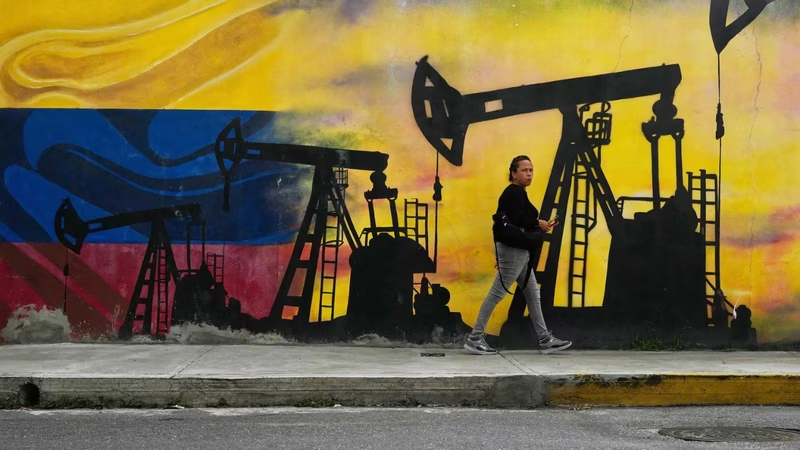
In a striking display of maritime enforcement and geopolitical ambition, the United States has seized a Russian-flagged oil tanker in European waters—the latest and most aggressive move in its campaign to choke off funding for Vladimir Putin’s war in Ukraine. But this isn’t just about oil. Simultaneously, Washington has dramatically intensified its diplomatic and strategic overtures toward Greenland, the vast, ice-covered territory that sits at the crossroads of the Arctic and the North Atlantic. Together, these actions form what analysts are calling the ‘Max Americana’ strategy: a muscular, multi-front effort to isolate Russia and secure the future of the Arctic frontier .
Table of Contents
- The Tanker Seizure: What Happened?
- Why This Seizure Is Different
- Greenland: The Next Geopolitical Chess Piece
- The ‘Max Americana’ Doctrine—Explained
- Legal and Diplomatic Fallout
- What This Means for Global Energy Markets
- Conclusion: A New Era of Strategic Assertiveness
- Sources
The Tanker Seizure: What Happened?
According to U.S. Department of Justice officials, federal authorities, in coordination with European partners, detained the Russian-flagged vessel *Sergey Mesyats* in a port in southern Spain in early January 2026. The tanker was allegedly transporting crude oil purchased in violation of the G7-imposed price cap and U.S. sanctions targeting Russia’s energy sector .
This marks the first time the U.S. has directly seized a Russian-flagged commercial vessel outside its own jurisdiction since the war began. The move leverages expanded enforcement powers granted under the 2023 REPO (Russian Elites, Proxies, and Oligarchs) Act, which allows U.S. agencies to target assets tied to sanctions evasion anywhere in the world.
Why This Seizure Is Different
Previous sanctions focused on financial penalties or blocking transactions. This is physical asset confiscation—on foreign soil. It signals a major shift from passive compliance to active interdiction. The implications are profound:
- Extraterritorial Reach: The U.S. is asserting its legal authority beyond its borders, setting a precedent that could unsettle global shipping norms.
- Deterrence by Example: By seizing one tanker, Washington aims to scare off dozens of others involved in shadow fleet operations.
- Coalition Pressure: The operation was conducted with European allies, reinforcing transatlantic unity against Russia.
This bold enforcement of the US seizes Russian oil tanker narrative isn’t just symbolic—it’s designed to cripple the logistics behind Moscow’s oil exports.
Greenland: The Next Geopolitical Chess Piece
While headlines focus on the tanker, a quieter but equally significant drama is unfolding in the Arctic. The U.S. has dramatically increased its diplomatic, economic, and military engagement with Greenland—a self-governing territory of Denmark that holds immense strategic value.
Why Greenland? Three reasons:
- Arctic Dominance: As polar ice melts, new shipping lanes and resource reserves are emerging. Control over Greenland means influence over the Northwest Passage.
- Military Positioning: The U.S. already operates the Thule Air Base in northern Greenland—the northernmost U.S. military installation, critical for missile early-warning and space surveillance.
- Countering China & Russia: Both Beijing and Moscow have shown interest in Greenland’s rare earth minerals and strategic location. Washington is determined to keep them out.
Recent reports indicate the U.S. is offering enhanced defense guarantees and infrastructure investment to Greenland’s government, pushing for greater autonomy from Copenhagen under a U.S.-friendly framework .
The ‘Max Americana’ Doctrine—Explained
Coined by foreign policy circles, “Max Americana” describes a strategy of maximal U.S. global engagement—using every tool of statecraft: sanctions, seizures, diplomacy, investment, and military presence. It’s a rejection of isolationism and a doubling down on American primacy in an era of great power competition.
This doctrine views energy, territory, and alliances as interconnected battlefields. Seizing a tanker in Spain and courting Greenland aren’t separate actions—they’re part of a unified campaign to contain adversaries and secure future advantages.
Legal and Diplomatic Fallout
Russia has condemned the tanker seizure as “piracy” and vowed retaliatory measures, though its options are limited. More concerning is the potential backlash from neutral nations who see U.S. extraterritorial enforcement as overreach.
Meanwhile, Denmark has expressed caution over U.S. overtures to Greenland, wary of undermining its sovereignty. The balancing act for Washington is delicate: assert leadership without appearing imperialistic.
What This Means for Global Energy Markets
The seizure sends a chill through the global oil shipping industry. Companies operating so-called “shadow fleets”—aging tankers that obscure ownership to bypass sanctions—now face real risk of confiscation. Insurance, financing, and port access could dry up rapidly.
For countries like India and China, which rely on discounted Russian oil, the message is clear: the cost of doing business with Moscow is rising—not just financially, but legally and logistically. This could accelerate a shift back to more transparent (and expensive) supply chains.
Conclusion: A New Era of Strategic Assertiveness
The dual moves—US seizes Russian oil tanker in Europe and turns up the heat on Greenland—signal a new phase in 21st-century statecraft. The U.S. is no longer content to merely impose sanctions; it’s actively enforcing them and simultaneously securing the geopolitical high ground for the next century. Whether this “Max Americana” approach leads to a more stable world or triggers a new cycle of confrontation remains to be seen. But one thing is certain: America is playing for keeps.
Sources
- U.S. Department of Justice Press Release on Asset Seizure: U.S. DOJ
- Arctic Strategy and Greenland’s Geopolitical Role: Center for Strategic and International Studies (CSIS)
- REPO Act Overview: U.S. Treasury Department
- [INTERNAL_LINK:impact-of-us-sanctions-on-global-oil-trade]
- [INTERNAL_LINK:russia-ukraine-war-and-arctic-geopolitics]