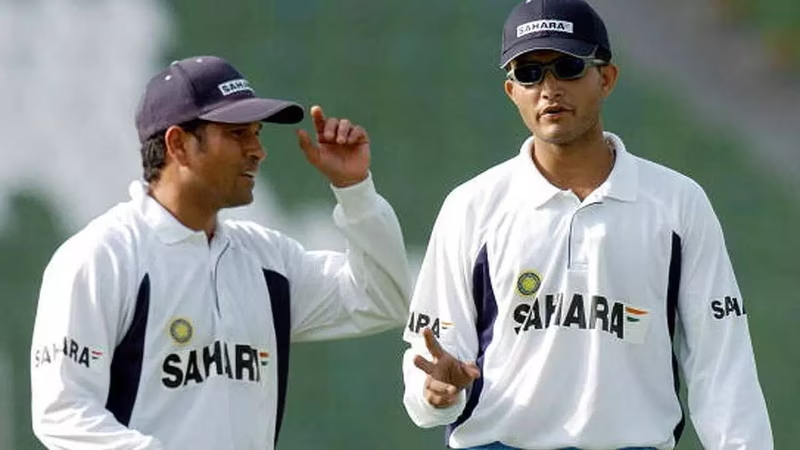
In a world where headlines are dominated by geopolitical friction and diplomatic standoffs, a poignant cricketing memory from two decades ago offers a powerful reminder of humanity, sportsmanship, and cross-border respect. Former Bangladesh batter Rajin Saleh has stepped forward with an emotional revelation: during a deeply challenging phase of his career in the 2004 India tour, it was none other than Indian legends Sachin Tendulkar and Sourav Ganguly who gave him the guidance that changed everything.
This story arrives at a sensitive juncture in India-Bangladesh cricket relations—just as tensions flare over security concerns and the upcoming T20 World Cup. Amid the noise, Saleh’s recollection is a quiet yet potent testament to the bonds the sport can forge, even between fierce rivals.
Table of Contents
- The 2004 Series: A Low Point for Saleh
- Tendulkar’s Advice: The Power of a Mental Reset
- Ganguly’s Mentorship: Play Without Fear
- The Turnaround: 80s in Nagpur
- Why This Story Matters Today
- The Legacy of Cricket Diplomacy
- Conclusion: A Beacon of Sportsmanship
- Sources
The 2004 Series: A Low Point for Saleh
The 2004 tour of India was a baptism by fire for the young Bangladesh side. Fresh off their historic 2003 World Cup performance, they were still finding their feet against top-tier opposition. For Rajin Saleh—a promising top-order batter with a solid domestic record—the series began disastrously.
He scored just 4 and 0 in the first Test in Dhaka (Bangladesh’s home series that year, with India as visitors), followed by meager returns in early tour matches. The pressure mounted. Media scrutiny intensified. And internally, Saleh was crumbling under self-doubt. “I was completely lost,” he recently admitted in an exclusive interview .
Tendulkar’s Advice: The Power of a Mental Reset
In a moment that would define his career, Saleh found an unexpected ally in Sachin Tendulkar. During a practice session or team interaction (the exact setting remains private), the “Little Master” noticed the young batter’s distress. Tendulkar, known for his humility despite his god-like status, pulled Saleh aside.
His advice was simple yet profound: “After every innings—good or bad—wipe the slate clean. Don’t carry the past into the next match. Treat every ball like the first one you’ve ever faced.”
This philosophy of mental reset, so central to Tendulkar’s own 24-year career, gave Saleh a psychological lifeline. It wasn’t technical coaching; it was emotional intelligence from a master.
Ganguly’s Mentorship: Play Without Fear
Not to be outdone, India’s then-captain, Sourav Ganguly—the “Maharaja” of Indian cricket—also offered his own brand of tough love. Known for his aggressive leadership and belief in fearless cricket, Ganguly’s message to Saleh was direct: “You have the talent. Stop thinking about getting out. Just play your shots. If you fail, fail boldly.”
For a player paralyzed by the fear of failure on foreign soil, this was liberating. Ganguly, who had himself rebuilt Indian cricket with a new generation of risk-takers, recognized that Saleh needed permission to be brave.
The Turnaround: 80s in Nagpur
Armed with this dual wisdom from cricket’s two titans, Saleh walked into the second Test in Nagpur a changed man. He silenced critics with a composed 82 in the first innings, followed by another score in the 80s in the second. It was a career-defining performance that earned him respect across borders.
“I owe those innings to Sachin and Sourav,” Saleh says today. “They didn’t have to say a word to me. But they did. That’s the spirit of cricket I believe in.”
Why This Story Matters Today
This anecdote isn’t just nostalgia. It arrives amid a major crisis in India-Bangladesh cricket relations. With Bangladesh threatening to boycott the T20 World Cup over security concerns and national dignity, and political rhetoric heating up, Saleh’s memory is a timely counter-narrative .
It reminds fans and administrators alike that behind the jerseys and rivalries are human beings capable of extraordinary kindness. In an era where every match is framed as a “battle,” this story is a whisper: sometimes, the greatest victory is lifting someone else up.
The Legacy of Cricket Diplomacy
Cricket has long served as an unofficial channel for diplomacy between India and its neighbors. From the 1987 Jinnah Cup to Kapil Dev’s support for Sri Lankan players during their civil war, the sport has bridged divides when politics failed.
Tendulkar and Ganguly’s gesture fits perfectly into this tradition. Their actions weren’t strategic—they were human. And that’s what makes them enduring.
For more on the cultural impact of cricket in South Asia, the British Museum’s South Asia collection includes exhibits on cricket’s colonial roots and post-independence unifying role .
Conclusion: A Beacon of Sportsmanship
As current tensions threaten to cast a shadow over the future of India-Bangladesh cricket, Rajin Saleh’s story stands as a beacon. It proves that the game’s true legacy isn’t just in sixes and wickets—but in the quiet moments of mentorship, empathy, and mutual respect that happen off the field. In a world quick to divide, this memory from 2004 is a call to remember what unites us.