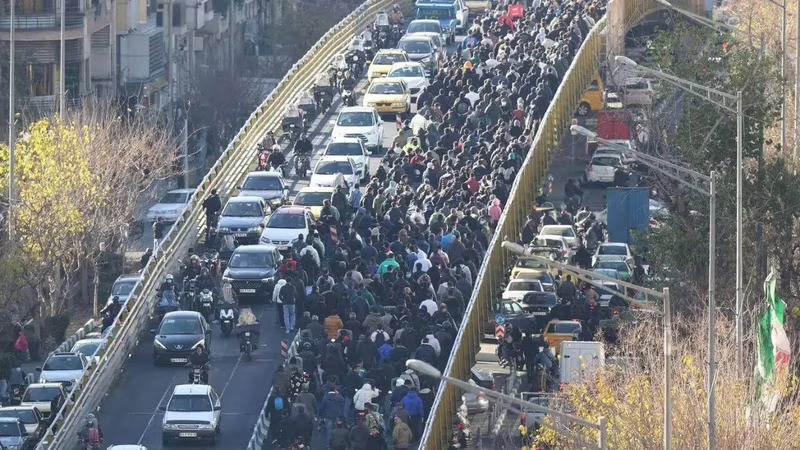
A sharp crack of gunfire. Plumes of black smoke over Tehran. Barricades burning in the streets. This is the volatile reality that has prompted the Australian government to take an extraordinary step: issuing a stark, unambiguous command for its citizens to leave Iran immediately. The official Australia Iran travel advisory has been escalated to its most severe level, reflecting a security environment that officials describe as unpredictable and potentially life-threatening.
Table of Contents
- The Urgent Call: What the Australia Iran Travel Advisory Says
- What Sparked the Iran Protests?
- The Deadly Toll and Government Response
- How This Advisory Compares to Others
- Practical Steps for Australians in Iran
- What This Means for Travel to Iran
- Conclusion: A Sobering Warning for Global Travelers
- Sources
The Urgent Call: What the Australia Iran Travel Advisory Says
The Australian Department of Foreign Affairs and Trade (DFAT) has updated its travel advice for Iran to the highest possible level: “Do not travel”, with an explicit and urgent instruction for those already in the country to “leave as soon as possible” .
This isn’t a gentle suggestion; it’s a serious warning. The advisory cites “violent protests” and a “volatile security situation” that can change with little or no warning. It warns that Australian consular assistance in Iran is extremely limited, making it difficult for the government to help its citizens if they get into trouble .
This escalation of the Australia Iran travel advisory underscores a significant and rapid deterioration in the on-the-ground conditions, moving beyond typical civil unrest into a zone of genuine, immediate danger for foreigners.
What Sparked the Iran Protests?
The current wave of unrest is rooted in deep-seated economic grievances. A perfect storm of hyperinflation, soaring unemployment, and the devaluation of the national currency has pushed many ordinary Iranians to their breaking point. The protests, which began as localized economic demonstrations, have since spread to major cities across the country.
What makes this situation particularly complex is the Iranian government’s attempt at a nuanced response. President Masoud Pezeshkian has reportedly ordered security forces to not crack down on peaceful economic protests, distinguishing these demonstrators from what the government labels as “rioters” and “agitators” . This strategy is clearly an attempt to show a more tolerant face to the public while still maintaining control, but the line between a peaceful protest and a violent riot can blur in the chaos of the streets.
The Deadly Toll and Government Response
The human cost of these protests has been severe. Reports from local human rights groups and international observers indicate significant casualties on both sides, with protesters and security forces among the dead and injured [[2], [3]]. The Iranian government has been quick to blame external actors for fomenting the unrest, a common narrative used to deflect from internal discontent.
For foreign nationals, the danger lies not just in being caught in the crossfire of a protest, but in the potential for being mistaken for a spy or a provocateur in a highly charged nationalist atmosphere. The unpredictable nature of the security forces’ response, despite the President’s orders, adds another layer of risk.
How This Advisory Compares to Others
Australia is not alone in its concerns. Other Western nations, including the United States, the United Kingdom, and Canada, have long-standing “Do Not Travel” advisories for Iran due to the risk of arbitrary detention, terrorism, and civil unrest . However, the Australian government’s explicit call for an immediate exit is a significant escalation that signals a belief that the current situation is more acute and dangerous than the already-high baseline risk.
To understand your home country’s stance, always refer to official sources like the Australian Government’s Smartraveller website or the U.S. State Department’s travel advisories.
Practical Steps for Australians in Iran
If you are an Australian citizen currently in Iran, the advice is clear and immediate:
- Contact the Australian Embassy: Register your presence with the Australian Government through the Smartraveller website immediately, even if you plan to leave.
- Monitor Local Media: Stay informed about the locations of protests and avoid all demonstrations and large gatherings.
- Secure Travel Plans: Book a commercial flight out of Iran as soon as possible. Do not delay.
- Do Not Rely on Consular Help: Understand that the Australian government’s ability to provide assistance inside Iran is very limited.
For those with loved ones in the country, the anxiety must be immense. Sharing this official information is the most helpful action you can take.
What This Means for Travel to Iran
For the foreseeable future, travel to Iran for leisure or non-essential business is simply not an option for Australians. This Australia Iran travel advisory effectively shuts down any plans for tourism. Even for those with dual citizenship or professional obligations, the risks now far outweigh any potential benefits [[INTERNAL_LINK:travel-advisories-for-middle-east]].
Conclusion: A Sobering Warning for Global Travelers
The Australian government’s urgent plea for its citizens to flee Iran is more than just a travel update; it’s a stark indicator of a nation in the throes of a profound crisis. The Australia Iran travel advisory serves as a powerful reminder of the critical importance of heeding official government warnings. In a world where global travel is more accessible than ever, this is a sobering lesson that some destinations can become dangerous with terrifying speed. The safety of citizens must always be the paramount concern, and in this case, that means one clear directive: leave now.
Sources
- Australian Government – Smartraveller: Iran Travel Advice – https://www.smartraveller.gov.au/destinations/middle-east/iran
- Times of India: “Leave as soon as possible: Australia issues travel advisory” – https://timesofindia.indiatimes.com/world/rest-of-world/leave-as-soon-as-possible-australia-issues-travel-advisory-urges-citizens-to-exit-iran-amid-violent-protests/articleshow/126397034.cms
- Amnesty International: Iran Protest Updates – https://www.amnesty.org/en/location/middle-east-and-north-africa/iran/
- U.S. Department of State: Iran Travel Advisory – https://travel.state.gov/content/travel/en/traveladvisories/traveladvisories/iran-travel-advisory.html