Introduction: When a Single Syllable Sparks a Political Firestorm
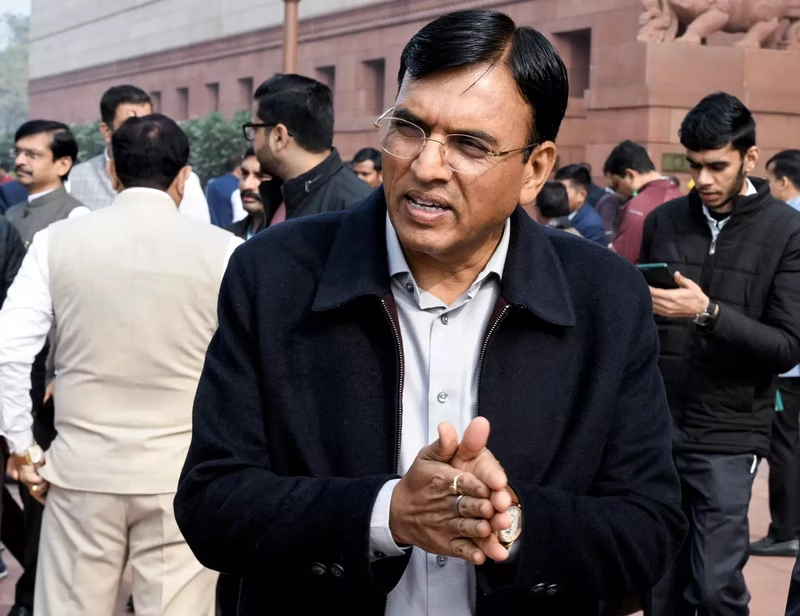
In West Bengal, football isn’t just a sport—it’s heritage, identity, and emotion woven into the fabric of daily life. So when Union Sports Minister Mansukh Mandaviya referred to the legendary Kolkata club as “Mohun Baigan” (Bengali for “eggplant”) during a public address, it wasn’t just a pronunciation error. It was, in the eyes of millions of Bengalis, a profound cultural slight.
The Trinamool Congress (TMC), Bengal’s ruling party, seized on the moment with scathing intensity. Within hours, TMC leaders were mocking the gaffe in rallies, social media, and press conferences, labeling it proof of the BJP’s “Bangla-birodhi” (anti-Bengali) arrogance. What might seem like a minor verbal slip elsewhere has become a lightning rod for deeper tensions over language, respect, and political identity in India’s most culturally assertive state.
Table of Contents
- The Mandaviya Mohun Bagan Faux Pas: What Happened?
- Mandaviya Mohun Bagan Faux Pas: Why a Name Matters So Much in Bengal
- BJP’s Response: “It Was Just a Slip”
- Mohun Bagan: More Than a Football Club
- Language as Power: The Politics of Pronunciation
- Historical Context: BJP and Bengali Cultural Sensitivity
- Public Reaction: Social Media Erupts
- Conclusion: When Words Become Wounds
- Sources
The Mandaviya Mohun Bagan Faux Pas: What Happened?
During a recent event in Delhi promoting grassroots sports, Union Minister Mansukh Mandaviya listed iconic Indian sports institutions, including “Mohun Baigan.” The error—swapping the “g” in Bagan (meaning “garden”) with a “j” sound that rendered it “Baigan” (eggplant)—was caught on video and went viral within minutes.
While Mandaviya later clarified it was an unintentional slip, the damage was done. In Bengal, where linguistic precision is a point of pride, mispronouncing the name of a 135-year-old institution revered as a symbol of anti-colonial resistance felt like willful ignorance.
TMC Outrage: Why a Name Matters So Much in Bengal
TMC leaders didn’t hold back. “It’s not ‘Baigan’—it’s Bagan! Do you even know what this club represents?” thundered TMC MP Saugata Roy. Chief Minister Mamata Banerjee’s party framed the incident as emblematic of the BJP’s broader disregard for Bengali culture.
“This isn’t about pronunciation,” said TMC spokesperson Kalyan Banerjee. “This is about contempt. You can’t lead a nation if you don’t respect its diversity. Mangling the names of our heroes shows you see Bengal as a colony, not a cradle of civilization.”
The party’s social media team amplified the message with memes, videos, and hashtags like #RespectBengal and #NotBaigan, turning the gaffe into a rallying cry against perceived cultural imperialism.
BJP’s Response: “It Was Just a Slip”
The BJP downplayed the controversy. Mandaviya issued a brief statement: “I have immense respect for Mohun Bagan. It was an unintentional misstatement—no disrespect intended.” Party leaders accused the TMC of “manufacturing outrage” for electoral gain ahead of local elections.
Yet, critics note this isn’t the first time BJP leaders have stumbled over Bengali names. From mispronouncing “Tagore” to botching “Durga Puja,” such errors feed a narrative of cultural insensitivity that the TMC exploits masterfully.
Mohun Bagan: More Than a Football Club
To understand the fury, one must grasp Mohun Bagan’s mythic status:
- Founded in 1889, it’s one of Asia’s oldest football clubs.
- 1911 IFA Shield Victory: Defeated East Yorkshire Regiment—the first all-Indian team to beat a British side—sparking nationalist celebrations across India.
- Cultural Symbol: Revered by poets, artists, and revolutionaries alike, including Rabindranath Tagore.
For Bengalis, saying “Mohun Bagan” correctly is a mark of respect—like getting “Churchill” or “Shakespeare” right in the West. To get it wrong, especially in an official capacity, feels like erasure.
Language as Power: The Politics of Pronunciation
This incident reflects a global truth: how you say a name reveals how you see a people. In post-colonial societies, linguistic accuracy is a form of reparative justice.
As linguist Dr. Ananya Chakravarti notes, “When a minister mispronounces a culturally loaded name, it signals that the community isn’t worth the effort to learn. It’s a micro-aggression with macro implications.”
In Bengal, where language movements have historically defined political identity (from the 1952 Language Movement to today’s cultural assertions), such slights cut deep.
Historical Context: BJP and Bengali Cultural Sensitivity
The BJP’s rocky relationship with Bengali identity isn’t new:
- 2016: BJP leaders mocked Durga Puja rituals as “idol worship.”
- 2021: PM Modi’s use of “Sonar Bangla” (Golden Bengal) was criticized as co-option without consultation.
- 2024: Central schemes rebranded Bengali festivals with Sanskritized names.
Each incident fuels the TMC’s “Bangla-birodhi” narrative—a potent electoral weapon in a state fiercely protective of its linguistic sovereignty.
Public Reaction: Social Media Erupts
Bengali netizens flooded platforms with creative rebukes:
- A viral meme showed an eggplant wearing a Mohun Bagan jersey: “Meet the new signing!”
- Poets posted verses in protest: “You may own Delhi, but you’ll never own our Bagan.”
- Football fans organized a “Say It Right” campaign, sharing pronunciation tutorials.
Even non-political figures, including actors and academics, joined the chorus—proving this transcends party lines.
For more on how language shapes regional identity in India, see our feature on [INTERNAL_LINK:language-politics-in-indian-states].
Conclusion: When Words Become Wounds
The Mandaviya Mohun Bagan faux pas may fade from headlines, but its resonance won’t. In a nation as diverse as India, respect isn’t just policy—it’s pronunciation. For West Bengal, where culture is armor and language is legacy, getting a name right is the first step toward genuine unity. Until then, “Baigan” will remain a symbol of everything they fear: a central government that speaks of “Ek Bharat” but doesn’t bother to learn how to say “Bagan.”