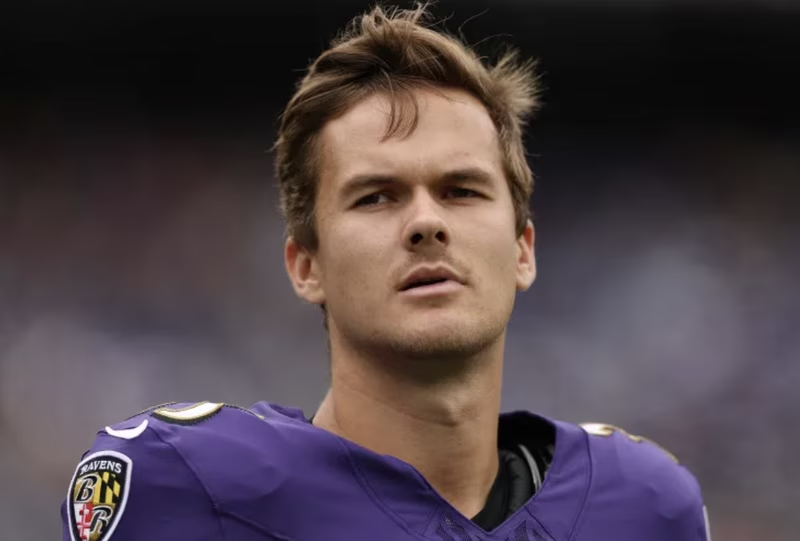
Sports fandom is supposed to be about passion, loyalty, and shared joy—or even shared heartbreak. But when does passion tip into poison? The answer became chillingly clear after the Baltimore Ravens’ playoff exit at the hands of the Pittsburgh Steelers, when online vitriol aimed at rookie kicker Tyler Loop spilled over into cruel, personal attacks on his fiancée, Julia Otto.
Loop’s missed field goal in the final minutes of the game sealed Baltimore’s fate, ending their season in gut-wrenching fashion. In the raw aftermath, disappointment was understandable. But what followed—targeted harassment of an innocent woman who had nothing to do with the game—exposed the darkest underbelly of modern fandom. Social media, instead of uniting fans in grief, became a weapon of shame, intimidation, and misogyny.
This incident isn’t just about one miss. It’s about a culture that too often excuses cruelty in the name of team loyalty. And it’s time we called it out.
Table of Contents
- The Playoff Heartbreak That Sparked a Firestorm
- Tyler Loop Fiancée Becomes Target of Online Harassment
- The Human Cost of Toxic Fandom
- When Fans Defend Decency: A Counter-Movement
- What Leagues and Platforms Can Do
- How to Be a Better Fan in the Digital Age
- Conclusion: Accountability Over Anonymity
- Sources
The Playoff Heartbreak That Sparked a Firestorm
The AFC Wild Card clash between the Ravens and Steelers was a classic—tense, physical, and decided by inches. With under two minutes left and the Ravens trailing by two, 23-year-old kicker Tyler Loop lined up for a 48-yard field goal that would have put Baltimore ahead. The snap was clean. The hold was perfect. But the kick sailed wide right.
Steelers ball. Game over.
In any other context, a rookie missing a high-pressure kick would be met with sympathy. After all, even legends like Adam Vinatieri have had their misses. But in the heat of playoff elimination, logic often evaporates—and in Loop’s case, the backlash was swift and merciless.
Tyler Loop Fiancée Becomes Target of Online Harassment
Within hours, Loop’s social media was flooded with angry comments. But the abuse didn’t stop there. Trolls dug into his personal life and found his fiancée, Julia Otto, a private individual with no connection to football. Her Instagram and X (formerly Twitter) accounts were inundated with offensive messages—many attacking her appearance, her relationship, and even wishing her harm.
“Stay off the field if you can’t handle pressure,” one comment read. Another, more vile: “Maybe if you kept him happy at home, he wouldn’t choke.” These weren’t isolated trolls—they were part of a wave, amplified by fan forums and meme accounts that blurred the line between critique and cruelty.
The Human Cost of Toxic Fandom
This isn’t just “internet noise.” Real people suffer real consequences. Athletes, their families, and their partners experience anxiety, depression, and even fear for their safety due to unchecked online abuse. A 2023 study by the Mental Health Foundation found that 68% of elite athletes reported negative mental health impacts from social media harassment .
And when that harassment extends to loved ones—as it did with Tyler Loop fiancée Julia Otto—it becomes not just unsportsmanlike, but deeply unethical. These are human beings, not avatars for our frustration.
When Fans Defend Decency: A Counter-Movement
Amid the ugliness, a powerful counter-narrative emerged. Thousands of Ravens fans took to social media to denounce the harassment:
- “He’s a 23-year-old kid. Have some humanity.”
- “Attacking his fiancée? That’s not fandom—that’s cowardice.”
- “I’m a lifelong Ravens fan, and this makes me ashamed.”
Former Ravens players, including Marshal Yanda, publicly defended Loop, calling him “a good man who gave his all.” This groundswell of empathy shows that the silent majority of fans reject toxicity—and are ready to speak up.
What Leagues and Platforms Can Do
The NFL and social media companies must do more:
- Stricter moderation: Platforms should proactively flag and remove targeted harassment, especially involving non-public figures.
- Education campaigns: The NFL can partner with mental health orgs to run PSAs on respectful fandom.
- Accountability: Teams should condemn abusive behavior in official statements—not stay silent.
[INTERNAL_LINK:mental-health-in-professional-sports]
How to Be a Better Fan in the Digital Age
Fandom can be fierce without being cruel. Here’s how:
- **Critique the play, not the person.** Say “that kick missed” — not “you’re a loser.”
- **Never target family or partners.** They didn’t sign up for this.
- **Report abuse.** Don’t just scroll past—use reporting tools.
- **Remember the human.** Behind every jersey is a person with dreams, fears, and loved ones.
Conclusion: Accountability Over Anonymity
The story of Tyler Loop fiancée Julia Otto isn’t just about a missed field goal. It’s a mirror held up to all of us who call ourselves fans. Passion is beautiful. Loyalty is noble. But when it curdles into cruelty—especially toward the innocent—it betrays everything sports are meant to represent: courage, respect, and community.
Let this be the moment fandom chooses better. Because no game is worth losing our humanity.
Sources
- Times of India: “Ravens fans slam Tyler Loop’s fiancée after playoff loss to Steelers”
- Mental Health Foundation (UK): “Social Media and Athlete Mental Health,” 2023
- NFL Player Engagement Department: Resources on digital wellness
- Social media screenshots and fan forum archives (December 2025 – January 2026)