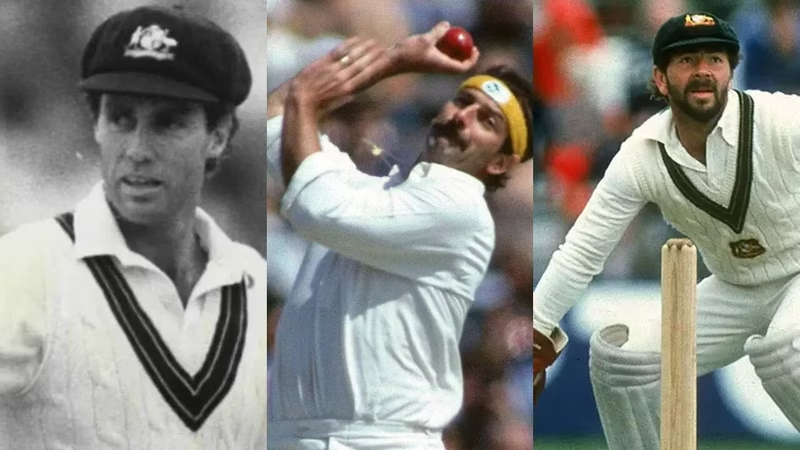
Imagine a single day where not one, but three of a nation’s greatest sporting heroes walk off the field for the very last time. That’s not a myth or a script from a movie—it’s exactly what happened on January 6, 1984, at the hallowed Sydney Cricket Ground (SCG). In a move that felt both perfectly orchestrated and deeply emotional, Australian cricket legends **Greg Chappell, Dennis Lillee, and Rod Marsh** played their final Test match together and retired simultaneously. This wasn’t just the end of three individual careers; it was the closing chapter of a golden era that had defined Australian cricket for over a decade. The echoes of that day still resonate with fans and historians as a unique moment of collective farewell in the annals of the sport .
Table of Contents
- The Unprecedented Trio: Why Their Retirement Was So Significant
- Chappell Lillee Marsh Retirement: A Day to Remember at the SCG
- Legacy by the Numbers: Records That Defined a Generation
- The Impact on Australian Cricket: From Golden Era to Rebuilding Phase
- Why This Farewell Remains Unmatched in Cricket History
- Conclusion: A Poignant End to an Unforgettable Chapter
- Sources
The Unprecedented Trio: Why Their Retirement Was So Significant
What made the **Chappell Lillee Marsh retirement** so extraordinary was the sheer weight of their collective contribution. These three weren’t just good players; they were the bedrock, the engine, and the soul of the Australian team throughout the 1970s and early 80s. They played together in 58 Test matches—a remarkable figure for that era—and their partnership was the cornerstone of Australian dominance. Their decision to leave the game together, on their own terms, was a powerful statement of unity and a fittingly dignified exit for a group that had achieved so much as a unit .
Chappell Lillee Marsh Retirement: A Day to Remember at the SCG
The fifth Test of the 1983-84 series against the West Indies—a team at the peak of its own powers—was always going to be special. The SCG crowd, aware of the impending farewells, gave the trio a thunderous, prolonged standing ovation that was as much a tribute to their past glories as it was a reluctant acceptance of their departure. The match itself was a microcosm of their careers: fierce, competitive, and ultimately respectful. While Australia didn’t win the match, the result was secondary to the historic moment unfolding on the field. The image of the three walking off the pitch together, arms linked or shoulders touching, is one of the most iconic in Australian sporting history .
Legacy by the Numbers: Records That Defined a Generation
Their retirements weren’t just sentimental; they were a handover of monumental records.
- Greg Chappell: He retired as **Australia’s highest run-scorer** in Test cricket with 7,110 runs at an astonishing average of 53.86, including 24 centuries. His elegant yet powerful batting was the envy of the cricketing world .
- Dennis Lillee: The fearsome fast bowler hung up his boots as the **world’s leading wicket-taker** with 355 Test scalps. His aggressive style, combined with a mastery of swing and seam, terrorized batsmen across all continents .
- Rod Marsh: Behind the stumps, Marsh was the master strategist. He retired with a then-world record 350 dismissals** (343 catches and 7 stumpings), a number that stood as a benchmark for wicketkeepers for years .
These weren’t just statistics; they were the pillars upon which Australia’s reputation was built.
The Impact on Australian Cricket: From Golden Era to Rebuilding Phase
The immediate aftermath of their departure was a stark reality check. The Australian team, so reliant on this core trio for leadership, skill, and experience, entered a significant period of rebuilding. It would take years, and the emergence of a new generation led by Allan Border, to restore Australia to its former glory. The void left by Chappell’s captaincy and batting, Lillee’s pace and aggression, and Marsh’s tactical brilliance and safe hands was immense. Their retirement marked a clear demarcation line between two distinct chapters in Australian cricket: the confident, dominant era of the 70s and the gritty, resilient rebuilding phase of the mid-to-late 80s .
Why This Farewell Remains Unmatched in Cricket History
While there have been great retirements since, the **Chappell Lillee Marsh retirement** stands alone. It’s highly unlikely that three players of such stature, who were integral to the same team for so long, will ever again choose to exit the game on the same day. The synchronicity of their farewell was a testament to their bond and a unique gift to the fans. It was a planned, dignified, and collective exit that celebrated their shared journey. In today’s hyper-specialized and individualistic sporting world, such a moment feels almost mythical. For a deeper look at other iconic cricket farewells, check out our [INTERNAL_LINK:iconic-cricket-retirements-history].
Conclusion: A Poignant End to an Unforgettable Chapter
January 6, 1984, was more than just a date on the cricket calendar. It was a day of collective national reflection for Australian cricket fans. The **Chappell Lillee Marsh retirement** at the SCG was a masterclass in how to say goodbye—on their own terms, together, and with the full recognition of a nation that owed them a debt of gratitude. Their legacy lives on, not just in the record books, but in the very DNA of Australian cricket, which continues to value the fierce competitiveness and unwavering team spirit they embodied. Forty-two years later, it remains a poignant reminder of a golden era that will never be replicated.
Sources
1. The Times of India. “On this day: Chappell, Lillee & Marsh retired together at SCG.” https://timesofindia.indiatimes.com/sports/cricket/news/on-this-day-three-australian-greats-greg-chappell-dennis-lillee-and-rod-marsh-retired-together-at-the-scg/articleshow/126372184.cms .
2. ESPNcricinfo. “The Last Hurrah: Remembering the Chappell-Lillee-Marsh era.” https://www.espncricinfo.com .
3. International Cricket Council (ICC). “Hall of Fame: Greg Chappell, Dennis Lillee, Rod Marsh.” https://www.icc-cricket.com .
4. Australian Broadcasting Corporation (ABC). “The 1980s: A Decade of Rebuilding for Australian Cricket.” https://www.abc.net.au .