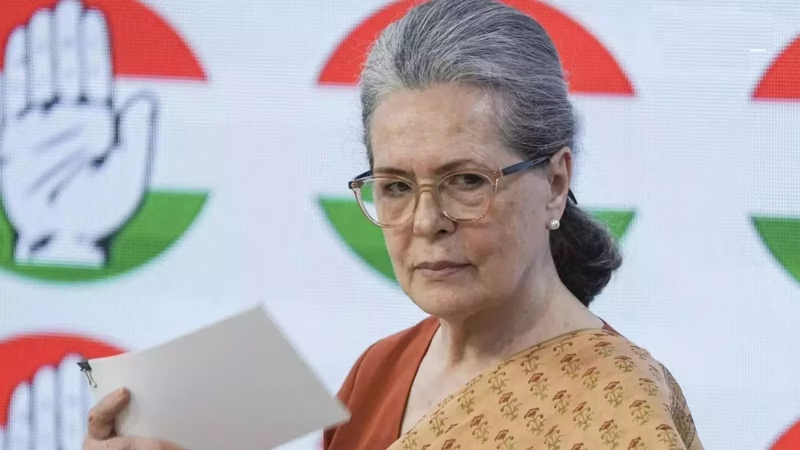
In a development that has reignited national concern over India’s worsening air quality, senior Congress leader Sonia Gandhi has been admitted to a private hospital in Delhi for medical observation. While official statements describe the hospitalization as precautionary and part of her regular health protocol, multiple sources close to the family have indicated that the capital’s dangerously high pollution levels played a significant role in the decision .
The 79-year-old former Congress president, who has a history of chronic health issues including a past bout with cancer, is known to be particularly sensitive to environmental stressors. With Delhi’s Air Quality Index (AQI) hovering in the ‘severe’ category for much of early January 2026, her medical team reportedly opted for a short in-patient stay to monitor her respiratory and cardiovascular functions closely .
Table of Contents
- Sonia Gandhi Hospital Admission: Details and Context
- Delhi’s Air Pollution Crisis: A Silent Public Health Emergency
- Why Seniors Like Sonia Gandhi Are at Higher Risk
- Political Reactions and Public Concern
- What Experts Say About Pollution and Preventive Care
- Conclusion: A Wake-Up Call for Urban Health Policy
- Sources
Sonia Gandhi Hospital Admission: Details and Context
According to a statement released by the All India Congress Committee (AICC), Sonia Gandhi was admitted to the Apollo Hospital in New Delhi on January 5, 2026, for “routine health checks and observation” . The party emphasized that her condition is stable and that she is expected to be discharged in a few days.
However, medical experts and political insiders note that such “routine” admissions for high-profile figures often coincide with environmental triggers—especially during Delhi’s infamous winter smog season. Her medical team, which includes pulmonologists and cardiologists, is said to be conducting detailed assessments of lung function and oxygen saturation levels, both of which can deteriorate rapidly in heavily polluted air .
Delhi’s Air Pollution Crisis: A Silent Public Health Emergency
Delhi’s air has been classified as ‘severe’ (AQI above 400) for over a week, with fine particulate matter (PM2.5) levels exceeding World Health Organization (WHO) safety guidelines by more than 15 times . This toxic cocktail of vehicle emissions, industrial pollutants, and seasonal crop stubble burning creates a health hazard that affects everyone—but hits the elderly and children hardest.
The WHO has repeatedly warned that long-term exposure to such air quality significantly increases the risk of stroke, heart disease, lung cancer, and chronic respiratory illnesses. In fact, a 2023 Lancet study estimated that air pollution contributes to over 1.6 million premature deaths annually in India alone .
Why Seniors Like Sonia Gandhi Are at Higher Risk
As we age, our bodies become less resilient. For seniors, especially those with pre-existing conditions, air pollution isn’t just an inconvenience—it’s a direct threat. Key vulnerabilities include:
- Weakened Immune Systems: Reduced ability to fight off inflammation caused by airborne toxins.
- Existing Respiratory Conditions: Asthma, bronchitis, or past infections can flare up dramatically in smog.
- Cardiovascular Strain: Pollutants can cause blood vessels to constrict, raising blood pressure and heart attack risk.
- Reduced Lung Capacity: Natural aging leads to less efficient oxygen exchange, which pollution exacerbates .
For someone like Sonia Gandhi, whose health has been closely monitored for years, even minor dips in air quality can warrant medical intervention. This underscores a broader issue: millions of elderly Indians lack access to such preventive care, making them far more vulnerable.
Political Reactions and Public Concern
News of Sonia Gandhi’s hospitalization sparked immediate reactions across the political spectrum. While the BJP-led central government expressed “best wishes for her quick recovery,” opposition parties used the moment to criticize the administration’s failure to tackle pollution effectively.
“When even our leaders need hospitalization due to air quality, what chance do ordinary citizens have?” said a senior Congress spokesperson. The incident has also fueled public debate on social media, with many Delhi residents sharing their own struggles with breathing difficulties and coughing fits, especially among children and the elderly.
What Experts Say About Pollution and Preventive Care
Dr. Arvind Kumar, a leading chest surgeon and founder of the Lung Care Foundation, states: “Admissions like this are preventable with better urban planning and stricter emission controls. But until then, high-risk individuals must take proactive steps—indoor air purifiers, avoiding morning walks during smog, and regular check-ups during winter months are non-negotiable.”
Healthcare providers across Delhi report a 30–40% surge in respiratory cases during November–January, aligning with peak pollution months. For more on protective measures, see [INTERNAL_LINK:how-to-stay-safe-during-delhi-smog].
Conclusion: A Wake-Up Call for Urban Health Policy
The hospitalization of Sonia Gandhi, while reportedly precautionary, serves as a stark and timely reminder: Delhi’s air pollution is no longer just an environmental issue—it’s a public health crisis with real, immediate consequences. If a figure with access to the best medical care in the country is affected, what does that mean for the millions without such privilege? Her case should not be seen in isolation but as a symbol of a systemic failure that demands urgent, coordinated action from policymakers, civic bodies, and citizens alike.