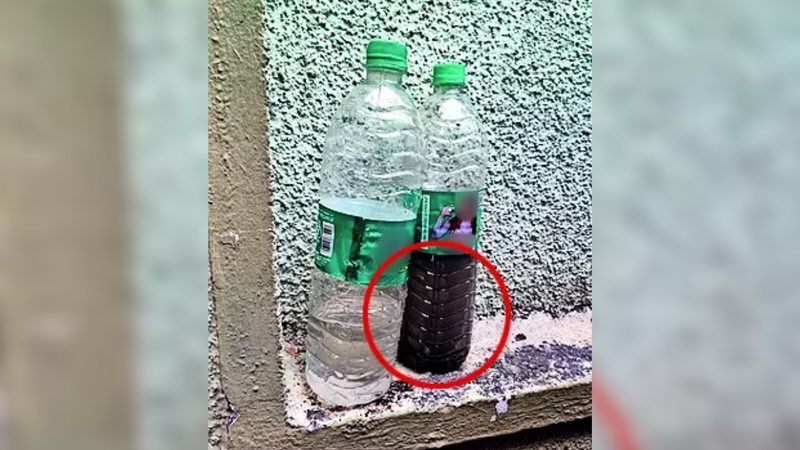
For over a week, life in the quiet lanes of KSFC Layout in Bengaluru has been anything but normal. Residents—some as young as toddlers, others elderly—have been forced to abandon their taps, relying instead on expensive private water tankers or bottled supplies. Why? Because the water flowing from their municipal pipes has turned foul-smelling, discoloured, and undeniably contaminated with sewage.
This alarming situation, eerily reminiscent of the recent Indore water crisis, has thrust Bengaluru’s crumbling water infrastructure into the spotlight. At the heart of the issue lies a dangerous mix of aging pipelines, poor maintenance, and a glaring lack of oversight—culminating in what many are calling a preventable public health disaster. The phrase now on every local’s lips: sewage in Bengaluru drinking water.
Table of Contents
- What Happened in KSFC Layout?
- Sewage in Bengaluru Drinking Water: The Technical Failure
- Health Risks of Sewage-Contaminated Water
- BWSSB’s Response: Delays and Damage Control
- From Indore to Bengaluru: A Pattern of Neglect?
- What Residents Can Do to Stay Safe
- Conclusion: A Call for Accountability
- Sources
What Happened in KSFC Layout?
The crisis in KSFC Layout, a residential area near Lingarajapuram, first surfaced when residents noticed a strong, rotten-egg-like odour emanating from their taps. Within hours, the water turned yellowish-brown, leaving stains on vessels and emitting a putrid smell that made it unusable for even basic tasks like washing.
Over 30 households on a single lane have been affected, with many reporting gastrointestinal distress, skin rashes, and nausea—especially among children. “We haven’t used tap water for drinking, cooking, or even brushing our teeth for eight days,” said Priya Menon, a local resident and mother of two. “We’re spending nearly ₹800 a day just to buy safe water.”
Residents allege they complained repeatedly to the Bangalore Water Supply and Sewerage Board (BWSSB), but received only vague assurances—not urgent action.
Sewage in Bengaluru Drinking Water: The Technical Failure
Preliminary investigations by civic engineers point to a catastrophic failure in the city’s dual-pipeline system. In theory, Bengaluru’s water supply and sewage networks operate on separate lines. In practice, decades of haphazard construction, poor alignment, and corrosion have caused cross-connections—where sewage seeps into freshwater mains under negative pressure.
In KSFC Layout, a major leak in an adjacent sewage line—combined with a drop in water pressure during early morning hours—likely created a siphon effect, sucking untreated wastewater directly into the drinking water pipeline. This is not an isolated incident; similar failures have been documented in Jakkur, RT Nagar, and Whitefield over the past three years .
What makes this crisis particularly disturbing is that it was avoidable. Regular pressure testing, pipeline inspections, and the installation of backflow prevention valves could have stopped this contamination before it reached kitchen taps.
Health Risks of Sewage-Contaminated Water
Consuming or even using sewage-contaminated water poses serious health threats. According to the World Health Organization (WHO), such water can carry pathogens like E. coli, Salmonella, Hepatitis A, and parasitic worms .
Common symptoms include:
- Diarrhoea and vomiting
- Abdominal cramps
- Skin and eye infections
- Long-term liver or kidney damage with prolonged exposure
Children, the elderly, and immunocompromised individuals are at the highest risk. Local clinics in Lingarajapuram have already reported a 40% spike in gastroenteritis cases since the contamination began.
BWSSB’s Response: Delays and Damage Control
The Bangalore Water Supply and Sewerage Board (BWSSB) initially downplayed the issue, calling it a “minor discoloration due to sediment.” Only after residents shared videos on social media and escalated complaints to local MLAs did the agency dispatch a technical team.
Officials have since isolated the affected pipeline and begun flushing the system, but have not yet provided a timeline for full restoration of safe water. Crucially, they have not offered compensation for the economic burden borne by residents or committed to systemic upgrades.
“They flush the line once and say it’s fixed—but without replacing the corroded pipes, this will happen again,” warned Dr. Anand Rao, an environmental engineer and Bengaluru civic activist.
From Indore to Bengaluru: A Pattern of Neglect?
This incident comes just weeks after Indore made headlines for a nearly identical crisis—where sewage mixed with drinking water in multiple wards, turning taps brown and triggering panic. Both cities, despite being among India’s most “developed” urban centers, suffer from the same core problem: rapid urbanization without proportional investment in water infrastructure.
Bengaluru’s population has doubled since 2001, yet its water distribution network remains largely unchanged. The BWSSB itself admits that over 30% of its pipelines are over 30 years old—well past their functional lifespan.
For more on urban infrastructure failures, see our feature on India’s deepening urban water crisis.
What Residents Can Do to Stay Safe
Until authorities ensure a consistent supply of clean water, residents are advised to:
- Never consume tap water directly. Boil it for at least 10 minutes or use certified RO purifiers.
- Test water quality using at-home kits available online (look for E. coli and coliform tests).
- File formal complaints with BWSSB (toll-free: 1916) and escalate to the Karnataka State Pollution Control Board if ignored.
- Document all health issues and medical expenses—this can support future claims for compensation.
Conclusion: A Call for Accountability
The presence of sewage in Bengaluru drinking water is not just a technical glitch—it’s a symptom of institutional failure. As Bengaluru races to become a global tech hub, its most basic civic promise—safe, clean water—remains broken for thousands. The KSFC Layout crisis must serve as a wake-up call. Without urgent investment, transparent monitoring, and strict accountability for agencies like BWSSB, this “Indore-like scare” will become Bengaluru’s new normal.
Sources
- Times of India. “‘Foul-smelling, discoloured’: Sewage in drinking water triggers Indore-like scare in Bengaluru.” https://timesofindia.indiatimes.com/city/bengaluru/foul-smelling-discoloured-sewage-in-drinking-water-triggers-indore-like-scare-in-bengalurus-lingarajapuram-30-houses-on-one-lane-hit/articleshow/126330020.cms
- BWSSB Official Website. Pipeline maintenance data and public advisories.
- Citizen Matters. “Why Bengaluru’s water keeps failing its residents.” https://citizenmatters.in
- World Health Organization (WHO). “Guidelines for drinking-water quality.” https://www.who.int/publications/i/item/9789241549950