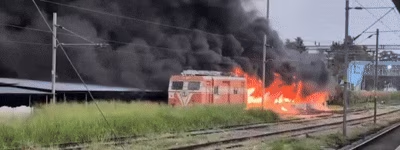
Introduction: A Morning Turned to Ashes
Sunday, January 4, 2026, started as a typical bustling morning at Thrissur railway station, one of the major transportation hubs in central Kerala. Commuters were arriving, trains were departing, and the paid parking shed was packed with an estimated 400 scooters and motorcycles—precious assets for daily wage earners and students alike. Then, in a terrifying instant, everything changed. A fire erupted, likely sparked by a fallen electric wire, and within minutes, a sea of flames engulfed the entire covered parking area. The result was catastrophic: hundreds of two-wheelers were completely gutted, leaving their owners with nothing but charred metal and a profound sense of loss. This is the story of the Thrissur railway station fire, a disaster that was contained but not without a massive toll.
Table of Contents
- The Blaze: What Happened at Thrissur Railway Station?
- Thrissur Railway Station Fire: Cause and Emergency Response
- The Human and Financial Toll
- A Pattern of Risk: Fire Safety at Indian Railway Stations
- Owner Reactions and the Long Road to Recovery
- Conclusion: A Wake-Up Call for Railway Safety
- Sources
The Blaze: What Happened at Thrissur Railway Station?
The fire is believed to have started in the early hours of Sunday morning inside the station’s designated paid parking shed for two-wheelers. According to preliminary reports from the Kerala Fire and Rescue Services, the initial ignition point was likely a live electric wire that had fallen onto a parked, covered bike [1]. The synthetic material of the bike cover acted as perfect kindling, and the fire spread with terrifying speed through the tightly packed rows of vehicles.
The parking shed, a covered structure, quickly became an inferno. Thick, black smoke billowed into the sky, visible for miles around, as the fire consumed vehicle after vehicle. The sheer density of the parking—hundreds of fuel-filled machines in a confined space—created a firestorm that was incredibly difficult to control.
Thrissur Railway Station Fire: Cause and Emergency Response
Upon receiving the distress call, multiple fire tenders from the Thrissur Fire and Rescue Services were dispatched to the scene immediately. The firefighters faced a daunting task: not only did they have to extinguish a massive vehicle fire, but they also had to prevent it from spreading to the main railway station building and its busy platforms, where thousands of passengers were present.
Their efforts were ultimately successful. Through a coordinated and brave operation, they managed to contain the fire to the parking shed, preventing any damage to the station’s core infrastructure and, most importantly, avoiding any reported loss of life or injuries [1]. This successful containment is a testament to the skill and quick action of the emergency services.
While the immediate cause is suspected to be an electrical short circuit from a fallen wire, a formal investigation has been launched by the Railway Protection Force (RPF) and local authorities to determine the exact sequence of events and whether any lapses in maintenance or safety protocols contributed to the disaster.
The Human and Financial Toll
The financial impact of the Thrissur railway station fire is estimated to be in the crores of rupees. With nearly 400 two-wheelers destroyed, many of which were the primary or only mode of transport for their owners, the personal loss is immense. For a daily wage laborer, a student, or a small shop owner, a bike is not just a vehicle; it’s a lifeline to their livelihood and education.
Owners arrived at the scene throughout the day, many breaking down in tears as they surveyed the wreckage of what was once their prized possession. The sight of the parking shed, now a smoldering graveyard of twisted metal and melted plastic, is a haunting image of sudden, total loss. The road to recovery for these individuals will be long, involving insurance claims, police verification processes, and the daunting prospect of having to purchase a new vehicle—a significant financial burden for most.
A Pattern of Risk: Fire Safety at Indian Railway Stations
This incident is not an isolated one. Railway stations across India, often old and congested, are vulnerable to fire hazards due to a combination of factors: aging electrical infrastructure, overcrowded parking facilities, and the presence of flammable materials. The Indian Railways Fan Club Association (IRFCA), a respected non-official body, has long highlighted the need for regular safety audits and modernization of station facilities, especially in high-footfall areas like Thrissur.
Key safety concerns that this fire brings to light include:
- Electrical Line Maintenance: Are overhead wires regularly inspected for wear and tear?
- Parking Shed Design: Are parking areas built with fire-resistant materials and adequate spacing between vehicles?
- Fire Safety Equipment: Are there functional fire extinguishers and hydrants readily available in parking zones?
- Emergency Drills: Are station staff trained to handle such emergencies swiftly?
Owner Reactions and the Long Road to Recovery
In the aftermath, a sense of anger and frustration is growing among the vehicle owners. Many are demanding compensation from the Indian Railways, arguing that since they paid for a ‘paid parking’ service, the railway authorities bear a responsibility for the safety of their vehicles. They are organizing and seeking legal counsel to understand their options for recourse.
The South Western Railway zone has acknowledged the incident and stated that they are coordinating with local authorities to assist the affected individuals. However, a formal policy on compensation for such events remains unclear, leaving the owners in a state of anxious uncertainty.
Conclusion: A Wake-Up Call for Railway Safety
The devastating Thrissur railway station fire serves as a stark and urgent wake-up call. While the heroic actions of the firefighters prevented a far greater tragedy, the massive loss of property is a direct consequence of potential systemic vulnerabilities. It is imperative that the Indian Railways uses this incident as a catalyst for a nationwide review and upgrade of fire safety protocols at all its stations. For the hundreds of people in Thrissur who lost their vehicles, their mornings may have turned to ashes, but their plight must ignite a lasting change to prevent such a disaster from happening again.
Sources
[1] “Fire erupts at Thrissur railway station; hundreds of two-wheelers gutted in blaze”, Times of India
[2] Preliminary reports from Kerala Fire and Rescue Services
[3] Statements from South Western Railway officials