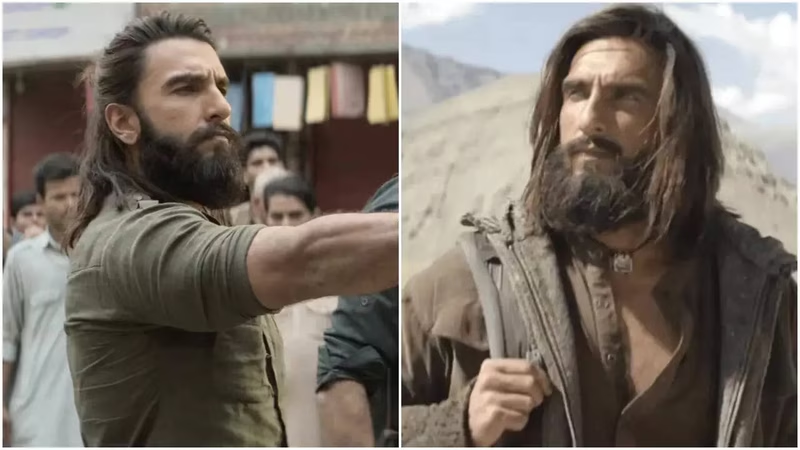
The buzz around Aditya Dhar’s highly anticipated film Dhurandhar, starring Ranveer Singh, took a sharp turn when rumors surfaced that the Ministry of Information and Broadcasting (I&B) had ordered the muting of a dialogue referencing ‘Baloch.’ But in a crucial clarification that has since quieted much of the speculation, government officials have categorically stated: there was no such order. The edits were entirely a voluntary move by the filmmakers, made in compliance with the Cinematograph Act during the certification process. This revelation reframes the narrative around the Dhurandhar Baloch controversy, shifting the focus from alleged state censorship to the creative and legal choices of the production team itself .
Table of Contents
- How the Dhurandhar Baloch Controversy Began
- Official Clarification: No I&B Ministry Order Issued
- The Role of the Cinematograph Act in Film Certification
- Why Filmmakers Might Choose Voluntary Edits
- Broader Implications for Bollywood and Creative Freedom
- Conclusion: Separating Fact from Rumor in the Dhurandhar Saga
- Sources
How the Dhurandhar Baloch Controversy Began
Initial reports and social media chatter suggested that a specific line in Dhurandhar—which allegedly referenced the politically sensitive ‘Baloch’ region—had been muted in the final theatrical cut. Given the history of political and diplomatic sensitivities around the Balochistan issue in India-Pakistan relations, many assumed this was a case of preemptive censorship by government censors or a direct order from the I&B Ministry . The controversy gained traction quickly, with critics and commentators using it as a flashpoint to discuss freedom of expression in Indian cinema. However, the full story, as later revealed by officials, was far more nuanced.
Official Clarification: No I&B Ministry Order Issued
In a definitive statement, officials from the Ministry of Information and Broadcasting have confirmed that no directive was ever sent to the makers of Dhurandhar to mute or alter any dialogue related to ‘Baloch’ . The decision to modify the film was made entirely by the production team during the Central Board of Film Certification (CBFC) process. The CBFC, operating under the Cinematograph Act of 1952, is the statutory body responsible for certifying films for public exhibition in India. Its role is to review content and suggest or require modifications to ensure compliance with legal and social standards—not to enact political censorship on behalf of the ministry .
This clarification is significant because it draws a clear line between the functioning of an independent regulatory body and direct political interference—a distinction that is often blurred in public discourse.
The Role of the Cinematograph Act in Film Certification
Understanding the Dhurandhar Baloch controversy requires a basic grasp of how film certification works in India. The Cinematograph Act empowers the CBFC to examine films and assign them a certificate (U, UA, A, etc.) based on their content. During this review, the board can advise filmmakers to make cuts or modifications. Crucially, these suggestions are not always mandates; filmmakers often choose to make voluntary changes to avoid a more restrictive certificate (like an ‘A’ for adults) or to sidestep potentially lengthy appeals processes .
In the case of Dhurandhar, it appears the filmmakers opted for a proactive edit to ensure a smoother certification and a wider audience reach, a common strategic move in the industry.
Why Filmmakers Might Choose Voluntary Edits
It’s easy to assume that any edit equals censorship, but the reality of filmmaking is more pragmatic. Directors and producers often weigh artistic vision against commercial viability. Here’s why a team like Aditya Dhar’s might choose a voluntary edit:
- Avoiding an ‘A’ Certificate: A more restrictive rating can drastically reduce a film’s box office potential by limiting its audience.
- Preventing Legal Challenges: Content that could be deemed inflammatory or defamatory might invite lawsuits or public protests post-release.
- Ensuring a Timely Release: The CBFC appeals process can be slow. Voluntary edits can fast-track a film’s release date, which is critical for a major star-driven project like Dhurandhar.
- Maintaining Diplomatic Neutrality: Even if legally permissible, referencing geopolitically volatile topics can create unwanted international friction, which studios may wish to avoid.
This strategic calculus is a routine part of commercial filmmaking, balancing art with the realities of the marketplace.
Broader Implications for Bollywood and Creative Freedom
The Dhurandhar episode highlights a recurring tension in Indian cinema: the space between creative freedom and regulatory compliance. While the I&B Ministry’s hands-off approach in this instance is a positive signal, the incident underscores how quickly rumors of censorship can spread. It also raises questions about the self-censorship that filmmakers might practice to navigate the complex certification landscape .
For more on this dynamic, see our deep dive into [INTERNAL_LINK:creative-freedom-in-indian-cinema]. The true test of a healthy cinematic ecosystem is not just the absence of government orders, but the confidence of creators to tell bold stories without fear of undue consequence—a conversation that continues long after the credits roll on Dhurandhar.
Conclusion: Separating Fact from Rumor in the Dhurandhar Saga
The Dhurandhar Baloch controversy serves as a powerful case study in how misinformation can take root in the digital age. The official confirmation that no government order was issued is a crucial piece of the puzzle. While the muted dialogue remains a point of discussion, the decision was a creative and strategic one by the filmmakers, made within the established legal framework of the Cinematograph Act. This distinction matters—not just for the legacy of Dhurandhar, but for the ongoing dialogue about artistic expression and regulation in Indian cinema.