New York City has always been expensive—but today, it’s becoming unlivable for many. From nurses and teachers to gig workers and artists, a quiet exodus is underway. At the heart of this upheaval is the New York affordability crisis, a systemic breakdown in housing, wages, and public investment that threatens the city’s very identity.
Now, in a historic shift, voters have handed the reins to Zohran Mamdani, a progressive firebrand who built his campaign on one urgent promise: to make New York affordable again. But with a projected $7 billion budget shortfall, waning federal support, and fierce opposition from real estate interests, can his vision—centered on a citywide rent freeze and massive affordable housing construction—actually become reality?
The answer could reshape not just NYC, but the future of urban governance across America.
Table of Contents
- Who Is Zohran Mamdani?
- The Scale of the New York Affordability Crisis
- Mamdani’s Bold Policy Playbook
- Financial and Political Hurdles Ahead
- What Success Would Look Like
- Conclusion: A Defining Moment for NYC
- Sources
Who Is Zohran Mamdani?
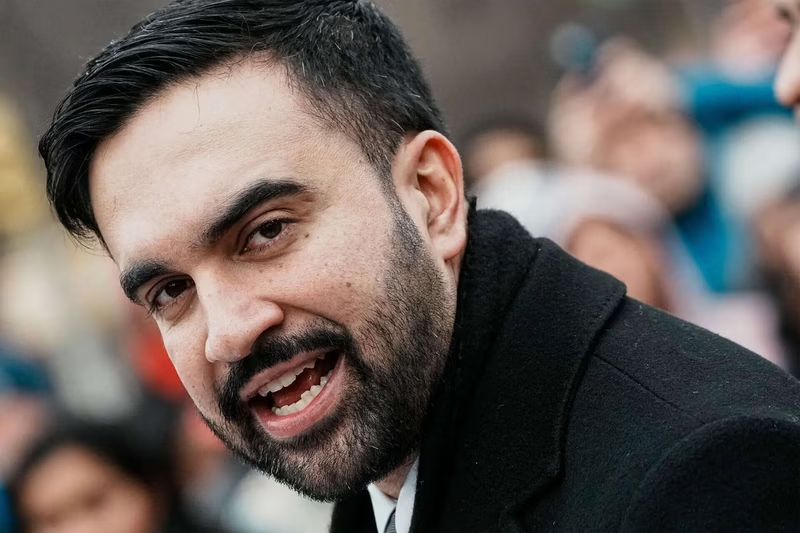
At just 32, Zohran Mamdani is not your typical New York mayor. A former Democratic Socialist assemblyman from Queens, he gained national attention for his fierce advocacy on transit equity, tenant rights, and climate justice. Born to Ugandan-Indian immigrants and raised in public housing, Mamdani frames housing as a human right—not a commodity.
His 2025 mayoral campaign rejected corporate donations and leaned heavily on small-dollar grassroots support, mirroring the playbook of Bernie Sanders and Alexandria Ocasio-Cortez. His victory signals a clear mandate: New Yorkers are done waiting for incremental fixes.
The Scale of the New York Affordability Crisis
The numbers paint a grim picture. According to the U.S. Census Bureau, over 50% of NYC renters are now “cost-burdened,” meaning they spend more than 30% of their income on housing—many spend over 50%. Median rent in Manhattan hit a record $4,500 in late 2025, while outer boroughs like Brooklyn and Queens aren’t far behind.
Compounding the problem is a severe shortage of affordable units. The city estimates it needs 500,000 new affordable homes over the next decade—but current building rates are far below that target. Meanwhile, wages have stagnated, and public services like subways and schools are straining under underfunding.
Mamdani’s Bold Policy Playbook
Mamdani’s plan to tackle the New York affordability crisis rests on three pillars:
- Universal Rent Freeze: His flagship proposal would halt all rent increases for the next three years across both rent-stabilized and market-rate units. This aims to provide immediate relief while longer-term solutions are built.
- Massive Public Housing Investment: He’s pledged to fast-track construction of 200,000 new city-owned affordable units by 2030, funded through a combination of real estate transfer taxes and repurposed city land.
- Tenant Power Expansion: His administration plans to expand access to free legal counsel in housing court and strengthen anti-eviction protections—a move proven to reduce homelessness in pilot programs.
Unlike past administrations that relied on private developers for affordable units (often with mixed results), Mamdani is betting on direct public action. “We cannot outsource the right to shelter to profit-driven entities,” he stated in his victory speech.
Financial and Political Hurdles Ahead
The roadblocks are formidable. The city faces a projected $7 billion budget gap in FY2026, worsened by declining tax revenues and cuts in federal aid. The powerful Real Estate Board of New York (REBNY) has already labeled the rent freeze “unconstitutional” and vowed legal challenges.
Moreover, Mamdani will need a cooperative City Council and, potentially, state-level legislation from Albany—where moderate Democrats hold key sway. Past attempts at rent control expansion have stalled there.
Even allies warn that without careful design, a blunt rent freeze could discourage maintenance or new construction, worsening the supply crunch long-term. Mamdani’s team counters that their plan includes targeted subsidies for small landlords to offset losses, but details remain thin.
What Success Would Look Like
If Mamdani succeeds, New York could become a model for progressive urbanism. Short-term, a rent freeze would halt displacement and give breathing room to working families. Medium-term, a surge in publicly built housing could shift market dynamics, lowering pressure on private rents.
Success also means redefining “affordability.” Under Mamdani’s vision, it’s not just about cheaper units, but about stability, dignity, and community control. Pilot programs in neighborhoods like East New York could serve as test beds for community land trusts and co-op models.
For residents, success looks like being able to stay in the neighborhood where they work, raise kids without fear of eviction, and see public investment—not just luxury condos—on their blocks.
Conclusion: A Defining Moment for NYC
Zohran Mamdani’s rise marks a pivotal moment in New York’s history. The New York affordability crisis is more than an economic issue—it’s a test of the city’s soul. Can a global metropolis that prides itself on diversity and opportunity still be home to the middle class, service workers, and artists?
Mamdani’s plan is audacious, risky, and deeply necessary. Whether it survives political warfare and fiscal reality remains to be seen. But one thing is certain: New Yorkers have made it clear they want bold action, not more band-aids. The world is watching to see if the city that never sleeps can finally build a future where everyone can afford to stay. For more on urban housing policy, see our analysis on [INTERNAL_LINK:affordable-housing-models-us].