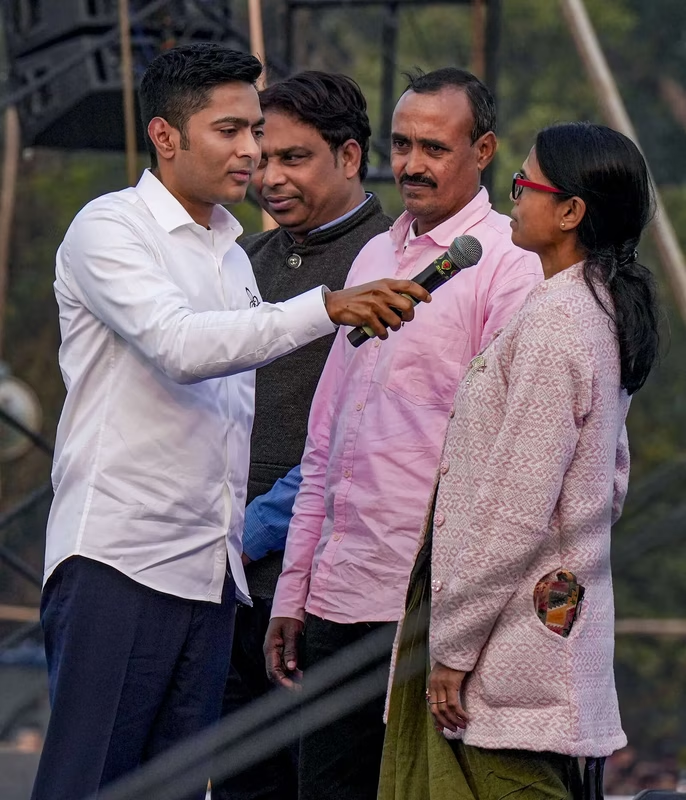
In a move that blended political theater with sharp electoral messaging, Trinamool Congress (TMC) leader Abhishek Banerjee launched his party’s 2026 campaign with a jaw-dropping stunt: he walked on stage flanked by three individuals—alive, breathing, and holding ID cards—whose names, he claimed, had been marked as ‘deceased’ in the Election Commission’s voter rolls.
Addressing a massive crowd in West Bengal, Banerjee accused the Election Commission (EC) of orchestrating a silent purge of Bengali voters, particularly those of minority and marginalized backgrounds. The incident has reignited the fierce debate over electoral integrity, demographic engineering, and whether the EC is acting as a neutral arbiter—or a political instrument. At the heart of this storm lies the phrase now echoing across Bengali media: Abhishek Banerjee dead voters.
Table of Contents
- The ‘Dead Voters’ Stunt: What Happened at the TMC Rally?
- Abhishek Banerjee ‘Dead Voters’ Allegations Explained
- The SIR Hearing Controversy: BJP, EC, and Voter Intimidation?
- Historical Context: Voter List Purges in West Bengal
- Election Commission Response and Legal Framework
- Political Fallout: TMC vs BJP Narratives
- What This Means for 2026 Elections
- Conclusion: Democracy at a Crossroads
- Sources
The ‘Dead Voters’ Stunt: What Happened at the TMC Rally?
At the rally, Banerjee introduced three men—local residents with valid Aadhaar and voter IDs—who were visibly shocked to learn their names had been flagged as ‘deceased’ in the EC’s updated electoral database. One man, a daily wage laborer, broke down on stage, saying, “I’m not dead—I pay taxes, I raise children, and now they say I don’t exist?”
Banerjee used this emotional moment to pivot into a broader critique: that the EC, under pressure from the BJP-led Centre, is systematically deleting names—especially those with Muslim-sounding or Bengali-origin surnames—under the guise of ‘cleansing’ rolls of ‘duplicates’ or ‘foreigners.’
Abhishek Banerjee ‘Dead Voters’ Allegations Explained
Banerjee’s core claims include:
- Erroneous Deletions: Thousands of genuine voters are being removed due to data-entry errors or lack of updated documentation.
- Targeted Scrutiny: Names perceived as ‘Bangladeshi’ are disproportionately flagged for verification under the Special Investigation Report (SIR) process.
- Political Motive: The timing—just months before the 2026 state elections—suggests an attempt to reduce TMC’s voter base in urban and border constituencies.
He drew a direct parallel between this and the 2016 demonetization, calling it “digital gerrymandering”—a quiet, bureaucratic way to disenfranchise millions without public outcry.
The SIR Hearing Controversy: BJP, EC, and Voter Intimidation?
A key part of Banerjee’s speech targeted the surge in SIR notices—letters sent to individuals asking them to appear before local election officers to ‘prove’ their citizenship.
“They’re sending notices to rickshaw pullers, tea stall owners, housewives—people who’ve lived here for generations,” he said. “This isn’t about legality; it’s about fear. It’s BJP’s new form of harassment.”
Critics argue that while verifying voter rolls is essential, the scale and selectivity of SIR hearings in Bengal raise red flags. Data from the EC shows West Bengal accounts for over 60% of all SIR cases nationwide—a statistic TMC calls “suspicious and discriminatory” .
Historical Context: Voter List Purges in West Bengal
This isn’t the first time West Bengal has faced voter roll controversies. In the 1990s and 2000s, the Left Front government faced similar accusations of deleting opposition voters. But the current dynamic is reversed: now, it’s the ruling TMC claiming victimhood.
However, independent observers note a concerning trend: the use of citizenship discourse—once limited to Assam’s NRC debates—is now creeping into Bengal’s electoral politics, creating anxiety among minority communities .
Election Commission Response and Legal Framework
The Election Commission maintains that voter list updates follow a transparent, rule-based process under the Representation of the People Act, 1950. Deletions occur only after multiple verification steps, including public notices and opportunities for objection.
Yet, civil society groups point out gaps:
- Many rural voters lack internet access to check their status online.
- Hearings are often scheduled in distant offices, making attendance difficult for the poor.
- No independent audit exists to verify deletion criteria.
The EC has not yet issued a formal response to Banerjee’s ‘dead voters’ claim, but sources say an internal review is underway.
Political Fallout: TMC vs BJP Narratives
For the TMC, this rally serves a dual purpose: it energizes the party’s base by framing the BJP as an existential threat to Bengali identity, and it shifts focus from internal challenges like corruption allegations.
For the BJP, the response has been swift. Party leaders dismissed Banerjee’s claims as “desperate theatrics” and accused TMC of sheltering “illegal infiltrators.” The battle lines are drawn—not just over votes, but over who truly belongs in Bengal.
What This Means for 2026 Elections
If even a fraction of Banerjee’s claims are true, the impact could be significant. A 5–10% voter suppression in key constituencies could swing the election. That’s why both parties are now racing to:
- TMC: Organize mass voter verification drives and legal aid camps for those flagged.
- BJP: Push for faster SIR resolutions and stricter citizenship documentation.
Citizens are urged to check their voter status via the [INTERNAL_LINK:how-to-check-voter-id-status-online] portal and file corrections immediately if needed.
Conclusion: Democracy at a Crossroads
The Abhishek Banerjee dead voters episode is more than political drama—it’s a stress test for India’s electoral democracy. At stake is not just who wins in 2026, but whether every eligible citizen, regardless of name or origin, can exercise their fundamental right to vote without bureaucratic hurdles or political bias. As the EC and political parties prepare for a high-stakes battle, one question remains: in the world’s largest democracy, who gets to count?