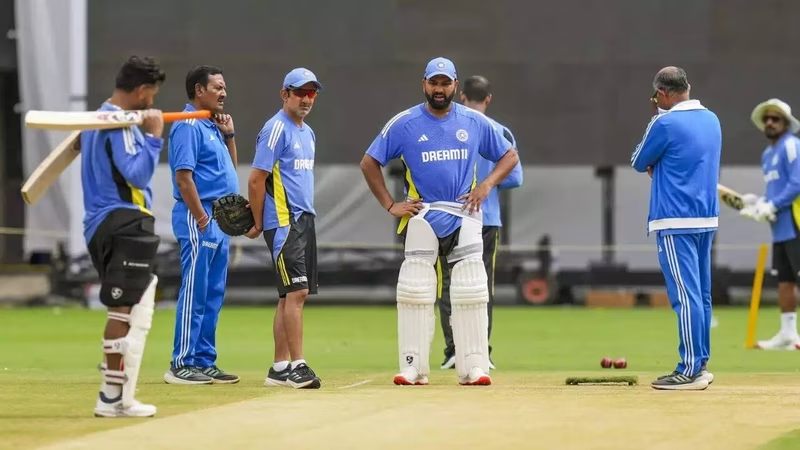
In a moment that sent shockwaves—and a few chuckles—through the cricketing world, former Pakistan coach Jason Gillespie has categorically rejected speculation that he might step in as the next **India coach**. His response? A blunt, no-nonsense “No thanks!” . The remark came amid rising online chatter from frustrated fans questioning Gautam Gambhir’s future after a string of underwhelming results for Team India in early 2026.
The Australian fast-bowling legend, who parted ways with Pakistan just seven months into his tenure in late 2024, is widely respected as a red-ball specialist and a builder of resilient Test units . But when approached informally—likely by journalists or social media pundits—about replacing Gambhir, Gillespie didn’t just decline; he made it clear he has no appetite for the immense pressure that comes with leading the Indian cricket team, one of the most scrutinized roles in global sport.
Table of Contents
- Why the India Coach Role Is Under Scrutiny
- Who Is Jason Gillespie—and Why Was His Name Floated?
- Gillespie’s Pakistan Experience: A Cautionary Tale
- The Real Challenges of Being India Coach
- What Comes Next for Gautam Gambhir?
- Conclusion: Respect, Realism, and the Weight of the Blue Jersey
- Sources
Why the India Coach Role Is Under Scrutiny
Since taking over as head coach in late 2025, Gautam Gambhir—a former India opener and World Cup hero—has faced intense scrutiny. While his appointment was initially celebrated for his no-nonsense attitude and leadership pedigree, recent results have fueled criticism:
- A surprise loss to Bangladesh in a bilateral ODI series in December 2025.
- A tame 2-0 defeat in the Test series against South Africa away from home.
- Perceived lack of clarity in team selection, especially around the middle order.
These setbacks have triggered a wave of fan backlash on social media, with some calling for an “experienced foreign coach” to take charge. Names like Andy Flower, Stephen Fleming, and—despite the irony—Jason Gillespie began trending. But as Gillespie’s response shows, not everyone sees the role as a dream job.
Who Is Jason Gillespie—and Why Was His Name Floated?
Jason Gillespie isn’t just any coach. As a player, he took 259 Test wickets for Australia with a fearsome 140+ kph yorker. As a coach, he transformed Sussex into County Championship winners and later worked with Australia A before taking the Pakistan job .
His reputation is built on discipline, technical excellence, and developing young fast bowlers—qualities India sorely needs. Given his success in rebuilding teams, some fans assumed he’d be eager to take on cricket’s biggest challenge: coaching India. But that assumption overlooked a key truth—Gillespie has grown cautious after his brief, high-stress stint with Pakistan.
Gillespie’s Pakistan Experience: A Cautionary Tale
Gillespie’s tenure with Pakistan lasted only seven months—from May to December 2024—before he resigned, citing “personal and professional reasons” . While publicly diplomatic, sources close to him suggested he was overwhelmed by political interference, constant media criticism, and the volatility of managing a team in perpetual transition.
Having just escaped one high-pressure Asian cricket job, the idea of stepping into an even more intense environment—where every decision is dissected by 1.4 billion people—was understandably unappealing. His “No thanks!” isn’t just politeness; it’s the weary wisdom of someone who’s been there, done that, and bought the T-shirt… only to return it.
The Real Challenges of Being India Coach
The **India coach** position is unlike any other in world cricket. Consider these realities:
- Media Frenzy: Every net session, selection call, and team meeting is headline news.
- Star Power vs. Authority: Balancing the egos of global superstars like Virat Kohli, Rohit Sharma, and Jasprit Bumrah requires diplomatic finesse.
- Board Politics: Navigating the BCCI’s internal dynamics can be as complex as game strategy.
- 24/7 Fan Scrutiny: Social media armies can turn on a coach within hours of a single loss.
For a coach like Gillespie, who values control and a clear mandate, this environment is a minefield. As he told reporters in 2024: “Coaching isn’t just about tactics—it’s about having the space to implement them.” In India, that space is often non-existent.
What Comes Next for Gautam Gambhir?
Despite the noise, Gambhir still has strong support within the BCCI. His deep understanding of Indian cricket culture, his rapport with key players, and his aggressive team philosophy align with the board’s current vision . The upcoming home season—including a crucial Test series against England in February 2026—will be his real test.
If India bounces back with dominant performances, the fan uproar will fade. But if the losses continue, the BCCI may be forced to look beyond sentiment—even if world-class coaches like Gillespie are saying “No thanks!”
Conclusion: Respect, Realism, and the Weight of the Blue Jersey
Jason Gillespie’s blunt rejection of the **India coach** role isn’t a slight against Indian cricket—it’s a sobering reminder of just how demanding the job has become. It takes more than tactical genius; it requires emotional armor, political savvy, and an almost superhuman tolerance for pressure. For now, Gautam Gambhir remains at the helm, with his legacy hanging in the balance. Whether he can silence the critics—or whether the BCCI will eventually find someone willing to say “Yes!”—remains one of cricket’s most compelling stories of 2026. For more on coaching philosophies in modern cricket, see our analysis on [INTERNAL_LINK:modern-cricket-coaching-trends].