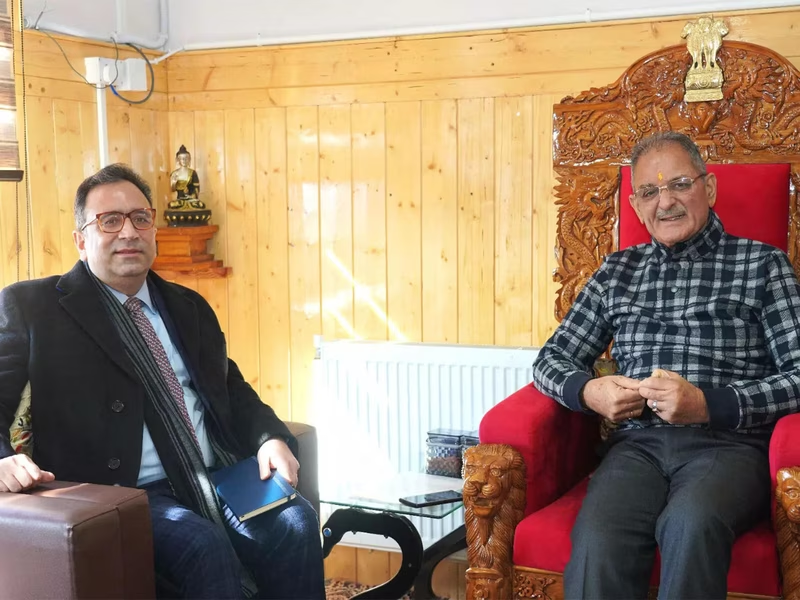
In a region where the silence of the high-altitude deserts speaks louder than political slogans, a new administrative voice has emerged. Ashish Kundra, the newly appointed Chief Secretary of the Union Territory of Ladakh, has stepped into one of India’s most sensitive and strategically vital postings with a clear, three-pronged mission: uphold peace, honor the people’s democratic aspirations, and safeguard a fragile ecosystem that is at a breaking point .
Kundra’s appointment comes at a critical juncture. Ladakh has been at the epicenter of a sustained civil society movement demanding full statehood and inclusion under the Sixth Schedule of the Indian Constitution—provisions that would grant its indigenous communities greater autonomy over land, resources, and cultural preservation . His first public remarks are not just a policy statement; they’re a delicate diplomatic gesture aimed at reassuring a restless population while walking a tightrope between development and environmental sustainability. The stakes for Ladakh Chief Secretary Ashish Kundra couldn’t be higher.
Table of Contents
- Who Is Ashish Kundra and Why His Role in Ladakh Matters
- The Peace Vow: Anchoring a Region in Turmoil
- Addressing the Ladakh Chief Secretary Ashish Kundra Priorities
- The Sixth Schedule and Statehood Demands: A People-Driven Movement
- The Ecological Tightrope: Reckless Development vs. Sustainable Growth
- A Civilisational History Worth Preserving
- Conclusion: Can Kundra Deliver on His Vow?
- Sources
Who Is Ashish Kundra and Why His Role in Ladakh Matters
A seasoned IAS officer of the 1995 batch (AGMUT cadre), Ashish Kundra brings decades of administrative experience to his new role. As the top bureaucrat in Ladakh, he is the key link between the Union Territory administration and the central government in New Delhi. His decisions will directly impact everything from infrastructure projects and tourism policy to law enforcement and inter-community relations .
His predecessor’s tenure was marked by significant protests and a trust deficit between the local population and the administration. Kundra’s immediate focus on “people’s aspirations” is a clear signal that he understands the political and emotional landscape he’s stepping into. His success will be measured not just in files cleared, but in bridges built with communities from Leh to Kargil.
The Peace Vow: Anchoring a Region in Turmoil
“Peace” is a loaded word in Ladakh. It doesn’t just mean the absence of violence; it encompasses social harmony between its Buddhist and Muslim communities, stability in the face of a volatile border with China, and a quiet confidence in the future among its youth. Kundra’s public vow to preserve this peace is a foundational promise.
It’s a direct response to the anxieties of a region that has seen its autonomy diluted since its reorganization as a Union Territory in 2019. By leading with peace, Kundra is attempting to create a stable platform from which other complex issues—like statehood—can be addressed through dialogue, not dissent.
Addressing the Ladakh Chief Secretary Ashish Kundra Priorities
Kundra has outlined a clear hierarchy of concerns that will guide his administration:
- People’s Aspirations: Actively engaging with civil society groups and local leaders to understand and address their core demands for greater autonomy.
- Civilisational Heritage: Protecting Ladakh’s unique cultural, linguistic, and religious identity as a cornerstone of its future.
- Ecological Security: Issuing a strong caution against “reckless development” that could irreparably damage the region’s fragile ecosystem, which is already under severe stress from climate change and unregulated tourism .
The Sixth Schedule and Statehood Demands: A People-Driven Movement
The demand for the Sixth Schedule is not a mere political request; it’s a survival mechanism for indigenous communities. The Sixth Schedule, currently applicable in parts of the Northeast, provides for Autonomous District Councils with legislative, judicial, and administrative autonomy over land, forests, and local customs .
For Ladakhis, this is seen as the only legal framework that can prevent their demographic and cultural identity from being overwhelmed by outside commercial interests. The Leh Apex Body and Kargil Democratic Alliance, representing both districts, have been at the forefront of this peaceful but unwavering movement. Kundra’s acknowledgment of “people’s aspirations” is widely interpreted as a tacit recognition of the legitimacy of these demands, even if immediate action from the Centre remains pending.
The Ecological Tightrope: Reckless Development vs. Sustainable Growth
Perhaps Kundra’s most urgent and technical challenge is the environment. Ladakh is a cold desert with minimal rainfall, and its water sources—glaciers and snowmelt—are receding at an alarming rate. Unchecked hotel construction, rampant tourism, and large-scale infrastructure projects without proper environmental impact assessments threaten to turn this pristine landscape into an ecological disaster zone .
Kundra’s warning against “reckless development” is a crucial intervention. It signals a potential shift from the old model of growth-at-all-costs to a new paradigm of sustainable, community-led tourism and infrastructure. This stance will likely earn him support from environmental groups but could create friction with business interests pushing for rapid expansion. For more on the region’s ecological vulnerabilities, see our feature on [INTERNAL_LINK:climate-crisis-in-ladakh].
A Civilisational History Worth Preserving
Beyond politics and ecology, Kundra has invoked Ladakh’s deep “civilisational history of peace.” This is a reference to the region’s centuries-old tradition of coexistence between its diverse communities and its role as a cultural crossroads on the ancient Silk Route. Preserving this heritage isn’t just about museums and monuments; it’s about ensuring that modern development respects the social fabric and spiritual values that have held Ladakh together for generations.
Conclusion: Can Kundra Deliver on His Vow?
Ladakh Chief Secretary Ashish Kundra has set a high bar for his tenure with a vow that is as noble as it is complex. Balancing the democratic fervor of a people demanding their rights with the ecological imperatives of a climate-vulnerable region is a Herculean task. His success will depend on his ability to be a facilitator, not just an administrator—to build trust, foster dialogue with New Delhi, and champion a model of development that is as unique and resilient as Ladakh itself. The entire nation will be watching to see if this new steward can indeed keep his peace.