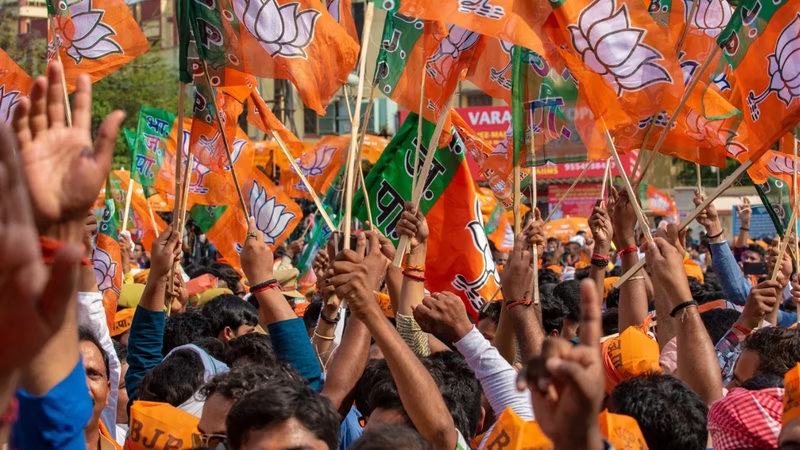
The political landscape of India’s financial capital is being redrawn. In a sweeping and controversial move, the Bharatiya Janata Party (BJP) has denied tickets to almost 40% of its own corporators who won in the 2017 Brihanmumbai Municipal Corporation (BMC) elections . This internal purge, which sees a significant number of incumbents—especially from the crucial western suburbs—left out in the cold, signals a dramatic shift in the party’s strategy for the upcoming 2025 civic polls.
With the release of its first list of 137 candidates, the party, which previously held 82 seats, is clearly betting on a mix of fresh blood, strategic defectors, and a calculated risk that loyalty alone is no longer enough to guarantee a ticket. The BJP BMC ticket denial has sent shockwaves through party ranks and has become the central talking point of Mumbai’s political season.
Table of Contents
- The Scale of the Shake-Up
- Why the BJP is Ditching Its Own
- The Western Suburbs Revolt (or Fall in Line?)
- The Impact of Ward Reservations
- The Bigger Battle Ahead
The Scale of the Shake-Up
The numbers are stark. Of the 82 corporators the BJP fielded and won with in 2017, a massive 32 have been denied renomination for the 2025 elections . This isn’t a minor reshuffle; it’s a wholesale clearance of nearly half the party’s sitting council. The move is unprecedented in its scale and has left many veteran party workers feeling betrayed and disillusioned.
This internal cleansing is part of a larger national trend within the BJP, where the leadership, under figures like Maharashtra CM Eknath Shinde (in alliance with the BJP) and party president Chandrashekhar Bawankule, is pushing for a ‘new face’ narrative over the established old guard . The message is clear: past performance is a prerequisite, not a guarantee, for future selection.
Why the BJP is Ditching Its Own: Strategy Behind the BJP BMC Ticket Denial
Several key factors appear to be driving this aggressive strategy:
- Performance & Local Connect: Many of the ousted corporators were accused of being ineffective or disconnected from their local constituencies. In a city as demanding as Mumbai, where civic issues like water supply, waste management, and infrastructure are constant pain points, visible, on-the-ground work is paramount. The party is betting that new candidates with stronger local ties can deliver better results .
- Accommodating Defectors: The BJP-Shiv Sena (Shinde faction) alliance has been on a relentless recruitment drive, poaching leaders from other parties, especially the Uddhav Thackeray-led Shiv Sena (UBT). These high-profile defectors need a place on the ticket, and the easiest way to make space is by dropping less influential incumbents .
- Anti-Incumbency Sentiment: The BJP leadership may be preemptively acting against potential anti-incumbency in certain wards. By fielding a fresh face, they hope to reset voter expectations and start with a clean slate.
The Western Suburbs Revolt (or Fall in Line?)
The axe has fallen heaviest in Mumbai’s affluent and politically crucial western suburbs, areas like Bandra, Khar, and Andheri. A large number of corporators from these regions have been denied tickets, leading to immediate murmurs of rebellion .
Some of these sidelined leaders are now openly threatening to contest as independents, which could split the BJP’s traditional vote bank and severely damage the party’s chances in these key constituencies. However, the party high command is banking on its strong organizational muscle and the threat of future political isolation to force most of these rebels to eventually “fall in line,” as was seen in previous such scenarios .
The Impact of Ward Reservations
Another significant, albeit structural, reason for the BJP BMC ticket denial is the rotation of ward reservations. For the 2025 elections, many wards that were open (general) in 2017 have now been reserved for Scheduled Castes (SC), Scheduled Tribes (ST), or Other Backward Classes (OBC) categories .
This legal requirement automatically disqualifies the previous male, general-category winners from contesting from their old wards. The party has to find new, eligible candidates for these reserved seats, which naturally leads to a high turnover. While this explains some of the changes, it doesn’t account for the large number of incumbents dropped in general wards, pointing to a more deliberate strategic purge.
The Bigger Battle Ahead
This internal reshuffle is all in service of a much larger war: the fight to retain control of the BMC, often dubbed the ‘powerhouse’ of Indian municipal governance with its annual budget running into tens of thousands of crores. The stakes couldn’t be higher. The BMC is not just a civic body; it’s a key political trophy for any party looking to establish its dominance in Maharashtra.
The BJP’s gamble is a high-risk, high-reward strategy. If the new candidates can energize the base and deliver on local promises, it could lead to a historic victory. But if the party alienates its core workers and the rebel independents gain traction, it could face an embarrassing setback in its own backyard. For more on the history of Mumbai’s civic politics, see our deep dive on [INTERNAL_LINK:history-of-bmc-and-shiv-sena].
The official BMC website provides context on the corporation’s structure and electoral wards, a vital resource for understanding the scale of this political realignment .
Summary
The BJP BMC ticket denial of nearly 40% of its 2017 winners is a bold and calculated political maneuver. Driven by a desire for fresh talent, the need to accommodate defectors, and performance-based accountability, the party is betting that this internal disruption will lead to a stronger external showing in the 2025 civic polls. While the move has sparked internal dissent, particularly in the western suburbs, the BJP’s leadership is confident that this strategic purge is necessary to win the ultimate prize: control of Mumbai’s civic destiny.
Sources
- Times of India: Why BJP denies tickets to 40% of 2017 BMC corporators
- Press Trust of India (PTI): Reports on Maharashtra BJP leadership strategy
- The Hindu: Analysis of political defections in Maharashtra
- Election Commission of India: BMC Ward Reservation List for 2025
- Brihanmumbai Municipal Corporation (BMC): Official Portal