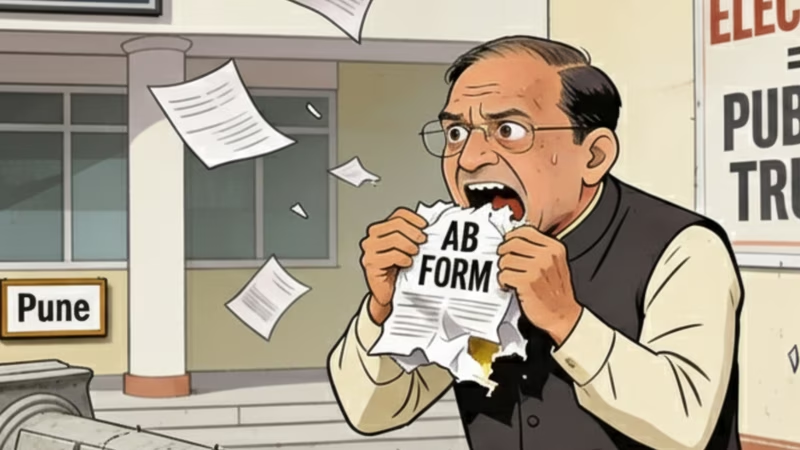
Elections are often called a high-stakes game, but a recent incident in Pune has taken that description to a whole new, stomach-churning level. In a scene that seems ripped from a dark political satire, a Shiv Sena candidate for the upcoming Pune civic polls allegedly tried to sabotage a rival’s campaign by swallowing their nomination paperwork on the spot .
The incident, which occurred at a ward office in Pune, has sent shockwaves through Maharashtra’s political landscape. It’s not just a bizarre anecdote; it’s a stark symptom of the intense infighting, desperation, and pressure that often boil beneath the surface of local elections, especially within a party as factionalized as the current Shiv Sena .
Table of Contents
- The Bizarre Incident: A Ward Office Drama
- What Are ‘A & B Forms’ and Why Are They So Crucial?
- Police Action and Legal Consequences
- The Deeper Problem: Shiv Sena Infighting and Civic Poll Pressure
- Is This the New Normal for Local Elections in India?
- The Future of Pune Civic Polls Amid Chaos
- Conclusion: A Call for Ethical Electoral Reform
- Sources
The Bizarre Incident: A Ward Office Drama
According to police reports and eyewitness accounts, the drama unfolded at a Pune municipal ward office during the nomination filing process for the upcoming Pune civic polls. A Shiv Sena aspirant, whose name has not been officially released in all reports but is identified in local media, spotted the nomination papers (commonly known as the ‘A & B forms’) of a rival candidate from his own party .
Instead of lodging a formal complaint or challenging the nomination through legal channels, he allegedly snatched the forms in a fit of rage. When onlookers intervened to stop him from tearing the documents, he reportedly fled to the nearest washroom. His next move was as astonishing as it was desperate: he consumed the papers, attempting to destroy the evidence physically .
The entire sequence of events was captured on mobile phone cameras by bystanders, and the video quickly went viral on social media, turning a local political squabble into a national spectacle of absurdity.
What Are ‘A & B Forms’ and Why Are They So Crucial?
For many outside the electoral process, the significance of these forms might be lost. However, in the context of Indian municipal elections, they are the absolute bedrock of a candidate’s eligibility. The ‘A Form’ is the official nomination paper filed with the Returning Officer, while the ‘B Form’ is the list of proposers who support the candidate’s nomination .
Without these documents properly submitted and verified, a candidate cannot officially contest the election. Destroying them is a direct, albeit crude, attempt to disqualify a rival before the race even begins. It’s a form of election interference that bypasses the democratic process entirely.
Police Action and Legal Consequences
Following a formal complaint from the victim—the rival candidate whose paperwork was ingested—the local police in Pune have taken swift action. A case has been registered against the accused aspirant under relevant sections of the Indian Penal Code (IPC) .
Potential charges could include:
- Section 403 (Dishonest Misappropriation of Property): For taking the forms which are the legal property of the other candidate.
- Section 427 (Mischief causing damage): For intentionally destroying the documents.
- Section 188 (Disobedience to order duly promulgated by public servant): If his actions obstructed the official election process.
He has been booked and is likely to face legal proceedings that could result in fines or even imprisonment, not to mention being barred from contesting the elections himself.
The Deeper Problem: Shiv Sena Infighting and Civic Poll Pressure
While the act itself is extreme, the context is all too familiar in Maharashtra politics. The Shiv Sena, since its split in 2022, has been engaged in a bitter and often violent struggle for control at all levels of governance, from the state assembly down to the local ward .
The Pune civic polls are not just about municipal governance; they are a critical battleground for the party’s two factions—Shiv Sena (UBT) and Shiv Sena (Shinde)—to prove their local dominance. The stakes are incredibly high, and the internal competition for tickets is cutthroat. This pressure cooker environment can foster a sense of desperation where candidates feel they must resort to any means necessary to eliminate competition, even from within their own ranks.
Is This the New Normal for Local Elections in India?
Unfortunately, this incident, while exceptionally strange, is not an isolated case of electoral malpractice. From physical assaults on candidates to the submission of fake documents, local elections across India have often been marred by such tactics .
The Election Commission of India has made significant strides in securing national and state-level elections, but the sheer volume and localized nature of civic polls make them harder to monitor effectively. This creates a vacuum where unethical and sometimes illegal practices can flourish, especially in politically sensitive urban centers like Pune.
The Future of Pune Civic Polls Amid Chaos
This bizarre event casts a long shadow over the credibility of the entire electoral process in Pune. The party involved (Shiv Sena) now faces serious questions about its internal discipline and commitment to fair play. The Election Commission may need to step in with heightened vigilance for the remainder of the nomination period to prevent similar incidents.
For the voters of Pune, it’s a stark reminder of the kind of characters who sometimes seek to represent them. It undermines public faith in the democratic system at the very level where it should be most accessible and accountable.
Conclusion: A Call for Ethical Electoral Reform
The image of a candidate swallowing nomination papers is absurd, but the issues it represents are deadly serious. The Pune civic polls incident is a glaring symptom of toxic internal party politics, a lack of ethical boundaries, and the immense pressure of local electoral battles. It’s a call to action for political parties to enforce internal discipline and for electoral authorities to strengthen safeguards at the grassroots level. Democracy, after all, should be decided at the ballot box, not in a bathroom.