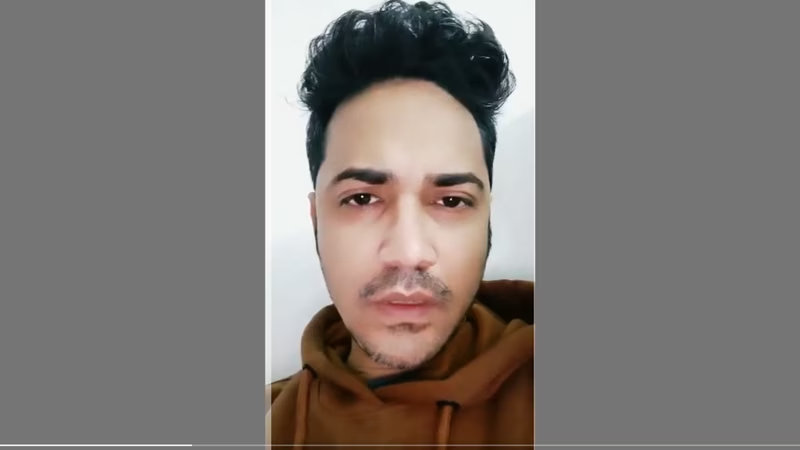
From the shadows of an international manhunt, a voice has emerged—not from the streets of Delhi, as alleged, but from the high-rises of Dubai. Faisal Karim Masud, the man Bangladesh authorities have named as the primary suspect in the high-profile assassination of Islamist radical Sharif Osman Hadi, has broken his silence. In a video message recorded from the UAE, Masud flatly denies any role in the killing and directly challenges Dhaka’s claim that India is harboring him. “I’m in Dubai,” he states firmly, “not India—and I had nothing to do with Hadi’s death.” This unexpected declaration doesn’t just complicate the investigation—it throws a geopolitical spanner into the already tense relations between Bangladesh and India.
Table of Contents
- Who Was Sharif Osman Hadi?
- Hadi Killing Suspect Faisal Karim Masud Speaks Out
- Bangladesh’s Accusation Against India
- What the Dubai Video Reveals
- Why Was Masud in Bangladesh—and Why Did He Leave?
- Geopolitical Implications of the Claim
- Can Bangladesh Extradite Him from Dubai?
- Conclusion
- Sources
Who Was Sharif Osman Hadi?
Sharif Osman Hadi was a controversial figure in Bangladesh’s Islamist landscape. A firebrand preacher known for his anti-India and anti-minority rhetoric, he led the Khelafat Majlish, a hardline faction that has long operated on the fringes of legality. In recent years, Hadi had drawn the attention of security agencies for allegedly inciting violence and spreading extremist ideology under the guise of religious discourse .
His assassination—reportedly carried out by motorcycle-borne assailants in broad daylight—sent shockwaves through Dhaka. Given his profile, speculation immediately turned to rival Islamist groups, state actors, or even foreign intelligence. But within days, Bangladesh’s Rapid Action Battalion (RAB) named Faisal Karim Masud as the chief suspect.
Hadi Killing Suspect Faisal Karim Masud Speaks Out
In his video statement, Masud presents himself not as a fugitive killer, but as a victim of political targeting. He claims he was in Bangladesh for legitimate business and personal reasons but was falsely implicated in Hadi’s murder due to “personal vendettas and political pressure.”
“I left Bangladesh because my life was in danger,” Masud says, his tone calm but resolute. “I was being framed. I’ve never met Hadi, never spoken to him, and certainly didn’t kill him.” He adds that he flew directly to Dubai after sensing a setup and has remained there ever since—countering Dhaka’s narrative that he fled to India for safe haven.
Bangladesh’s Accusation Against India
Prior to Masud’s video, Bangladesh’s Home Ministry and law enforcement agencies had strongly suggested—though never officially stated—that Masud had crossed into India and was being protected there. This allegation, if true, would represent a major breach of trust between the two neighboring countries, which have worked closely on counter-terrorism in recent years.
Indian officials have consistently denied sheltering any suspects from Bangladesh. The Ministry of External Affairs has called such claims “baseless” and reiterated India’s commitment to regional security cooperation. Masud’s Dubai declaration now lends credence to India’s position and puts Dhaka on the defensive.
What the Dubai Video Reveals
The video, while not independently verified, appears authentic based on voice pattern, background details, and Masud’s known appearance. He provides specific dates of his departure from Bangladesh and arrival in the UAE, challenging authorities to check immigration records.
Crucially, Masud also alleges that evidence against him—such as mobile phone data and witness statements—was fabricated. “They needed a quick arrest,” he claims. “And I was convenient.”
If his claims hold water, it raises serious concerns about due process and political interference in Bangladesh’s criminal justice system—issues long flagged by human rights organizations like Human Rights Watch .
Why Was Masud in Bangladesh—and Why Did He Leave?
Masud, reportedly a businessman with ties to both Bangladesh and the Gulf, says he was visiting family and handling property matters in Dhaka. He insists he has no links to militant groups or political factions. However, sources indicate he may have had past disagreements with individuals close to Hadi’s circle—possibly over business or local influence—making him a target for false implication.
His decision to flee, he argues, wasn’t guilt—but self-preservation. “In today’s Bangladesh,” he says, “if powerful people want you gone, they’ll find a way. Even murder charges can be a tool.”
Geopolitical Implications of the Claim
This case sits at a dangerous intersection of crime, politics, and diplomacy. Bangladesh’s initial implication of India could have been an attempt to pressure New Delhi or deflect from internal investigative failures. Now, with Masud in Dubai, the narrative shifts.
India, long accused by Western nations of being soft on certain Islamist elements in the past, has worked hard under the Modi government to position itself as a reliable counter-terrorism partner. Unfounded accusations from Dhaka risk undermining that credibility. For deeper insight, see our analysis on [INTERNAL_LINK:india-bangladesh-security-cooperation].
Can Bangladesh Extradite Him from Dubai?
Dubai is not a signatory to an extradition treaty with Bangladesh. While the UAE does cooperate on serious criminal matters—especially terrorism—the burden of proof is high. Bangladesh would need to present a watertight case, including forensic evidence and credible witness testimony.
If Masud’s claims of fabricated evidence are true, extradition becomes unlikely. Moreover, the UAE generally avoids becoming embroiled in politically charged cases from South Asia unless there’s clear international consensus.
Conclusion
The Hadi killing suspect’s declaration from Dubai has turned a domestic murder case into an international puzzle. Faisal Karim Masud’s denial not only challenges Bangladesh’s investigative narrative but also exposes the fragility of cross-border trust in South Asia. Whether he’s telling the truth or buying time, one thing is clear: the truth behind Sharif Osman Hadi’s assassination is far from settled. And until real evidence—not allegations—comes to light, justice will remain as elusive as the suspect himself.