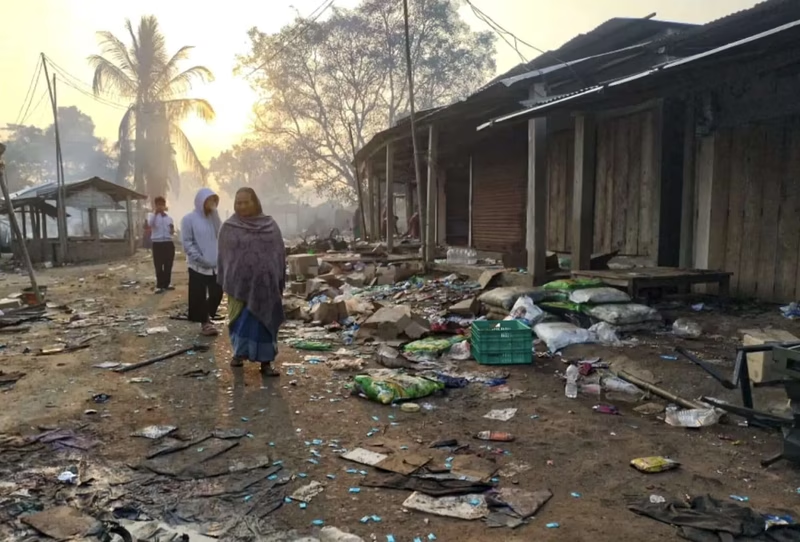
Tensions are simmering in the hills of Assam. The recent Karbi Anglong violence has not only left communities shaken but has ignited a fierce political storm. In a united front, opposition parties have taken their demands straight to the Governor’s office, calling for urgent humanitarian relief, legal accountability, and—most critically—a transparent judicial investigation into what they allege was a deliberate destruction of evidence. This isn’t just about restoring order; it’s about protecting the very fabric of tribal identity and justice in one of India’s most sensitive autonomous regions.
Table of Contents
- What Happened in West Karbi Anglong?
- Karbi Anglong Violence: Opposition’s Formal Response
- Key Demands in the Memorandum
- The Alleged Destruction of Evidence
- Tribal Land Rights at the Heart of the Crisis
- Why a Judicial Probe Is Crucial
- Broader Implications for Autonomous Councils in India
- Conclusion
- Sources
What Happened in West Karbi Anglong?
While official details remain scarce, reports indicate that the violence erupted from a long-simmering local conflict—possibly linked to land disputes, political rivalries, or ethnic tensions within the Karbi community. The Karbi Anglong Autonomous Council (KAAC), which governs this Sixth Schedule area, has been a flashpoint for administrative and identity-based struggles for decades .
What makes this incident particularly alarming is not just the physical damage or injuries, but the alleged attempts to obstruct justice afterward. Eyewitnesses and local activists claim that in the aftermath, key evidence was removed or destroyed from the residence of a senior council official—the Chief Executive Member (CEM)—raising serious questions about a potential cover-up.
Karbi Anglong Violence: Opposition’s Formal Response
Refusing to let the matter fade, a coalition of opposition parties—including the Congress, AIUDF, and regional voices—marched to the Raj Bhavan in Guwahati to submit a detailed memorandum to Governor Gulab Chand Kataria. Their message was clear: the state government’s response has been inadequate, and only an independent, high-level inquiry can deliver truth and justice .
“This is not a law-and-order issue alone,” said a senior opposition leader. “It’s about the dignity, safety, and constitutional rights of tribal communities who have been promised self-governance under the Sixth Schedule of the Indian Constitution.”
Key Demands in the Memorandum
The opposition’s memorandum outlines several urgent and non-negotiable requests:
- Immediate rehabilitation and compensation for all families affected by the violence, including housing, medical aid, and livelihood support.
- Strict enforcement of tribal land rights under the Sixth Schedule, ensuring no encroachment or illegal transfer of ancestral land.
- A fast-track judicial probe headed by a retired High Court judge to investigate the causes of the violence and the conduct of local authorities.
- A forensic audit of the CEM’s residence to determine what evidence may have been lost or tampered with.
- Deployment of central forces to maintain peace until trust in local administration is restored.
The Alleged Destruction of Evidence
Perhaps the most explosive claim in the memorandum is the allegation that evidence was destroyed at the official residence of the Chief Executive Member of the KAAC. Opposition leaders assert that crucial documents, digital records, and physical items related to the violence were removed or altered before any formal investigation could begin.
If proven true, this would represent a severe breach of public trust and a direct obstruction of justice. In regions like Karbi Anglong, where governance is already fragile and accountability mechanisms weak, such actions could embolden impunity and deepen communal divides.
Tribal Land Rights at the Heart of the Crisis
At its core, the Karbi Anglong violence is symptomatic of a larger, unresolved issue: the protection of tribal land rights in India’s autonomous districts. The Sixth Schedule was designed to shield tribal communities from external exploitation and preserve their cultural autonomy. Yet, in practice, land alienation, political interference, and weak institutions have eroded these safeguards .
Opposition parties argue that unless these foundational rights are upheld, violence will remain a recurring feature of life in Karbi Anglong. “You cannot have peace without justice, and you cannot have justice without land security,” stated a Karbi student leader during a solidarity rally.
Why a Judicial Probe Is Crucial
A standard police inquiry may lack the independence and public credibility needed in this context. A judicial probe, by contrast, carries the weight of the judiciary and can compel testimony, subpoena documents, and operate free from executive influence. Given the allegations of official misconduct, only such a probe can restore public confidence.
Similar judicial commissions have been effective in other conflict zones, such as the Srikrishna Commission on the 1992 Bombay riots. For Assam, this could be a turning point—if the state government agrees to it. So far, the BJP-led administration has remained silent on the demand.
Broader Implications for Autonomous Councils in India
The crisis in Karbi Anglong is a warning bell for all Sixth Schedule areas—from Bodoland to Ladakh. It highlights the urgent need to strengthen democratic institutions, ensure financial and administrative autonomy, and build conflict-resolution mechanisms that respect tribal customs and legal frameworks.
Ignoring this could fuel separatist sentiments or encourage vigilante justice. On the other hand, a transparent, empathetic response could become a model for inclusive governance in India’s tribal heartlands. To understand the legal framework better, see our explainer on [INTERNAL_LINK:sixth-schedule-autonomous-councils-india].
Conclusion
The Karbi Anglong violence is more than a local disturbance—it’s a test of India’s commitment to its tribal citizens and constitutional promises. The opposition’s demands for victim rehabilitation, land rights protection, and a judicial probe are not political posturing; they are essential steps toward healing and justice. How the Assam government and the Centre respond will determine whether this tragedy becomes a catalyst for reform—or just another forgotten chapter in a long history of neglect.