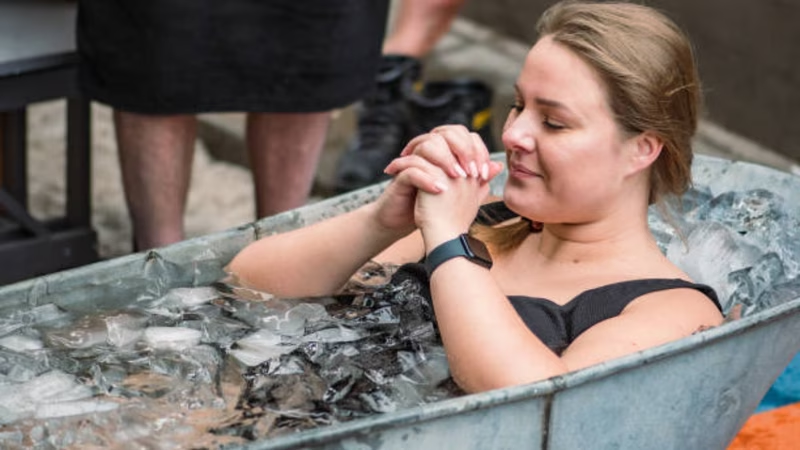
Should You Really Be Taking Cold Water Baths in the Dead of Winter?
Scroll through social media, and you’ll likely spot someone proudly posting a video of themselves diving into an icy tub or standing under a freezing shower—often with the hashtag #ColdPlunge or #WinterWarrior. Cold water baths have become a badge of toughness, a wellness dare, and for some, a daily ritual. But as temperatures drop, health experts are urging caution. Is this trend a legit health hack—or a fast track to hypothermia?
While proponents tout benefits like mental clarity, reduced inflammation, and even fat burning, medical professionals say the reality is far more nuanced. True wellness, they argue, isn’t about proving your grit—it’s about listening to your body, especially in winter.
Table of Contents
- What Exactly Are Cold Water Baths?
- Claimed Benefits of Cold Water Immersion: What’s Real?
- Cold Water Baths in Winter: The Hidden Dangers
- Who Should Absolutely Avoid Cold Water Baths?
- How to Try Cold Therapy Safely (If You Insist)
- Conclusion: Wellness Isn’t a Dare
- Sources
What Exactly Are Cold Water Baths?
Cold water baths, also known as cold water immersion or ice baths, typically involve submerging the body in water between 10°C to 15°C (50°F to 59°F) for a few minutes. Originally used by athletes for muscle recovery, the practice has now entered mainstream wellness culture—often exaggerated into extreme challenges like jumping into frozen lakes or taking unheated showers in sub-zero weather.
During winter, when ambient temperatures can dip well below freezing in many parts of India and globally, this practice becomes significantly riskier. Yet, its allure as a symbol of discipline and resilience keeps it trending.
Claimed Benefits of Cold Water Immersion: What’s Real?
Advocates of cold water immersion often cite several perks. Let’s separate myth from evidence-backed fact:
- Improved mood and alertness: Some studies, including research published in Medical Hypotheses, suggest cold exposure may trigger the release of endorphins and noradrenaline, leading to a temporary mood lift .
- Reduced muscle soreness: Athletes commonly use ice baths post-exercise to ease inflammation. A 2016 meta-analysis in the British Journal of Sports Medicine found modest support for this .
- “Boosted immunity”: This is largely overstated. While a Dutch study showed slightly fewer sick days among participants who practiced cold showers, it didn’t prove enhanced immune function—just possible behavioral changes like better circulation .
- Fat burning: The idea that cold “burns brown fat” is theoretical and not a practical weight-loss strategy. Any calorie burn is minimal and short-lived.
In short: some benefits are plausible, but many claims are blown out of proportion for social media clout.
Cold Water Baths in Winter: The Hidden Dangers
Winter adds serious risks to an already intense practice:
- Cold shock response: Sudden immersion can cause gasping, hyperventilation, and even cardiac arrest—especially in those with undiagnosed heart conditions .
- Hypothermia: Prolonged exposure, even in “mildly cold” water, can dangerously lower core body temperature.
- Increased blood pressure: Cold causes vasoconstriction, which spikes blood pressure—a major concern for those with hypertension .
“The body works harder to maintain its core temperature in winter,” explains Dr. Reena Gupta, a cardiologist at Fortis Hospital. “Adding an external cold stressor like an ice bath can overwhelm the system, particularly in older adults or those with chronic illnesses.”
Who Should Absolutely Avoid Cold Water Baths?
Medical experts strongly advise against cold water immersion for individuals with:
- Cardiovascular conditions (e.g., hypertension, arrhythmia, history of heart attack)
- Raynaud’s disease or poor circulation
- Respiratory issues like asthma or COPD
- Pregnancy
- Elderly individuals or young children, whose thermoregulation is less efficient
Even healthy people should never attempt cold water baths alone or immediately after alcohol consumption. And skipping warm showers for weeks on end in winter? That’s not discipline—it’s a health gamble.
How to Try Cold Therapy Safely (If You Insist)
If you’re determined to explore cold exposure, do it responsibly:
- Start gradually: Begin with a 30-second cold rinse at the end of a warm shower. Increase duration slowly over weeks.
- Never go below 10°C in winter: Use a thermometer. Ice baths should be avoided entirely during cold months.
- Limit time: Never stay immersed for more than 5–10 minutes.
- Warm up immediately after: Dry off, put on layers, and sip a warm (non-alcoholic) drink.
- Listen to your body: If you feel dizzy, short of breath, or excessively shivery—stop immediately.
Remember, consistency beats extremity. A [INTERNAL_LINK:cold-shower-benefits-guide] gentle daily cold rinse is safer and more sustainable than a weekly ice plunge.
Conclusion: Wellness Isn’t a Dare
Cold water baths might make for a great Instagram story, but real health isn’t measured by how long you can endure discomfort. In winter, your body is already under environmental stress. Adding extreme cold without medical clearance or proper preparation can do more harm than good. True resilience lies not in ignoring your limits—but in respecting them. So before you take that icy leap, ask yourself: am I doing this for my health—or just for likes?
Sources
- The Times of India. “Are cold water baths in winter, a badge of good health, a wellness dare or just a bad idea?” December 30, 2025. Link
- Shevchuk, N. A. (2008). “Adapted cold shower as a potential treatment for depression.” Medical Hypotheses. Link
- Bleakley, C. M., et al. (2016). “Cold-water immersion for post-exercise recovery.” British Journal of Sports Medicine. Link
- Buijze, G. A., et al. (2016). “The effect of cold showering on health and work.” PLOS ONE. Link
- World Health Organization (WHO). “Cold exposure and public health.” Link
- American Heart Association. “Cold Weather and Cardiovascular Risk.” Link