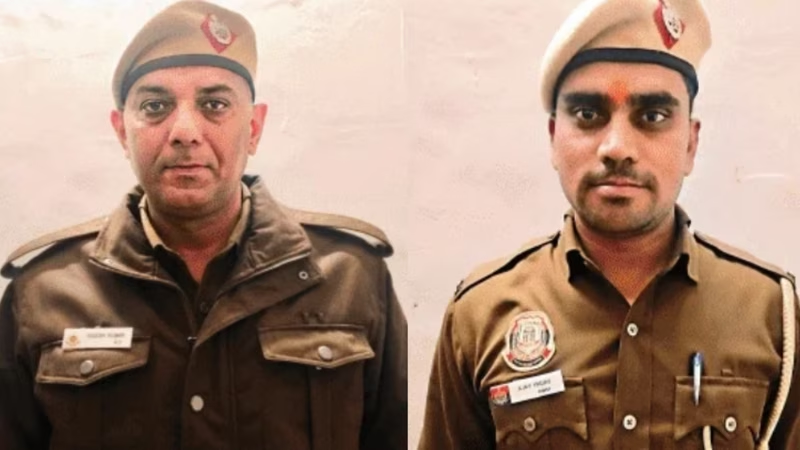
It started with a scream—a raw, desperate sound that ripped through the quiet of a Patel Nagar evening. For most, it might have been just another city noise. But for beat constables Rajesh Kumar and Sanjay Yadav, it was a call to action. What followed was a heart-stopping sequence of events that ended not in tragedy, but in hope: a Delhi police suicide rescue that unfolded in the nick of time .
The young man—just 26 years old—had locked himself in a room and attempted to take his own life. His mother’s scream alerted neighbors, who flagged down the patrolling officers. Without hesitation, the two cops raced upstairs, kicked open the jammed door, and found him hanging. They cut him down instantly and coordinated his emergency transport to a hospital, where he’s now recovering .
This isn’t just a story of police bravery—it’s a stark mirror to India’s deepening youth mental health crisis. And it’s a powerful reminder that intervention, even in its simplest form, can be the difference between life and death.
Table of Contents
- The Patel Nagar Rescue: What Happened?
- Delhi Police Suicide Rescue: Heroes and Protocols
- The Hidden Crisis: Youth Mental Health in India
- How to Spot and Respond to Suicide Warning Signs
- What to Do If You or Someone You Know Is in Crisis
- Conclusion: Every Second Counts
- Sources
The Patel Nagar Rescue: What Happened?
On the evening of December 30, 2025, a woman in her 50s began screaming outside her Patel Nagar building. Her son, distraught and unreachable, had barricaded himself inside his room. Neighbors, alarmed, called local beat officers Rajesh Kumar and Sanjay Yadav, who were patrolling nearby .
Recognizing the urgency, the officers sprinted to the third floor. Finding the door locked from the inside, they forced it open—a move that likely saved precious seconds. Inside, they discovered the 26-year-old hanging from a ceiling fan with a rope around his neck .
Acting on instinct and training, they cut him down immediately. Conscious but in critical condition, he was rushed to Deen Dayal Upadhyay Hospital. Doctors confirmed that another minute could have been fatal. The quick response has since earned the officers praise—and an official reward from Delhi Police .
Delhi Police Suicide Rescue: Heroes and Protocols
While Kumar and Yadav’s actions were heroic, they weren’t random. Delhi Police has increasingly integrated mental health awareness into its beat-level training. Officers are now taught to recognize signs of distress, de-escalate crises, and coordinate with emergency medical services .
Still, this incident highlights a gap: frontline responders often act as de facto mental health first responders due to the lack of dedicated crisis intervention teams in most Indian cities. Their success here underscores the need for more structured, city-wide suicide prevention systems—like those recommended by the World Health Organization (WHO) .
The Hidden Crisis: Youth Mental Health in India
The rescued man’s age—26—is no coincidence. According to the World Health Organization, suicide is the leading cause of death among Indians aged 15–39 . The National Crime Records Bureau (NCRB) reports over 170,000 suicides in 2023—nearly 500 every day—with young adults disproportionately affected .
Factors driving this crisis include:
- Academic and career pressure
- Social isolation and digital overload
- Stigma around seeking mental health help
- Lack of accessible, affordable counseling services
This Patel Nagar case is a microcosm of a national emergency—one that demands more than just hospital beds. It needs empathy, awareness, and systemic support.
How to Spot and Respond to Suicide Warning Signs
Most people who attempt suicide show warning signs. Knowing them can save a life:
- Verbal cues: “I can’t go on,” “Everyone would be better off without me.”
- Behavioral shifts: Withdrawing, giving away possessions, sudden calm after depression.
- Situational triggers: Job loss, breakup, financial stress, academic failure.
If you notice these signs:
- Ask directly: “Are you thinking about hurting yourself?”
- Listen without judgment.
- Stay with them and remove access to means (rope, pills, weapons).
- Call for help: 9820466616 (Vandrevala Foundation) or 9152987821 (iCall).
What to Do If You or Someone You Know Is in Crisis
You don’t need to be a police officer to make a difference. Immediate steps include:
- Contact a mental health helpline (see above).
- Reach out to a trusted friend, teacher, or family doctor.
- Avoid leaving the person alone.
- In emergencies, call 112 or your local police—they are trained to assist.
For deeper guidance, explore our resource on [INTERNAL_LINK:mental-health-support-india].
Conclusion: Every Second Counts
The Delhi police suicide rescue in Patel Nagar is more than a news story—it’s a call to action. It shows that ordinary people, armed with awareness and compassion, can intervene in moments of despair. The two officers didn’t just follow protocol; they saw a human being in pain and chose to act.
As India grapples with a silent epidemic, we must all become first responders in our own circles. Because sometimes, the only thing standing between life and death is someone who hears a scream—and runs toward it.
Sources
- Times of India: “Trailing a scream, cops foil suicide, save youth; to be rewarded”
- Delhi Police Official Statement, December 30, 2025
- Hindustan Times: “Delhi Cops Save 26-Year-Old From Suicide in Patel Nagar”
- Delhi Police Community Safety Guidelines 2025
- World Health Organization (WHO) – Mental Health and Suicide Prevention Reports
- NCRB Accidental Deaths & Suicides in India (ADSI) 2023