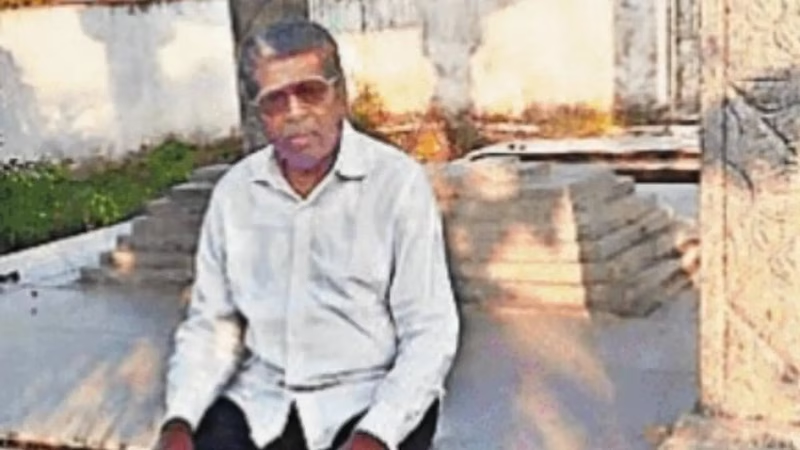
What If You Built Your Own Final Resting Place?
In the small village of Jagtial, Telangana, an 80-year-old man has done something most of us can barely imagine: he’s dug his own grave. Not as a metaphor—but a real, physical, granite-lined tomb built with his own hands, right beside his late wife’s resting place. His name is Nakka Indrayya, and his act isn’t born of despair, but of deep love and responsibility .
After spending 45 years working in construction in Dubai, Indrayya returned to his homeland with one final project in mind. He spent ₹12 lakh—his life savings—to build a dignified burial site so his children wouldn’t have to bear the cost or emotional chaos of arranging his funeral at the last minute. Every morning, he walks to the grave, cleans it, waters the plants around it, and sits in quiet reflection. To him, it’s not a morbid ritual. It’s peace. It’s preparation. And it’s his final gift to his family.
Table of Contents
- The Story of Nakka Indrayya
- Why He Dug His Own Grave
- Cultural and Emotional Context in India
- The Financial Burden of Death in Rural India
- A Psychological Perspective on Preparing for Death
- Conclusion: A Quiet Act of Love
- Sources
The Story of Nakka Indrayya
Nakka Indrayya’s life reads like a testament to hard work and sacrifice. Born in a modest Telangana village, he left for Dubai in his thirties—a common path for many from his region seeking better wages. For over four decades, he worked on construction sites, sending money home to support his wife and children. When his wife passed away, he returned permanently to be near her memory .
Instead of spending his retirement in leisure, he channeled his energy into building a shared eternal home. Using his construction expertise, he designed a granite grave that matches his wife’s, creating a serene space under the shade of neem trees. “This is my final home,” he told local reporters, his voice calm and resolute .
Why He Dug His Own Grave
For Indrayya, the decision was practical and deeply personal. In rural India, funeral arrangements can be a significant financial strain on families. From purchasing the burial plot to organizing rituals, costs can spiral—especially if the deceased hasn’t planned ahead. By digging his own grave and pre-funding his funeral, Indrayya removed that burden entirely.
But it’s more than money. It’s about dignity. It’s about control. And it’s about companionship—even in death. “I want to rest beside her,” he said simply, referring to his wife . His daily visits aren’t morbid; they’re meditative. They’re his way of saying goodbye slowly, with grace.
Cultural and Emotional Context in India
In many Indian communities, death isn’t seen as an end—but as a transition. Preparing for it is considered a spiritual duty, especially for elders. While building one’s own grave is rare, the underlying sentiment isn’t. Families often hold rituals like shraddha or begin discussing final rites well in advance.
However, modern pressures—migration, nuclear families, and economic uncertainty—have disrupted these traditions. Indrayya’s story resonates because it bridges the old and the new: he uses his modern earnings (from Dubai) to fulfill an ancient ideal of peaceful, prepared departure. This act has struck a chord across India, with many calling it “the ultimate parental sacrifice” .
The Financial Burden of Death in Rural India
A funeral in rural India can cost anywhere from ₹20,000 to over ₹2 lakh, depending on customs, community expectations, and location. For families living on daily wages, this can mean taking loans or selling assets .
Indrayya’s ₹12 lakh investment may seem high, but it includes not just the grave, but likely all associated rituals and maintenance. His foresight ensures his children won’t face a financial crisis during their time of grief. This is a growing concern across South Asia, where end-of-life planning remains taboo despite its necessity .
A Psychological Perspective on Preparing for Death
From a mental health standpoint, Indrayya’s actions align with what psychologists call “death positivity”—a movement that encourages open, healthy conversations about mortality. According to experts at the University of Oxford, individuals who confront their mortality often report greater life satisfaction and reduced anxiety .
His daily tending of the grave isn’t denial—it’s acceptance. It’s a form of closure that most of us delay until it’s too late. As one gerontologist notes, “Planning for death can be one of the most empowering acts of aging” . For Indrayya, peace comes not from ignoring death, but from meeting it with open eyes and a clean heart.
For more on how other cultures approach end-of-life planning, see our feature on [INTERNAL_LINK:end-of-life-traditions-around-the-world].
Conclusion: A Quiet Act of Love
Nakka Indrayya didn’t build a grave to shock or mourn. He built it to protect, to honor, and to bring peace—to himself and to his family. In a world obsessed with youth and denial of death, his story is a quiet rebellion. It reminds us that responsibility doesn’t end with life; sometimes, it culminates in the most selfless final act. His grave isn’t a symbol of death. It’s a monument to love that outlives even the grave itself.
Sources
[1] Times of India. (2025, December). 80-yr-old digs his own grave in Jagtial, tends it daily.
[3] Web Search Result. (2025). Public reaction to Telangana man’s grave.
[5] Reserve Bank of India. (2024). Household expenditure and financial stress in rural India.
[6] World Health Organization. (2023). Palliative care and end-of-life planning in South-East Asia.
[7] University of Oxford, Department of Psychiatry. (2022). The psychology of death acceptance and well-being.