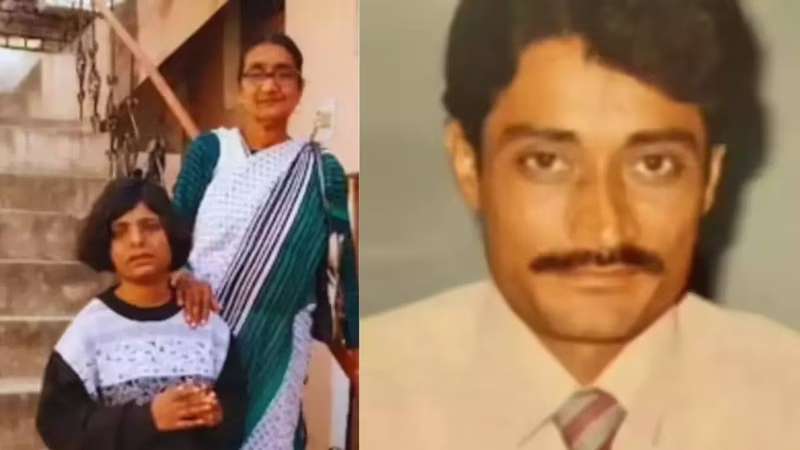
A House of Horrors: When Greed Turned a Home Into a Prison
In the quiet town of Mahoba, Uttar Pradesh, a chilling crime has shaken the conscience of the nation. What appeared to be an ordinary household harbored a five-year nightmare—a retired 70-year-old railway clerk and his mentally challenged daughter were allegedly held captive, starved, and abused in their own home by the very people entrusted to care for them.
The motive? Pure, unrelenting greed for property.
This isn’t just a crime story—it’s a stark warning about vulnerability, betrayal, and the dark side of familial and domestic trust in India. As details of the UP home prison case continue to emerge, they paint a picture of systemic neglect, cruelty, and a justice system that intervened far too late.
Table of Contents
- The Discovery of the Crime
- Who Were the Victims?
- The Accused and Their Motive
- Gory Details from the Investigation
- How Was This Allowed to Happen?
- Legal Action and Public Outrage
- Broader Implications for Elderly and Disabled Care in India
- Conclusion: A Call for Vigilance and Reform
- Sources
The Discovery of the Crime
The horror came to light only after the elderly man, identified as a retired railway clerk, died under suspicious circumstances in December 2025. Relatives, who hadn’t seen the pair in years, grew concerned and visited the home. What they found defied belief.
The daughter—now in her 40s—was found in a skeletal, emaciated state, barely able to walk or speak. The home, once modest but functional, had become a dungeon. Neighbors reported the couple had “disappeared” from public life around 2020, but no one filed a missing person report. Authorities had no record of welfare checks.
Who Were the Victims?
The victims were among society’s most vulnerable: an aging man with diminishing physical strength and a daughter with intellectual disabilities who relied entirely on him for care. With no immediate family nearby and limited social interaction, they became easy targets for exploitation.
According to relatives, the man owned a small ancestral property in Mahoba—a modest home and a piece of agricultural land. In rural UP, even such modest holdings can become the focal point of deadly greed, especially when the owners are perceived as weak or isolated.
The Accused and Their Motive
Police have arrested a couple—identified as the family’s long-time domestic help and her husband—who allegedly moved into the home under the guise of providing care. Over time, they allegedly cut off all outside contact, confiscated phones, and prevented visitors.
“Their sole motive was to take over the property,” a senior police officer told reporters. “They planned to declare the victims dead or mentally unfit, then forge documents to transfer ownership.”
This pattern—exploiting elderly or disabled individuals for property—is not new in India, but the duration and severity of this case have stunned investigators.
Gory Details from the Investigation
Forensic and medical reports reveal harrowing conditions:
- The elderly man weighed less than 35 kg at the time of death—consistent with prolonged starvation.
- His daughter was found locked in a dark, windowless room with no bedding or sanitation.
- Both showed signs of chronic malnutrition, untreated infections, and physical restraints.
- Autopsy confirmed the man died of multi-organ failure due to extreme malnourishment.
Witnesses say the accused would occasionally be seen buying minimal groceries—never enough to sustain two adults. Yet they lived comfortably, using the victims’ pension money and selling parts of their land quietly.
How Was This Allowed to Happen?
This case raises painful questions about systemic failures:
- No community oversight: Neighbors assumed the family was “just reclusive.”
- Lack of welfare checks: Despite being pensioners, no government agency verified their well-being.
- Weak elder protection laws: India’s Maintenance and Welfare of Parents Act lacks robust enforcement mechanisms.
- Property documentation loopholes: Land records in rural UP are often paper-based and easily manipulated.
[INTERNAL_LINK:elder-abuse-prevention-india] highlights urgent reforms needed in this space.
Legal Action and Public Outrage
Following public outcry, the Uttar Pradesh Police have filed charges under multiple sections of the Indian Penal Code, including:
- Section 302 (Murder)
- Section 330 (Voluntarily causing hurt to extort confession/property)
- Section 376 (Cruelty by caregiver)
- Section 420 (Cheating and dishonestly inducing property transfer)
The National Human Rights Commission (NHRC) has also issued a notice to the UP government, demanding a detailed report on preventive measures.
Broader Implications for Elderly and Disabled Care in India
With over 138 million Indians aged 60+—a number projected to double by 2050—cases like this are a terrifying wake-up call. The intersection of aging, disability, property ownership, and social isolation creates a perfect storm for exploitation.
Experts urge:
- Mandatory periodic welfare checks for elderly living alone
- Digitization of land records with biometric verification
- Community-based elder watch programs
- Stronger penalties for caregivers who abuse trust
Conclusion: A Call for Vigilance and Reform
The UP home prison case is more than a crime—it’s a societal indictment. It reveals how easily the most vulnerable can vanish in plain sight when systems fail and communities look away. As India ages, protecting its elderly and disabled isn’t just a moral duty—it’s a national imperative. Justice for this father and daughter must be more than punishment; it must spark real change.
Sources
- Times of India: Couple’s greed for property turned UP home into 5-year prison
- National Human Rights Commission of India
- Uttar Pradesh Police Crime Branch: Press Briefing, December 29, 2025
- UNFPA India: “Ageing in India – 2023 Report”