Driving Blind in the Fog: The Deadly Risks UP Roadways Drivers Face Every Morning
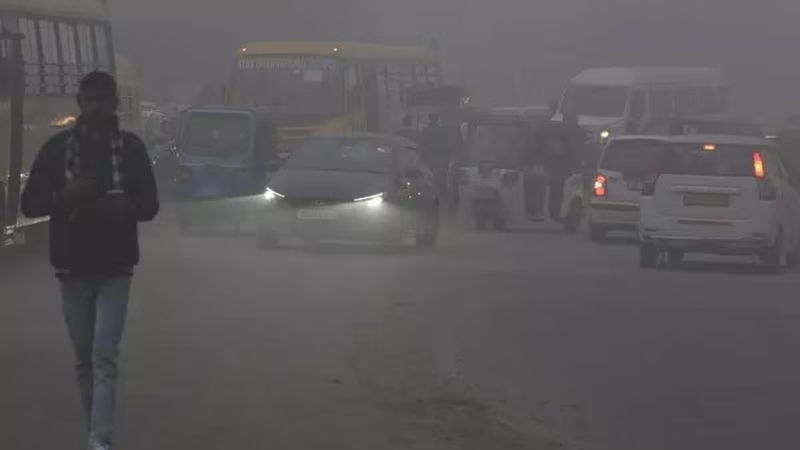
It’s 4:30 a.m. in Noida. The air is thick with winter fog so dense you can barely see your hand in front of your face. Yet, on the Yamuna Expressway, a UPSRTC bus rolls forward—its headlights struggling to pierce the gloom. Behind the wheel, a tired but determined driver grips the steering wheel, eyes scanning the pitch-black road for any sign of vehicles, animals, or debris. This isn’t a movie scene—it’s the daily reality for hundreds of UP Roadways fog risk frontline workers, who transport thousands of commuters to destinations like Agra, Mathura, and beyond .
Despite near-zero visibility and the constant threat of catastrophic accidents, these drivers keep going. Why? Because their contractual pay depends on completing trips—regardless of weather. While the Uttar Pradesh State Road Transport Corporation (UPSRTC) has introduced fog lights and reduced speed limits, one critical flaw remains: **inadequate expressway lighting**. And for drivers and passengers alike, that gap could be deadly.
Table of Contents
- The 4:30 a.m. Routine: Life on the Fog-Bound Expressway
- Why UP Roadways Fog Risk Is So Severe
- What UPSRTC Is Doing—and Why It Isn’t Enough
- Drivers’ Plea: Fair Pay and Better Infrastructure
- Passenger Perspective: Unsuspecting and Unprotected
- Comparing With Other States: Safer Alternatives Exist
- Summary and Call for Action
- Sources
The 4:30 a.m. Routine: Life on the Fog-Bound Expressway
For commuters heading to Agra for work, pilgrimage, or tourism, the early UPSRTC buses are a lifeline. But for drivers like Rajesh Kumar (name changed), it’s a nerve-wracking gamble.
“We can’t see 20 meters ahead,” Kumar told reporters. “Sometimes, we only spot a stalled vehicle when it’s almost too late. We rely on instinct—and luck” .
The Yamuna Expressway—though modern in design—lacks consistent street lighting in long stretches. During peak winter months (December–January), fog reduces visibility to under 50 meters, turning the expressway into a corridor of uncertainty.
Why UP Roadways Fog Risk Is So Severe
Several systemic issues amplify the danger:
- Poor Expressway Lighting: Large sections of the Yamuna and Agra-Lucknow Expressways remain unlit or dimly lit, especially between night and early morning .
- Contractual Employment: Many drivers work on performance-based contracts—they earn only if they complete trips, creating pressure to drive regardless of conditions.
- Lack of Real-Time Fog Alerts: Unlike highways in Punjab or Haryana, UP’s expressways often lack automated fog detection and variable message signs.
- Vehicle Overload: Buses frequently run at or above capacity, increasing braking distance and accident severity.
[INTERNAL_LINK:india-road-safety-fog-guidelines] According to World Health Organization (WHO) data, low-visibility conditions contribute to over 20% of fatal road crashes in North India during winter .
What UPSRTC Is Doing—and Why It Isn’t Enough
The UPSRTC has taken some steps:
- Mandated use of **yellow fog lights** on all buses
- Enforced a **40 km/h speed limit** during dense fog
- Conducted driver awareness sessions on fog navigation
Yet, these measures are reactive, not preventive. Without addressing the root cause—**inadequate road infrastructure**—the risk remains high. As one transport official admitted anonymously, “Lights cost money. Fog doesn’t.”
Drivers’ Plea: Fair Pay and Better Infrastructure
Drivers aren’t asking for much—just safety and dignity. Their demands include:
- Permanent employment with weather-based duty waivers
- Installation of LED street lighting on all expressway stretches
- Real-time fog monitoring with automatic speed advisories
- Emergency rest bays for halting during “black fog” conditions
“We’re not heroes—we’re humans,” said one veteran driver. “If the government wants us to drive in fog, at least give us light to see.”
Passenger Perspective: Unsuspecting and Unprotected
Most passengers are unaware of the risks. “I just book my ticket online and go,” said Priya Mehta, a regular Noida-Agra commuter. “I never thought about how dangerous it is for the driver—or for us.”
While some private operators cancel trips during severe fog, UPSRTC rarely does—making it the only option for low-income travelers. This lack of alternatives traps both drivers and passengers in a high-risk system.
Comparing With Other States: Safer Alternatives Exist
Punjab and Haryana have implemented advanced fog warning systems on NH-44 and the Ambala-Chandigarh corridor, using sensors that trigger automatic speed limits and LED signage . Delhi’s transport department has even trialed AI-powered fog cameras.
Uttar Pradesh, despite being India’s most populous state, lags behind. Experts argue that with the Yamuna Expressway being a **public-private partnership (PPP)**, responsibility is diffused between UPSRTC, UPEIDA (expressway authority), and private concessionaires—leading to accountability gaps.
Summary and Call for Action
The UP Roadways fog risk is not just a transportation issue—it’s a public safety emergency. Every morning, drivers are forced to choose between their livelihood and their lives. While fog is an act of nature, the lack of lighting, poor policy, and contractual exploitation are human failures. As winter deepens, the government must act: install proper lighting, revise driver contracts, and adopt smart fog-mitigation tech. Because no commuter’s convenience should come at the cost of a life.