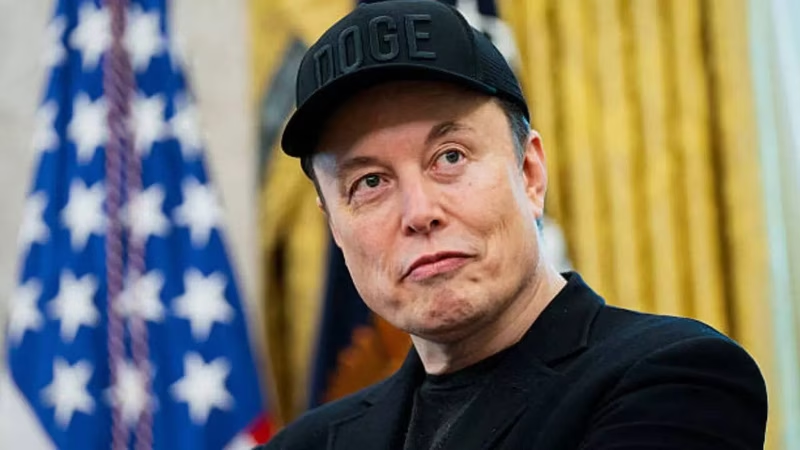
It’s rare for a TV show to ignite a cultural firestorm before its final episode even drops. But that’s exactly what’s happening with Stranger Things. As fans eagerly await Season 5, the show’s conclusion has become the center of a heated debate—fueled by none other than Elon Musk.
In a now-viral social media post, the world’s richest man weighed in on a pivotal character arc: Will Byers’ anticipated coming-out moment. “It feels unnecessary and forced,” Musk wrote, echoing sentiments shared by a vocal segment of the show’s fanbase . The comment isn’t just a casual critique—it carries significant weight, especially given Musk’s recent announcement that he canceled his Netflix subscription in protest against what he perceives as “woke” content mandates .
This controversy has thrust Stranger Things ending into the crosshairs of a much larger cultural conversation about representation, storytelling authenticity, and the role of social messaging in mainstream entertainment. Is the Duffer Brothers’ handling of Will’s journey a sensitive, long-planned character development—or a late-in-the-game concession to external pressures? Let’s break it down.
Table of Contents
- The Will Byers Arc: A Long-Simmering Narrative Thread
- Elon Musk’s Critique: What He Said and Why It Matters
- Fan Reactions: Polarized Over the Stranger Things Ending
- The Duffer Brothers’ Defense: Artistic Intent vs. Public Perception
- Netflix in the Middle: Balancing Creativity and Global Audiences
- Broader Implications for TV Storytelling in the 2020s
The Will Byers Arc: A Long-Simmering Narrative Thread
Since Season 1, Will Byers (played by Noah Schnapp) has been central to Stranger Things’ emotional core. His abduction by the Demogorgon, his struggle with trauma, and his deep, often unspoken bond with Mike Wheeler and the group have defined much of the show’s emotional landscape.
Over the seasons, subtle hints suggested Will’s feelings for Mike might be more than platonic. In Season 4, these hints became far more explicit. Will’s emotional outbursts, his discomfort with Mike and Eleven’s relationship, and a poignant scene where he tells his brother Jonathan, “It’s not my fault… that I know him better than anyone… that I love him,” strongly signaled his sexuality . Noah Schnapp himself confirmed in interviews that Will is gay, calling it a “big part of his arc” .
So for many fans, the coming-out moment in the final season isn’t a sudden twist—it’s the culmination of an eight-year character journey.
Elon Musk’s Critique: What He Said and Why It Matters
Musk’s criticism—calling the storyline “unnecessary and forced”—resonates with viewers who feel the show’s earlier seasons thrived on universal themes of friendship, courage, and nostalgia, without overt social commentary. His stance aligns with a broader critique that modern storytelling often prioritizes representation over narrative cohesion.
But Musk’s influence extends beyond opinion. As the owner of X (formerly Twitter) and a major tech figure, his words shape discourse. His decision to cancel Netflix—reportedly over similar concerns with other shows—adds a layer of real-world consequence to his critique . It signals to studios that ideological disagreements can directly impact subscriber numbers, especially among influential demographics.
Fan Reactions: Polarized Over the Stranger Things Ending
Online, the fanbase is deeply split:
- Supporters argue that Will’s sexuality was woven into the story organically over years and reflects real-life experiences of many young people. They see Musk’s take as dismissive of LGBTQ+ representation.
- Critics agree with Musk, claiming the show’s final season is shoehorning in a “social agenda” that wasn’t present in its original, beloved tone. They worry it sacrifices character consistency for virtue signaling.
- Neutral observers suggest the backlash isn’t about representation itself, but about execution—if it feels rushed or tacked-on in the final episodes, it could undermine an otherwise powerful arc.
The Duffer Brothers’ Defense: Artistic Intent vs. Public Perception
While the Duffer Brothers haven’t directly responded to Musk, their past statements defend the narrative choice. They’ve described Will’s journey as “inevitable” based on where the character had gone emotionally. In an interview with Empire Magazine, they emphasized that Will’s identity wasn’t a marketing ploy but a “human truth” they wanted to honor .
For more on how creators navigate sensitive topics, see our analysis on [INTERNAL_LINK:representation-in-modern-tv-drama].
Netflix in the Middle: Balancing Creativity and Global Audiences
Netflix finds itself in a tough spot. On one hand, it champions diverse storytelling as part of its global brand. On the other, it risks alienating segments of its massive international subscriber base—particularly in regions where LGBTQ+ themes are controversial or even illegal.
The platform must weigh artistic freedom against market realities. Musk’s departure may be a drop in the ocean for Netflix’s 260+ million subscribers, but it’s a symbolic crack in their cultural dominance.
Broader Implications for TV Storytelling in the 2020s
The Stranger Things ending controversy is a microcosm of a larger tension in entertainment. Audiences increasingly demand both authenticity and inclusivity—but also crave stories that feel timeless and unforced. The challenge for creators is to integrate representation in a way that serves the story, not the other way around.
As the final season approaches, all eyes will be on how the Duffer Brothers handle this delicate balance. Will it be a heartfelt conclusion to a beloved character’s journey—or the moment the Upside Down bled too much into the real world?
Conclusion
Elon Musk’s critique of the Stranger Things ending has done more than stir fan debate—it’s highlighted a cultural fault line in modern media. Whether Will Byers’ story is seen as “unnecessary and forced” or as a long-overdue, authentic moment will likely depend on the viewer’s own lens. But one thing is certain: the final season won’t just end a TV show—it may redefine how we talk about representation, storytelling, and who gets to decide what belongs in the narrative.
Sources
- Times of India: Elon Musk agrees with unhappy Stranger Things fans
- Web search results on Elon Musk canceling Netflix subscription [[2], [6]]
- Empire Magazine: Duffer Brothers on Will Byers’ sexuality
- Interviews with Noah Schnapp on Will’s identity [[4], [7]]