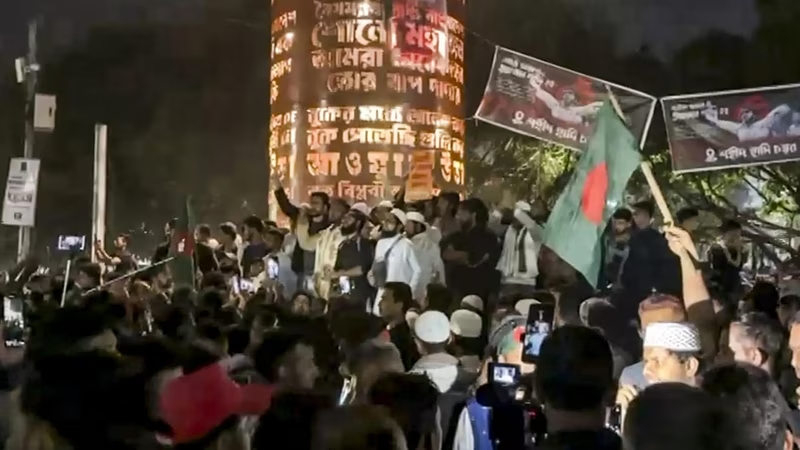
In a deeply troubling escalation, Bangladesh is witnessing a disturbing wave of violence against its Hindu minority. The latest incident—a Hindu man shot dead by his own colleague—marks the third targeted killing of a Hindu citizen in just two weeks. These attacks have sent shockwaves through communities both within the country and across South Asia, raising urgent questions about the safety of religious minorities and the government’s ability—or willingness—to protect them.
While authorities have labeled the most recent shooting as a “workplace dispute,” local activists and international human rights groups are skeptical, pointing to a broader pattern of rising intolerance and impunity. With each new case, fears grow that Bangladesh’s secular foundations are eroding under pressure from extremist elements.
Table of Contents
- Latest Incident: Hindu Man Shot by Colleague
- Hindu Killings in Bangladesh: A Disturbing Pattern
- Who Are the Victims? What We Know
- Government Response and Public Reaction
- Historical Context of Hindu Minorities in Bangladesh
- International Concerns and Diplomatic Fallout
- Summary
- Sources
Latest Incident: Hindu Man Shot by Colleague
According to police reports from Dhaka, a 38-year-old Hindu man was shot at point-blank range by a coworker at a small garment factory in the capital’s Mirpur area. The victim, whose name has been withheld for security reasons, was pronounced dead on arrival at Dhaka Medical College Hospital.
Initial statements from law enforcement described the incident as stemming from a “personal grudge” over workplace rivalry. However, multiple witnesses told local media that the accused had made derogatory remarks about the victim’s faith in the days leading up to the shooting.
Notably, this is the third violent death of a Hindu individual since mid-December 2025—following two other killings in separate districts, both involving religious slurs and apparent premeditation.
Hindu Killings in Bangladesh: A Disturbing Pattern
What makes these recent cases alarming isn’t just their frequency, but their context:
- December 18, 2025: A Hindu shopkeeper in Khulna was hacked to death by unidentified assailants who chanted religious slogans.
- December 24, 2025: A Hindu farmer in Rangpur was murdered after refusing to sell land to a local Islamist group.
- December 30, 2025: The Dhaka factory worker shot by his colleague amid reported religious taunts.
Human rights organizations like Human Rights Watch have long documented targeted violence against religious minorities in Bangladesh, particularly Hindus, who comprise about 8% of the population. Recent incidents, however, suggest a worrying intensification.
Who Are the Victims? What We Know
All three victims were middle-class, non-political citizens—ordinary men trying to support their families. None had criminal records or known affiliations with activist groups. Their only commonality? Their faith.
Local Hindu leaders report increased vandalism of temples, social boycotts, and land-grabbing attempts under the guise of “Islamic welfare.” Many families are now considering migration to India or seeking asylum abroad—a trend that could accelerate if security isn’t restored.
Government Response and Public Reaction
The Bangladesh government, led by Prime Minister Sheikh Hasina, has publicly condemned the violence and promised “strict action” against perpetrators. Home Minister Asaduzzaman Khan called the killings “isolated incidents” and denied any systematic targeting.
But critics argue that rhetoric isn’t enough. “When the same pattern repeats in three different districts in 12 days, it’s not ‘isolated’—it’s a crisis,” said Rana Dasgupta, spokesperson for the Bangladesh Hindu Buddhist Christian Unity Council.
Meanwhile, social media in Bangladesh is polarized: while many Muslims have expressed solidarity with Hindu neighbors, hardline voices online have justified the attacks as “consequences of blasphemy”—a claim unsupported by evidence in any of the three cases.
Historical Context of Hindu Minorities in Bangladesh
Since Bangladesh’s independence in 1971, its Hindu population has steadily declined—from nearly 20% to around 8% today. Causes include forced migration, discriminatory property laws (like the Vested Property Act), and periodic waves of communal violence, often linked to political instability or religious extremism.
Despite constitutional guarantees of secularism, the rise of Islamist parties and vigilante groups has created an environment where minorities feel increasingly vulnerable—especially outside major urban centers.
International Concerns and Diplomatic Fallout
India has expressed “deep concern” over the killings, with the Ministry of External Affairs urging Dhaka to “ensure the safety and dignity of all religious communities.” Given the shared cultural and religious ties, further violence could strain bilateral relations.
Similarly, the U.S. State Department and the United Nations have called for transparent investigations and protection of minority rights. Persistent inaction could affect Bangladesh’s standing in international forums and its eligibility for certain development aid programs tied to human rights benchmarks.
Summary
The Hindu killings in Bangladesh have reached a critical inflection point. With three targeted murders in just two weeks—including the latest case of a man shot by his colleague—the Hindu minority is living in fear. While the government insists these are isolated crimes, the pattern suggests a more systemic threat. Without swift, credible action to protect minorities and hold perpetrators accountable, Bangladesh risks further destabilization and international isolation. The world is watching—and so are its own citizens.
Sources
- Times of India: Third Hindu Man Killed in Bangladesh
- Human Rights Watch: Bangladesh Reports
- U.S. Department of State: Bangladesh Country Report
- United Nations: Bangladesh Profile
- [INTERNAL_LINK:bangladesh-minority-rights-history]
- [INTERNAL_LINK:india-bangladesh-religious-tensions]