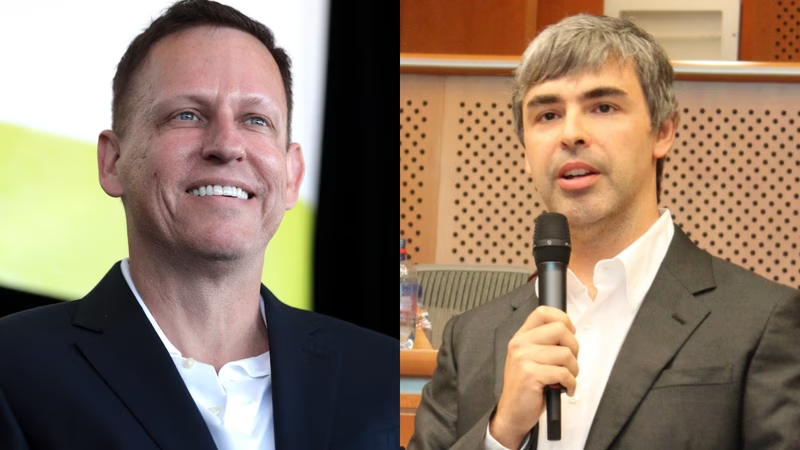
Silicon Valley is facing a potential brain—and wealth—drain. In a dramatic reaction to California’s proposed **5% wealth tax on billionaires**, tech icons **Peter Thiel** and **Larry Page** are reportedly packing their bags, ready to leave the state that helped make them legends. If they go, California could lose not just two of its most influential entrepreneurs—but an estimated **$12 billion in taxable assets**.
Their exodus wouldn’t just be personal. It would mark a symbolic rupture between California’s progressive political leadership and the very innovators who built its tech empire. With the state legislature pushing for aggressive redistribution policies, the question isn’t just *“Can California afford to tax billionaires?”*—it’s *“Can it afford to lose them?”*
Table of Contents
- Billionaires Leaving California: Why Now?
- The Proposed Wealth Tax: What It Entails
- Peter Thiel and Larry Page: Why They Matter
- Economic Impact: What California Stands to Lose
- A Growing Trend: Tech Talent Fleeing High-Tax States
- Counterarguments: The Case for the Wealth Tax
- What Happens Next? Policy Deadlock or Compromise?
- Conclusion: California at a Crossroads
- Sources
Billionaires Leaving California: Why Now?
For years, California has been the global epicenter of innovation—home to Apple, Google, Facebook, and countless startups. But rising costs, regulatory burdens, and now, aggressive tax proposals, are pushing even loyal residents to reconsider.
The immediate trigger is a **ballot measure** gaining traction in Sacramento: a 5% annual tax on net worth exceeding $1 billion, with potential **retroactive application**. For Thiel (co-founder of PayPal, early Facebook investor) and Page (Google co-founder), whose combined net worth exceeds $150 billion, this could mean **billions in back taxes and future liabilities**.
Both have expressed private frustration, with sources close to them stating they “won’t risk staying” if the law passes. Neither has confirmed relocation plans publicly, but property records and business filings suggest both are expanding operations in **Texas, Florida, and Nevada**—states with **no state income or wealth taxes**.
The Proposed Wealth Tax: What It Entails
The initiative, backed by progressive lawmakers and advocacy groups like Patriotic Millionaires, aims to fund housing, climate resilience, and public education.
Key features include:
- A **5% annual tax** on net worth above $1 billion.
- Possible **retroactive enforcement** for up to three years.
- Valuation based on **public and private assets**, including stakes in private companies.
- Estimated to raise **$10–15 billion annually**.
Critics argue the plan is **legally dubious**—the U.S. Constitution may not permit states to tax unrealized gains or wealth without a sale event. The California Legislative Analyst’s Office has flagged “significant legal and administrative hurdles.”
Peter Thiel and Larry Page: Why They Matter
These aren’t just wealthy individuals—they’re **architects of the digital age**.
- Larry Page co-founded Google in 1998 in a Menlo Park garage. His innovations shaped how the world accesses information.
- Peter Thiel not only co-founded PayPal but also made the first outside investment in Facebook. He’s a key figure in Silicon Valley’s libertarian-leaning tech elite.
Both have deep roots in California—but also global footprints. Page has long maintained privacy and minimal public presence, while Thiel has been vocal about his disillusionment with “woke capitalism” and California governance. [INTERNAL_LINK:tech-billionaires-political-shifts]
Economic Impact: What California Stands to Lose
If Thiel and Page leave—and inspire others—the consequences could be severe:
- Tax Revenue Decline: Even without a wealth tax, they contribute millions via property, sales, and business taxes.
- Job Migration: Their ventures (and investments) could shift operations out of state, taking high-paying tech jobs with them.
- Investor Confidence: California may be seen as “hostile to capital,” deterring future startup formation.
A 2024 Stanford study warned that a 1% increase in top marginal tax rates correlates with a **2.3% drop** in billionaire residency over five years.
A Growing Trend: Tech Talent Fleeing High-Tax States
Thiel and Page aren’t alone. Elon Musk moved Tesla’s HQ to Texas in 2021. Salesforce CEO Marc Benioff retains a presence but has expanded heavily in Indianapolis. Venture capital firms like Andreessen Horowitz are opening satellite offices in Miami and Austin.
According to IRS migration data, **California lost more high-income taxpayers than any other state** between 2020–2024—many relocating to Florida, Texas, and Tennessee.
Counterarguments: The Case for the Wealth Tax
Supporters argue that billionaires have **benefited disproportionately** from California’s infrastructure, talent pool, and legal system—and should pay their “fair share.”
“These individuals didn’t build their empires in a vacuum,” said State Senator Lena Gonzalez, a proponent of the tax. “They used public roads, educated workers, and legal protections. It’s time they give back.”
Advocates also dispute the “exodus” narrative, noting that many billionaires maintain California residences even after “moving” for tax purposes—thanks to domicile laws.
What Happens Next? Policy Deadlock or Compromise?
The wealth tax proposal must survive legal challenges and likely a voter referendum. Governor Gavin Newsom has not endorsed it, citing “implementation risks.”
Meanwhile, Thiel and Page are hedging their bets—securing properties in tax-friendly states and restructuring assets. Their final decision may hinge on the **November 2026 ballot**.
Conclusion: California at a Crossroads
The potential departure of Peter Thiel and Larry Page over the wealth tax isn’t just about money—it’s about **philosophy**. Can California balance social equity with economic competitiveness? The answer will shape not just the state’s budget, but its identity as a hub of innovation. As the debate rages, one thing is clear: the era of unquestioned loyalty between tech giants and their home state may be over.