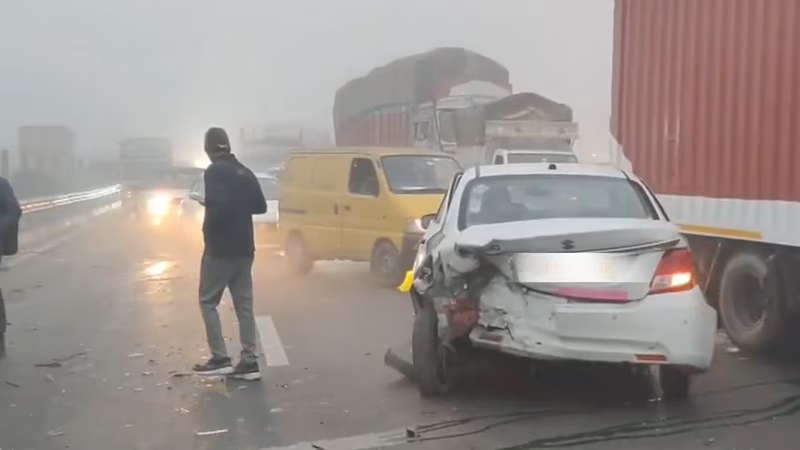
Delhi–Sonipat Fog Mayhem: Multi-Vehicle Pileup Sparks Highway Safety Alarms
Early Monday morning, one of North India’s busiest corridors turned into a scene of chaos. On the Delhi–Sonipat stretch of National Highway 44 (NH44), dense winter fog—so thick you could barely see your hand—led to a devastating chain-reaction collision involving at least three vehicles. While initial reports confirm one to two individuals were injured, the incident has reignited nationwide concern over road safety during peak fog season .
Eyewitnesses described a terrifying domino effect: a car lost control in near-zero visibility, struck another vehicle, and before anyone could react, a third car plowed into the wreckage at speed. Emergency services rushed to the scene, but the real question remains: in 2025, with all our technology and infrastructure, why are we still so unprepared for seasonal fog?
Table of Contents
- What Happened in the Delhi–Sonipat Fog Accident?
- Why NH44 Is a Fog Accident Hotspot
- Delhi–Sonipat Fog Accident: Response and Rescue
- Winter Fog in North India: A Recurring Nightmare
- Expert Recommendations for Driving in Fog
- What the Government Is (Or Isn’t) Doing
- Conclusion: When Will We Learn From Fog Tragedies?
- Sources
What Happened in the Delhi–Sonipat Fog Accident?
The incident occurred around 7:15 AM on Monday, just as morning commuters were hitting the road. According to police reports from Sonipat district, visibility had dropped to under 50 meters due to dense radiation fog—a common phenomenon in December and January across the Indo-Gangetic plain .
“The first car swerved after missing a slow-moving truck,” said a local eyewitness. “It hit a sedan, which stopped abruptly. Within seconds, a speeding SUV slammed into them from behind. It all happened in less than 10 seconds.”
Two occupants sustained minor to moderate injuries and were rushed to a nearby hospital. Thankfully, no fatalities were reported—but the narrow escape has left many wondering: how many more near-misses will it take before systemic changes happen?
Why NH44 Is a Fog Accident Hotspot
The Delhi–Sonipat corridor is part of NH44, India’s longest national highway, stretching over 4,000 km from Srinagar to Kanyakumari. But the 50-km stretch between Delhi and Sonipat is notorious for winter accidents due to:
- High traffic density: Over 60,000 vehicles daily, including trucks, buses, and private cars.
- Flat, open terrain: Allows fog to settle evenly with no natural wind barriers.
- Inadequate fog warnings: Limited real-time alerts or variable message signs.
- Poor enforcement of speed limits: Many drivers ignore reduced speed advisories.
According to data from the Ministry of Road Transport, Haryana alone recorded over 120 fog-related accidents in December 2024—up 18% from the previous year .
Delhi–Sonipat Fog Accident: Response and Rescue
Local police and the National Highway Authority of India (NHAI) acted swiftly. Within 20 minutes, ambulances from Sonipat Civil Hospital arrived, and traffic police diverted vehicles to alternate routes via NH352 and the Western Peripheral Expressway.
“Our rapid response unit is trained for such scenarios,” said Sonipat SP Rajesh Kumar. “But prevention is better than reaction. We urge all drivers to avoid non-essential travel during dense fog.”
Still, critics argue that reactive measures aren’t enough. [INTERNAL_LINK:winter-road-safety-india] could have saved lives if implemented proactively.
Winter Fog in North India: A Recurring Nightmare
Winter fog in North India isn’t just an inconvenience—it’s a public health and safety crisis. Caused by a mix of low temperatures, high humidity, and air pollution (especially post-harvest stubble burning), visibility can drop to near zero for days.
The India Meteorological Department (IMD) issues “dense fog” alerts when visibility falls below 50 meters. Yet, these warnings rarely translate into road closures or mandatory speed restrictions—unlike in countries like Germany or the UK, where highways shut automatically under severe conditions.
As [The Lancet Planetary Health](https://www.thelancet.com/journals/lanplh) has noted, South Asia’s fog season is worsening due to climate change and pollution, making adaptive infrastructure not optional—but essential .
Expert Recommendations for Driving in Fog
Until systemic upgrades happen, driver awareness is critical. Road safety experts recommend:
- Never use high beams: They reflect off fog and reduce visibility further. Use fog lights or low beams instead.
- Slow down drastically: Drive at 20–30 km/h or less in dense fog.
- Follow road markings, not vehicles: Don’t tailgate—drivers ahead may brake suddenly.
- Use hazard lights only if stopped: Otherwise, they can confuse other drivers.
- Avoid travel if possible: Check IMD or NHAI alerts before heading out.
These simple steps could prevent dozens of accidents every winter.
What the Government Is (Or Isn’t) Doing
The NHAI has piloted “fog detection systems” on select stretches, using sensors to trigger warning signs. But coverage remains patchy. Meanwhile, the central government’s “Road Safety Action Plan 2025” includes funding for better signage and lighting—but implementation lags in states like Haryana and Uttar Pradesh.
Activists argue that without mandatory fog protocols—like temporary speed caps or GPS-based alerts integrated with navigation apps like Google Maps—tragedies like the Delhi–Sonipat crash will keep repeating.
Conclusion: When Will We Learn From Fog Tragedies?
The Delhi–Sonipat fog accident is more than a headline—it’s a symptom of a deeper failure to adapt infrastructure to climate realities. Every winter, families lose loved ones to preventable crashes. Technology exists. Data exists. What’s missing is urgency. Until fog is treated as the highway emergency it is, the mayhem will continue.