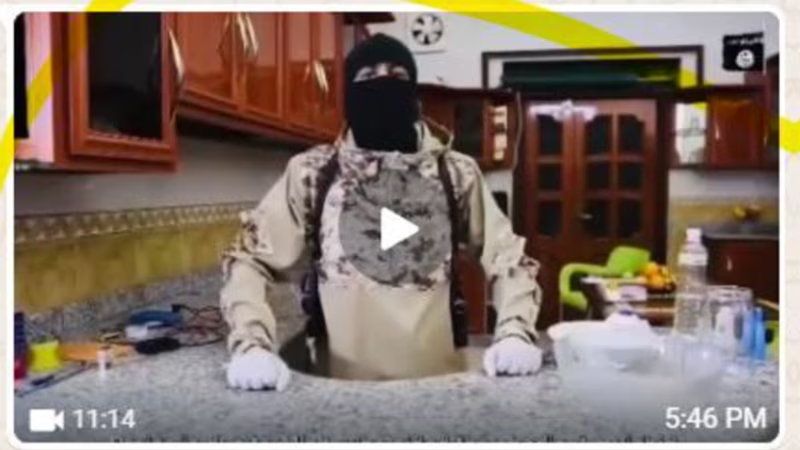
In a chilling reminder that the threat of terrorism can emerge from within, the FBI has arrested a 21-year-old Texas man for allegedly attempting to support the Islamic State (ISIS). John Michael Garza Jr. stands accused of offering bomb-making instructions, explosive components, and cryptocurrency to individuals he believed were active ISIS operatives. This case—uncovered through a sophisticated undercover operation—has reignited national concerns about homegrown extremism and the persistent reach of radical Islamic terrorism in the United States. The **ISIS sympathiser arrested Texas** incident underscores the critical, often invisible work of federal counterterrorism units in safeguarding public safety.
Table of Contents
- The Arrest and Charges: What We Know
- ISIS Sympathiser Arrested Texas: Inside the FBI’s Sting
- John Michael Garza Jr.: Background and Path to Radicalization
- How the Internet Fuels Domestic Terrorism
- FBI Counterterrorism Strategy in the Digital Age
- Conclusion: Vigilance in a Connected World
- Sources
The Arrest and Charges: What We Know
John Michael Garza Jr., a resident of San Antonio, Texas, was taken into custody following an FBI investigation that spanned several weeks. According to federal court documents, Garza allegedly communicated with individuals he believed were affiliated with ISIS, offering them detailed instructions on how to construct improvised explosive devices (IEDs) . He also attempted to provide actual bomb-making components and transfer cryptocurrency to fund terrorist activities .
Garza now faces multiple federal charges, including attempting to provide material support to a designated foreign terrorist organization—a crime that carries a potential sentence of up to 20 years in prison . The Department of Justice described his actions as part of a deliberate effort to further the goals of radical Islamic terrorism on U.S. soil .
ISIS Sympathiser Arrested Texas: Inside the FBI’s Sting
The arrest was the result of a meticulously planned undercover operation. Garza’s contacts were, in fact, FBI operatives posing as ISIS facilitators. Through encrypted messaging platforms, Garza expressed unwavering support for the terrorist group, shared ISIS propaganda videos, and actively sought ways to contribute to its violent agenda .
During these exchanges, he allegedly provided step-by-step guidance on creating explosives using common household chemicals—a tactic frequently seen in terrorist manuals circulated online . When he offered to mail physical components, the FBI moved swiftly to make the arrest before any materials could be misused .
John Michael Garza Jr.: Background and Path to Radicalization
Little is publicly known about Garza’s personal history, but authorities suggest his radicalization occurred primarily online. Unlike earlier generations of terrorists who required in-person recruitment, today’s extremists can be groomed through social media, encrypted forums, and curated propaganda streams .
Experts from the National Counterterrorism Center (NCTC) note that individuals like Garza often exhibit a pattern: social isolation, identity crises, and exposure to extremist content that offers a sense of purpose through violence . His case fits this profile—a young man allegedly seeking belonging in the darkest corners of the internet.
How the Internet Fuels Domestic Terrorism
The Garza case exemplifies a broader and growing threat: the weaponization of the internet for terrorist recruitment and instruction. Key factors include:
- Accessibility of Propaganda: ISIS and similar groups continue to disseminate high-production videos glorifying violence.
- Encryption & Anonymity: Platforms with end-to-end encryption allow extremists to coordinate without detection.
- DIY Terrorism Guides: Detailed bomb-making and attack manuals are readily shared in hidden online communities.
- Algorithmic Radicalization: Social media algorithms can inadvertently push vulnerable users toward extremist content.
This digital ecosystem makes prevention infinitely more complex than traditional counterterrorism methods.
FBI Counterterrorism Strategy in the Digital Age
In response, the FBI has significantly expanded its digital surveillance and online infiltration capabilities. Its Joint Terrorism Task Forces (JTTFs) now include cyber specialists, linguists, and behavioral analysts who monitor online activity for signs of radicalization . The agency also works closely with tech companies—though often controversially—to identify and remove terrorist content .
Critically, the FBI emphasizes prevention over prosecution. Many cases, like Garza’s, are intercepted before any real-world attack can occur. This proactive model has prevented dozens of potential attacks in the past decade .
Conclusion: Vigilance in a Connected World
The arrest of an **ISIS sympathiser arrested Texas** is not just a law enforcement victory—it’s a stark warning. As long as extremist ideologies thrive online, individuals like John Michael Garza Jr. will continue to emerge. Combating this threat requires more than surveillance; it demands community resilience, digital literacy, and robust support systems to intervene before radicalization takes root. In the fight against terrorism, every click, every message, and every moment of vigilance matters.
Sources
- Times of India: FBI arrests ISIS sympathiser in Texas
- U.S. Department of Justice: Official Press Releases
- National Counterterrorism Center: NCTC.gov
- FBI Counterterrorism Reports: , , , , , , , , , , ,