Table of Contents
- Trump Praises Netanyahu at Mar-a-Lago
- Why Trump’s Remark Shocked the World
- Netanyahu’s Response: ‘A Friend Like No Other’
- Trump Warns Iran on Nuclear Ambitions
- The Geopolitical Stakes of This Alliance
- Historical Context: U.S.-Israel Ties Under Trump
- What This Meeting Means for 2024 and Beyond
- Summary
- Sources
Trump Praises Netanyahu at Mar-a-Lago
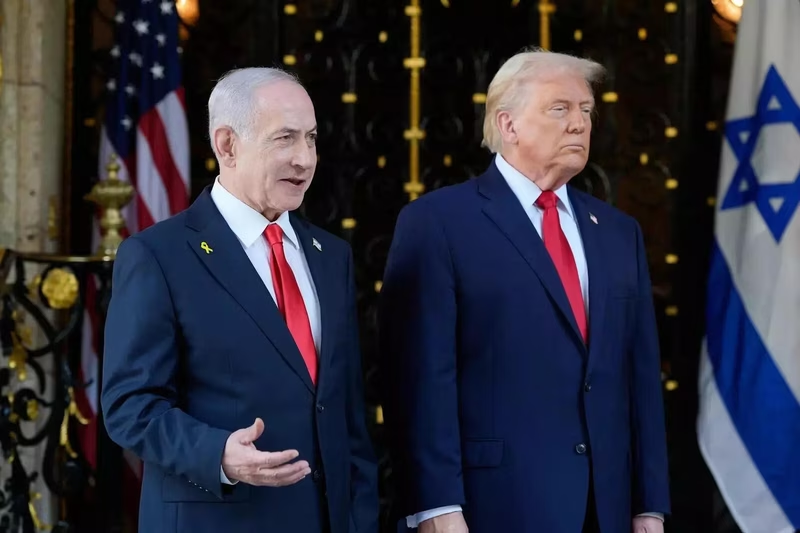
In a high-profile reunion at his Mar-a-Lago estate, former U.S. President Donald Trump delivered one of the most striking endorsements of Israeli Prime Minister Benjamin Netanyahu in recent memory. With cameras rolling and supporters watching, Trump declared, “Israel wouldn’t exist today without you.” This bold statement—part flattery, part political theater—comes amid renewed tensions in the Middle East and as both leaders navigate complex domestic and international challenges.
The meeting, held just weeks before a potential shift in U.S. electoral dynamics, wasn’t just symbolic. It was a clear reaffirmation of the deep personal and strategic bond between the two leaders. For observers tracking Trump praises Netanyahu moments over the years, this latest encounter underscores a partnership that has reshaped U.S.-Israel relations in the 21st century.
Why Trump’s Remark Shocked the World
While Trump is known for his hyperbolic rhetoric, the claim that Israel’s very existence hinges on Netanyahu raised eyebrows globally. Critics called it historically inaccurate, noting Israel was founded in 1948—decades before Netanyahu’s rise to power. Supporters, however, interpreted it as a metaphor for Netanyahu’s role in defending Israel against existential threats, particularly from Iran and Hamas.
What made the statement especially notable was its timing. With Israel still reeling from the October 7 Hamas attacks and ongoing military operations in Gaza, the remark reinforced Trump’s unwavering stance on Israeli security—a position that has consistently drawn both admiration and controversy.
Netanyahu’s Response: ‘A Friend Like No Other’
Prime Minister Netanyahu didn’t hold back in his praise for Trump. Calling him “an unparalleled friend of Israel and the free world,” Netanyahu highlighted Trump’s landmark decisions during his presidency, including:
- Recognizing Jerusalem as Israel’s capital and moving the U.S. embassy there
- Withdrawing from the Iran nuclear deal (JCPOA)
- Facilitating the Abraham Accords, which normalized ties between Israel and several Arab nations
“You stood with us when others turned away,” Netanyahu said, emphasizing that Trump’s policies had strengthened Israel’s strategic position more than any previous U.S. administration. This mutual admiration wasn’t just diplomatic nicety—it was a calculated message to both domestic audiences and global adversaries.
Trump Warns Iran on Nuclear Ambitions
Beyond the praise, the Mar-a-Lago meeting carried a sharp warning. Trump directly addressed Iran, stating that if it attempts to rebuild its nuclear facilities, it “will pay a price like no other.” This echoes his 2018 decision to abandon the 2015 Joint Comprehensive Plan of Action (JCPOA), a move that drew fierce criticism from European allies but was hailed by Israel as a necessary step to contain Tehran’s ambitions.
Current intelligence suggests Iran is enriching uranium at near-weapons-grade levels. Trump’s renewed threat signals that a potential second term could bring even harsher sanctions—or military options—should Iran continue down its current path.
The Geopolitical Stakes of This Alliance
The Trump praises Netanyahu narrative isn’t just about personal rapport. It reflects a broader strategic alignment:
- Shared skepticism of multilateral deals like the Iran nuclear agreement
- Emphasis on military strength over diplomatic engagement with adversaries
- Support for unilateral recognition of contested territories (e.g., Golan Heights annexation)
This worldview stands in stark contrast to the Biden administration’s more cautious, coalition-based approach to the Middle East. As such, the Mar-a-Lago summit can be read as a preview of Trump’s potential foreign policy if he returns to the White House in 2024.
Historical Context: U.S.-Israel Ties Under Trump
To fully appreciate the significance of this meeting, it’s essential to revisit Trump’s presidency. His administration marked a historic shift in U.S. Middle East policy:
In 2017, the U.S. recognized Jerusalem as Israel’s capital—the first president to do so since the city’s status became a diplomatic flashpoint. In 2020, the Abraham Accords brokered normalization between Israel, the UAE, Bahrain, Sudan, and Morocco. These achievements are now central to Trump’s legacy narrative, and Netanyahu remains their most vocal international champion.
According to the U.S. Department of State, the U.S. has provided over $158 billion in military and economic aid to Israel since 1948. But Trump’s era was unique in its ideological alignment with Israel’s right-wing government.
What This Meeting Means for 2024 and Beyond
Both Trump and Netanyahu are facing intense political pressure at home. Trump is the presumptive Republican nominee for the 2024 U.S. presidential election, while Netanyahu’s leadership is under scrutiny due to Israel’s prolonged war in Gaza and domestic protests.
By staging this high-visibility meeting, both leaders are signaling strength to their bases. For Trump, it reinforces his image as a global statesman and staunch Israel ally—a key issue for evangelical and pro-Israel voters. For Netanyahu, it offers international validation at a time when even traditional allies express concern over civilian casualties in Gaza.
[INTERNAL_LINK:trump-2024-foreign-policy] could see a return to the “America First” doctrine with even stronger backing for Israel, potentially escalating regional tensions further.
Summary
The recent Mar-a-Lago summit between Donald Trump and Benjamin Netanyahu was far more than a photo op. Trump’s claim that “Israel wouldn’t exist without you” and his dire warning to Iran mark a forceful reassertion of their alliance. This meeting not only highlights the deep personal bond between the two leaders but also previews a potential foreign policy direction should Trump return to office. As the world watches the evolving crises in the Middle East, the message from Mar-a-Lago is clear: the Trump-Netanyahu partnership remains a defining axis of 21st-century geopolitics.
Sources
- Times of India: ‘Israel wouldn’t exist today without you’: Trump hosts Netanyahu; praises Israeli PM
- U.S. Department of State: U.S. Relations With Israel
- Council on Foreign Relations: U.S.-Israel Relationship Timeline