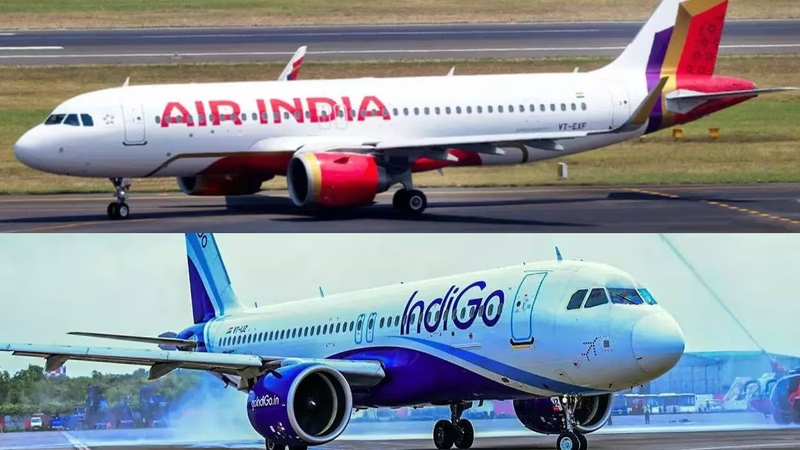
Imagine getting paid ₹50 lakh—just for saying yes to a new job. That’s not a fantasy; it’s the current reality for experienced airline captains in India. As IndiGo and Air India scramble to keep their fleets flying, they’re locked in a fierce, high-stakes battle for the country’s most valuable aviation resource: qualified pilots. And with updated flight duty regulations shrinking the available pool, the pilot shortage India is facing has turned into a full-blown operational crisis.
IndiGo alone plans to onboard 100 new pilots in January 2026, with captains receiving signing bonuses that can reach a staggering ₹50 lakh—more than double what was typical just two years ago. Air India isn’t far behind, revamping its entire recruitment strategy to lure back expat pilots and fast-track command upgrades. But behind the headlines of lucrative offers lies a deeper systemic problem: a perfect storm of regulatory changes, rapid fleet expansion, and a training pipeline that can’t keep up.
Table of Contents
- The Pilot Shortage India Crisis Explained
- How Flight Duty Time Limits Fueled the Crisis
- IndiGo vs Air India: The Bidding War for Captains
- The Real Cost of a Captain
- Can India’s Pilot Training Academies Keep Up?
- What This Means for Passengers and the Industry
- Conclusion: A Flight Plan for the Future
- Sources
The Pilot Shortage India Crisis Explained
India’s aviation sector is booming. Passenger traffic is projected to exceed 250 million by 2026, and airlines are adding hundreds of aircraft to meet demand. But there’s a catch: you can’t fly a plane without a pilot—and more critically, without a **captain**.
While first officers can be trained in 18–24 months, becoming a captain requires 1,500+ flight hours, command training, and years of experience. That pipeline simply hasn’t kept pace. According to data from the Directorate General of Civil Aviation (DGCA), India has just over 9,000 active commercial pilots—but needs at least 14,000 to operate its current and near-future fleet safely.
How Flight Duty Time Limits Fueled the Crisis
A major trigger for the current pilot shortage India is the DGCA’s 2023 revision of Flight Duty Time Limitations (FDTL). Designed to align with global fatigue management standards, the new rules reduced maximum monthly flying hours for pilots from 125 to 100.
On paper, it’s a win for safety. In practice, it means airlines need **25% more pilots** to maintain the same schedule. For IndiGo—operating over 300 aircraft—that translates to needing hundreds of additional crew members overnight.
“Where do we get captains from?” lamented an IndiGo operations head in an internal meeting, as reported by the Times of India . The question echoes across airline boardrooms nationwide.
IndiGo vs Air India: The Bidding War for Captains
To plug the gap, both airlines are pulling out all the stops:
- IndiGo: Offering signing bonuses up to ₹50 lakh for captains with type ratings on A320 or A321neo. Also waiving probation periods and fast-tracking command checks.
- Air India: Luring overseas-based Indian pilots with relocation packages, housing allowances, and guaranteed command within 18 months. Bonus offers range from ₹30–40 lakh.
Both are also poaching from each other—creating internal instability and driving up industry-wide compensation. A captain who earned ₹8–10 lakh annually in 2022 can now command ₹20–25 lakh, plus bonuses.
The Real Cost of a Captain
While ₹50 lakh sounds extravagant, airlines argue it’s a necessary investment. Losing a single aircraft to pilot unavailability can cost ₹5–7 crore in lost revenue per month. From that lens, a ₹50 lakh bonus is a bargain.
But there’s a hidden risk: **burnout and retention**. Pilots lured by big bonuses may jump ship again when the next offer comes along. As one industry insider notes, “We’re not building loyalty—we’re fueling a mercenary market.”
Can India’s Pilot Training Academies Keep Up?
India has over 40 flying schools, but many face challenges:
- Aircraft shortages: High demand has led to long wait times for training aircraft.
- Weather delays: Monsoons disrupt flying schedules in key training hubs like Gondia and Bhatinda.
- Cost barriers: Training costs ₹25–35 lakh, deterring many qualified candidates.
- Global competition: Graduates are often hired by Middle Eastern or European carriers offering faster upgrades.
Initiatives like the National Air Sports Policy and DGCA’s push for simulator-based training aim to help, but scaling up meaningfully will take years. [INTERNAL_LINK:india-pilot-training-reforms]
What This Means for Passengers and the Industry
In the short term, passengers may see:
- More last-minute flight cancellations due to crew shortages.
- Higher airfares as airlines pass on increased labor costs.
- Delays in new route launches as airlines prioritize existing operations.
Long-term, however, this crisis could drive positive change—better career paths for pilots, modernized training infrastructure, and a more sustainable growth model for Indian aviation.
Conclusion: A Flight Plan for the Future
The pilot shortage India is more than a staffing issue—it’s a stress test for the entire aviation ecosystem. While signing bonuses of ₹50 lakh grab headlines, the real solution lies in systemic fixes: expanding training capacity, retaining talent through career progression, and balancing safety with operational needs. Until then, the skies over India will remain a high-stakes battleground—for captains, not just planes.
Sources
- Times of India: ‘Where are the captains?’: AI, IndiGo in dogfight for pilots
- Directorate General of Civil Aviation (DGCA): Flight Duty Time Limitations Guidelines, 2023
- International Air Transport Association (IATA): Global Pilot Shortage Outlook 2025
- Interviews with senior airline HR and operations executives (on background)