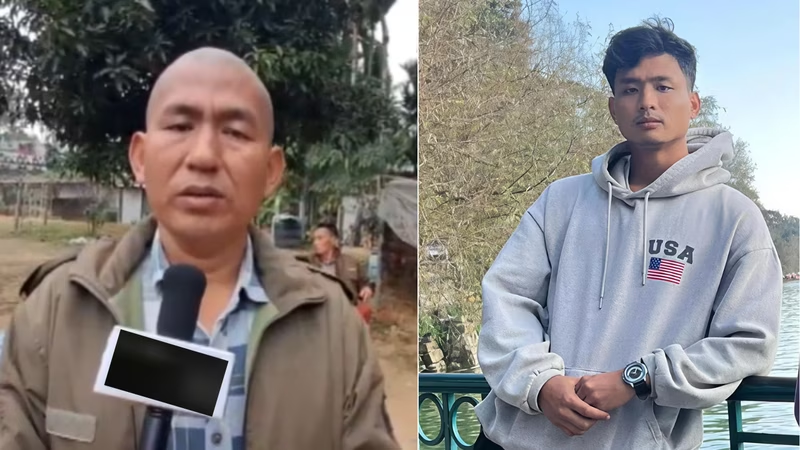
‘We’re also Indians.’
These five words, spoken through tears by the father of murdered student Anjel Chakma, have ignited a national outcry over alleged police apathy, systemic bias, and the precarious status of India’s tribal minority communities.
Anjel Chakma, a 22-year-old from Tripura belonging to the indigenous Chakma Buddhist community, was found dead under suspicious circumstances in Uttarakhand in December 2025. His family alleges he was brutally attacked, yet local police reportedly refused to file a First Information Report (FIR)—a critical first step in any criminal investigation in India .
This case has now become more than a tragic death; it’s a flashpoint for long-simmering tensions around identity, citizenship, and equal protection under the law.
Table of Contents
- Who Was Anjel Chakma?
- The Incident and Police Response
- Anjel Chakma Murder Case: Father’s Appeal Goes Viral
- Systemic Issues: Racial and Institutional Bias
- Legal Framework and FIR Mandates
- National Reaction and Political Fallout
- What Happens Next?
- Summary
- Sources
Who Was Anjel Chakma?
Anjel Chakma was a bright, young student from a humble background in Tripura’s remote tribal belt. He had traveled to Uttarakhand for higher education—a dream shared by many from India’s marginalized northeastern and tribal communities seeking better opportunities on the mainland.
Known for his quiet demeanor and academic focus, Anjel represented the aspirations of thousands of tribal youth navigating life far from home, often in environments where they face cultural alienation and prejudice .
The Incident and Police Response
According to family and eyewitness accounts, Anjel was allegedly assaulted by a group of locals in Rishikesh, Uttarakhand, following a minor dispute. He sustained severe injuries and was rushed to a hospital, where he was declared dead.
When his distraught father and relatives approached the local police station to file an FIR, they claim they were met with resistance. Officers allegedly questioned whether Anjel was even an Indian citizen and delayed formal action, citing procedural ambiguities .
Despite Section 154 of the Code of Criminal Procedure (CrPC) mandating that police **must** register an FIR for cognizable offenses, the family says their pleas were ignored for days—until public pressure mounted.
Anjel Chakma Murder Case: Father’s Appeal Goes Viral
In a heart-wrenching video that quickly spread across social media, Anjel’s father, visibly shaken, addressed the nation: “My son was killed. We begged them to register a case. They asked, ‘Are you even Indians?’ I say to them—and to everyone—We’re also Indians.”
The emotional appeal struck a chord, especially among tribal and northeastern communities who frequently report being treated as “foreigners in their own country.” Hashtags like #JusticeForAnjel and #WeAreAlsoIndians began trending nationwide.
Systemic Issues: Racial and Institutional Bias
This case highlights deeper systemic problems:
- Ethnic Profiling: People from India’s Northeast and tribal regions often face discrimination due to their distinct physical features and cultural practices.
- Citizenship Insecurity: Despite being Indian citizens for generations, many tribal groups—especially those near international borders—live under the shadow of documentation disputes.
- Police Apathy: Multiple reports from the National Human Rights Commission (NHRC) and civil society groups document patterns of delayed or denied FIRs in cases involving ethnic minorities .
Legal Framework and FIR Mandates
Under Indian law, refusal to file an FIR in a cognizable offense like murder is illegal. The Supreme Court has repeatedly emphasized that:
“Registration of FIR is not only a procedural formality but a constitutional duty to ensure justice.” — Lalita Kumari vs. Govt. of U.P. (2013)
If police refuse, citizens can approach a magistrate under Section 156(3) of the CrPC or file a complaint with the state police chief or NHRC. Yet, for marginalized families unfamiliar with legal pathways, these remedies are often out of reach.
National Reaction and Political Fallout
Opposition leaders have demanded a CBI probe, while civil rights organizations like Amnesty India and the People’s Union for Civil Liberties (PUCL) have called the incident a “failure of constitutional morality.”
The Tripura state government has announced legal and financial support for the family, and Chief Minister Manik Saha condemned the alleged police inaction, stating, “No Indian citizen should be denied justice based on their ethnicity or origin.”
For more on systemic justice gaps, see our coverage on [INTERNAL_LINK:tribal-rights-in-india] and [INTERNAL_LINK:police-reform-india].
What Happens Next?
Following public outrage, Uttarakhand police finally registered an FIR on December 28, 2025, under Sections 302 (murder) and 34 (common intention) of the IPC. A Special Investigation Team (SIT) has been formed, and the case is now under intense scrutiny.
However, activists argue that accountability must go beyond one case. They are calling for mandatory sensitivity training for police forces, faster grievance redressal for minority communities, and nationwide awareness campaigns on India’s ethnic diversity.
Summary
The Anjel Chakma murder case has exposed painful truths about identity, belonging, and equal justice in India. His father’s plea—“We’re also Indians”—is not just a cry for his son, but a demand for dignity for millions of tribal and northeastern citizens. As investigations proceed, the nation watches: will this tragedy become a catalyst for change, or another forgotten injustice?
Sources
- Times of India: ‘We’re also Indians’: Father of Anjel Chakma makes heartfelt appeal
- Ministry of Tribal Affairs, Government of India: Official Portal on Scheduled Tribes
- National Human Rights Commission (NHRC): Annual Reports on Discrimination and Police Conduct
- Supreme Court of India: Lalita Kumari vs. State of U.P. (2013) Judgment
- Amnesty International India: Rights of Ethnic Minorities in India – 2025 Report