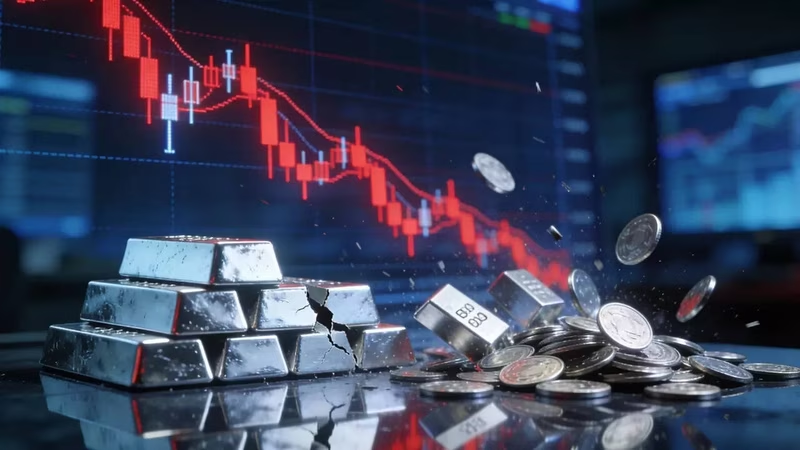
Imagine hitting a jackpot—only to see half of it vanish before you can even cash the ticket. That’s exactly what happened to silver traders and investors this week. After soaring to a historic peak of ₹2.5 lakh per kg on the Multi Commodity Exchange (MCX), silver prices came crashing down by a staggering ₹21,000 in under 60 minutes .
This isn’t just market noise—it’s a textbook example of extreme **silver prices crash** volatility, driven by a perfect storm of profit booking, shifting global sentiment, and regulatory tightening. And with silver being a key hedge against inflation and economic uncertainty, this sudden reversal has left many wondering: was this a correction… or the beginning of a deeper downturn?
Table of Contents
- What Happened? The Hour That Shook Silver Markets
- Why Did Silver Prices Crash So Suddenly?
- Global Factors Influencing Silver’s Rollercoaster Ride
- How Higher Margin Requirements Triggered a Domino Effect
- Silver Investment Outlook: Buy the Dip or Stay Away?
- Historical Context: How This Crash Compares to Past Volatility
- Expert Tips for Navigating Silver Market Swings
- Conclusion: Volatility Is the New Normal
- Sources
What Happened? The Hour That Shook Silver Markets
On the day of the crash, silver futures on MCX opened strong, riding high on weeks of geopolitical tension, strong festive demand, and speculative buying. By mid-morning, the metal had breached ₹2,50,000 per kg—a record never seen before in India’s commodity history .
Then, almost without warning, the floor gave way. Within 60 minutes, prices tumbled by ₹21,000. Futures contracts reversed course sharply as traders, sensing overvaluation, rushed to lock in profits. The sudden drop triggered stop-loss orders, amplifying the sell-off in a classic feedback loop.
Why Did Silver Prices Crash So Suddenly?
The **silver prices crash** didn’t happen in a vacuum. It was the result of multiple converging forces:
- Aggressive Profit Booking: After weeks of relentless buying, traders seized the record-high moment to cash out.
- Easing Geopolitical Tensions: As fears around Middle East conflicts and Red Sea shipping disruptions began to ease, safe-haven demand for silver softened.
- Stronger U.S. Dollar: A rebounding dollar made dollar-denominated commodities like silver more expensive for foreign buyers, reducing global demand.
- Higher Margin Requirements: MCX had just hiked margins on silver contracts to curb speculation—squeezing leveraged traders and forcing liquidations.
Global Factors Influencing Silver’s Rollercoaster Ride
While the crash was most dramatic in India, global markets set the stage. Silver, traded in U.S. dollars on COMEX, had been buoyed by expectations of Fed rate cuts and inflation hedging. But recent U.S. economic data—showing resilience in jobs and consumer spending—has pushed back those rate-cut hopes .
When investors believe interest rates will stay higher for longer, non-yielding assets like gold and silver lose some of their appeal. This shift in sentiment quickly spilled over into Indian markets, where local traders amplify global moves through leveraged futures.
How Higher Margin Requirements Triggered a Domino Effect
Just days before the crash, MCX increased margin requirements for silver futures by up to 50% . This move, intended to cool overheated speculation, had an immediate impact.
Many retail and institutional traders operate with high leverage—sometimes 10x or more. When margins rise, they must either deposit more capital or reduce their positions. With liquidity tight, the latter option dominated, creating a wave of forced selling that accelerated the **silver prices crash**.
[INTERNAL_LINK:how-commodity-margins-work-in-india] For new investors, this is a stark reminder: leverage magnifies both gains and losses.
Silver Investment Outlook: Buy the Dip or Stay Away?
So, what now? Should you view this crash as a golden (or silvery) opportunity?
Experts are divided. Bullish analysts point to strong underlying demand from India’s jewelry and industrial sectors—especially during the upcoming wedding and festival season. Bearish voices warn that without fresh geopolitical shocks or Fed rate cuts, silver lacks momentum to reclaim its highs soon.
Here’s a balanced take:
- Short-term traders: Exercise extreme caution. Volatility remains high, and further margin hikes are possible.
- Long-term investors: Consider staggered buying (rupee-cost averaging) rather than lump-sum investments.
- Physical buyers: Jewelers and households may find current prices attractive for small purchases—but avoid timing the absolute bottom.
Historical Context: How This Crash Compares to Past Volatility
This isn’t the first time silver has staged a dramatic reversal. In 2011, silver surged past $48/ounce globally before crashing over 50% in months. More recently, in March 2020, pandemic-driven panic caused wild swings.
What’s different now? The speed and scale of the move in the Indian market—driven by a highly active retail futures segment—makes this episode uniquely sharp. According to the Investing.com commodity data, such intraday reversals are rare even by historical standards .
Expert Tips for Navigating Silver Market Swings
If you’re investing in commodities, keep these rules in mind:
- Never invest more than 5–10% of your portfolio in volatile assets like silver.
- Use stop-loss orders to limit downside risk—especially in futures.
- Stay updated on U.S. Fed policy, dollar trends, and MCX circulars.
- Prefer physical silver (coins, bars) or sovereign-backed ETFs for long-term holding over leveraged futures.
Conclusion: Volatility Is the New Normal
The **silver prices crash** after a record high is a powerful reminder that markets reward patience—and punish greed. While the ₹21,000 plunge shocked many, it also highlights silver’s dual nature: a store of value and a speculative instrument.
For informed investors, such volatility isn’t a threat—it’s an opportunity to act with discipline. The key is understanding the drivers, managing risk, and never betting the farm on a single commodity move.
Sources
- Times of India: Silver prices crash Rs 21,000 in an hour after hitting life-time high
- U.S. Bureau of Economic Analysis: U.S. Economic Indicators and GDP Data
- Investing.com: Silver Historical Data and Charts