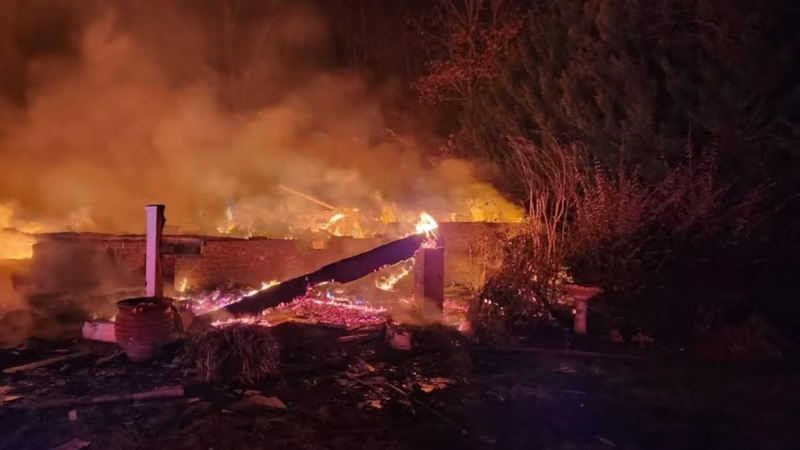
Sunday night in rural Gaston County, North Carolina, turned into a scene of chaos and urgency as flames engulfed the home belonging to the parents of NASCAR Cup Series superstar Denny Hamlin. The fast-moving Denny Hamlin parents house fire not only threatened the property but put lives at risk—prompting a massive emergency response in an area ill-equipped for such a disaster.
The incident, which unfolded late in the evening, left two individuals hospitalized and firefighters scrambling under difficult conditions. With no nearby fire hydrants and limited water access, crews faced a race against time to contain the blaze and rescue those inside. Here’s everything we know so far—and what this tragedy reveals about fire safety in rural America.
Table of Contents
- What Happened at the Hamlin Residence?
- Emergency Response: Fighting Fire Without Hydrants
- Who Was Affected—and What’s Denny Hamlin’s Response?
- The Bigger Issue: Rural Fire Safety in the U.S.
- What Every Family Can Learn from This Tragedy
- Conclusion: A Close Call That Highlights Systemic Gaps
- Sources
What Happened at the Hamlin Residence?
According to the Gaston County Fire Department, emergency calls came in around 9:30 PM on Sunday reporting a structure fire at a residence on Old Halls Ferry Road in the Stanley area—an unincorporated community known for its quiet, wooded surroundings and limited infrastructure.
Upon arrival, firefighters found the single-family home fully involved in flames. Thick smoke and intense heat made entry extremely dangerous. Despite the odds, crews managed to locate and extract two occupants, both of whom were transported to a nearby hospital with non-life-threatening injuries.
The home, described by neighbors as a long-standing family property, was largely destroyed. Investigators are still working to determine the official cause of the fire, though early reports suggest it may have originated in the kitchen or electrical system.
Emergency Response: Fighting Fire Without Hydrants
One of the most critical factors that complicated the response was the complete absence of fire hydrants in the immediate area—a common issue in many rural U.S. communities.
Firefighters had to rely on tanker trucks to shuttle water from distant sources, significantly slowing their ability to douse the flames. “Without a hydrant system, we’re essentially fighting with one hand tied behind our back,” said Battalion Chief Marcus Ellison in a press briefing.
This logistical hurdle is not unique to Gaston County. According to the U.S. Fire Administration, rural fire departments are 30% more likely to face delayed response times and resource shortages compared to urban counterparts. In incidents like the Denny Hamlin parents house fire, those delays can mean the difference between a contained fire and total loss.
Who Was Affected—and What’s Denny Hamlin’s Response?
While officials have not publicly confirmed the identities of the two individuals rescued, multiple sources—including local news outlets and NASCAR insiders—have identified them as Denny Hamlin’s parents, Dr. Carty Hamlin and his wife.
Denny Hamlin, a 21-time NASCAR Cup Series winner and co-owner of 23XI Racing, has not issued a formal public statement as of Monday morning. However, team sources confirm he was notified immediately and is “devastated but relieved his parents are alive.”
The Hamlin family has deep roots in the Gaston County area. Dr. Carty Hamlin, a retired dentist, has long been a pillar of the local community. The home was more than just a residence—it was a multi-decade family landmark.
[INTERNAL_LINK:nascar-drivers-family-stories] highlights how many NASCAR stars maintain strong ties to their hometowns, making events like this especially personal for the racing community.
The Bigger Issue: Rural Fire Safety in the U.S.
Beyond the headlines, this fire underscores a systemic problem: rural America’s fire safety gap.
Key challenges include:
- No hydrant infrastructure: Over 70% of rural fire districts lack pressurized hydrant systems.
- Volunteer-dependent departments: Many rural stations rely on part-time or volunteer crews, limiting rapid deployment.
- Longer response times: Average rural fire response is 14 minutes vs. 6 minutes in cities (NFPA data).
- Aging homes with outdated wiring: Older rural homes often haven’t been retrofitted for modern electrical loads.
The National Fire Protection Association (NFPA) notes that people in rural areas are twice as likely to die in a house fire as those in urban settings. This tragedy could serve as a wake-up call for local governments to invest in water infrastructure and community fire prevention programs.
What Every Family Can Learn from This Tragedy
Even if you don’t live in a rural area, the Denny Hamlin parents house fire offers crucial takeaways for homeowner safety:
- Install and maintain smoke alarms on every floor—test them monthly.
- Create and practice a home fire escape plan with two ways out of each room.
- Never overload power strips or outlets, especially in older homes.
- Keep a fire extinguisher in the kitchen and know how to use it.
- If you live in a rural area, consider installing a residential fire sprinkler system or a private water tank for emergency use.
As Red Cross fire safety experts emphasize, “Most fatal home fires occur at night while people are asleep. Early warning saves lives.”
Conclusion: A Close Call That Highlights Systemic Gaps
Thankfully, the Denny Hamlin parents house fire ended without loss of life—a small miracle given the circumstances. But it also exposes deeper vulnerabilities in America’s rural emergency infrastructure. For families like the Hamlins, the emotional and financial toll will be significant. For the rest of us, it’s a stark reminder that fire preparedness isn’t optional—it’s essential.
We send our best wishes to the Hamlin family for a full recovery and hope this incident sparks greater investment in fire safety for underserved communities.