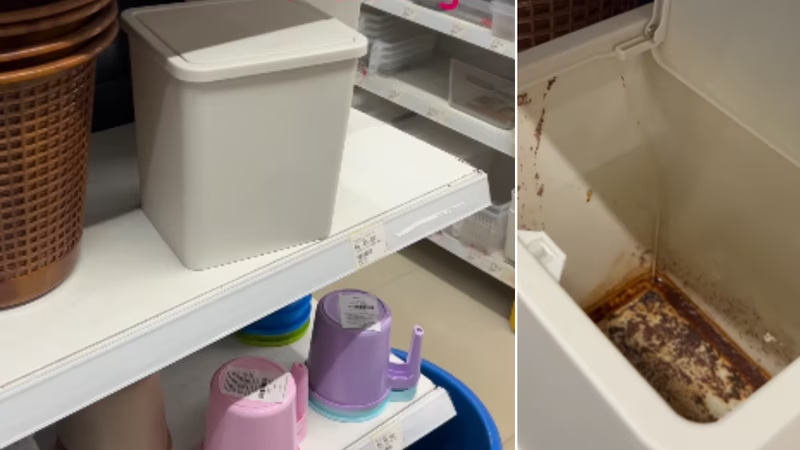
A simple trip to a store in Kanpur turned into a national scandal. A shopper at a Mr DIY outlet filmed the inside of a brand-new dustbin that was on display for sale—only to find it stained with fresh, red gutka spit. The video, which has since exploded across social media, has left netizens furious, embarrassed, and deeply concerned about the state of public hygiene and civic sense in urban India .
Table of Contents
- The Viral Incident: What Happened in Kanpur?
- Why a Gutka-Stained Dustbin is a Public Health Hazard
- The Civic Sense Crisis Exposed
- Kanpur’s Struggle with Public Hygiene
- What Needs to Change?
- Conclusion
- Sources
The Viral Incident: What Happened in Kanpur?
The incident, captured on December 24, 2025, shows a customer at a Mr DIY store in Kanpur opening a plastic dustbin that was part of the store’s display. To his shock, the inside was smeared with the unmistakable red residue of gutka, a form of smokeless tobacco . He immediately recorded the scene and shared it online with the caption that has now become infamous. The clip quickly went viral, with many dubbing Kanpur the sarcastic “City of Masala” in reference to the widespread issue of public spitting .
The public reaction was swift and severe. Social media users expressed a mix of disgust and shame, pointing fingers not just at the individual who spat, but at the store for failing to inspect its own merchandise and at the broader societal apathy towards cleanliness . The store has not yet issued a public statement, but the damage to its reputation is already significant.
Why a gutka-stained dustbin is a Public Health Hazard
This isn’t just about aesthetics or a dirty product; it’s a serious public health concern. Gutka is a known carcinogen. The World Health Organization and numerous Indian health bodies have long classified it as a leading cause of oral cancer . The red stains are more than just a messy residue; they are a visible sign of a dangerous habit that poses severe health risks .
Allowing a product meant for personal home use to be contaminated in this manner creates a potential vector for disease transmission. While the direct risk from surface contact is lower than consumption, the incident highlights a shocking disregard for basic sanitation protocols. Scientific studies consistently link gutka use to oral pre-cancerous lesions and a dramatically increased risk of oral cancer [[12], [18]]. The very presence of such a stained item in a retail setting normalizes a hazardous behavior and undermines public health messaging.
The Civic Sense Crisis Exposed
The core of the outrage lies in what this incident symbolizes: a profound lack of civic sense. The person who spat into the dustbin demonstrated a complete absence of respect for public and private property. This act of casual vandalism is symptomatic of a larger problem in many urban centers across India, where personal convenience is often prioritized over collective well-being .
As one netizen aptly commented, “We should be ashamed” . The incident forces a national conversation about responsibility. It’s not enough for municipalities to conduct cleanliness drives ; citizens must internalize a sense of ownership and respect for shared and public spaces. This event is a stark reminder that Swachh Bharat (Clean India) is as much a social and behavioral challenge as it is an infrastructural one.
Kanpur’s Struggle with Public Hygiene
This is not the first time Kanpur has found itself in the spotlight for poor hygiene. The city has previously faced criticism for its public toilets and waste management systems . While the Kanpur Municipal Corporation claims to be carrying out regular cleanliness drives , incidents like this suggest a gap between policy and on-the-ground reality.
The city has been part of various sanitation improvement plans, including those under the Namami Gange programme and the Swachh Bharat Mission [[21], [25]]. However, the persistence of such behavior indicates that infrastructure development must be matched with a robust public awareness and enforcement campaign. A sanitation plan is only as good as the civic culture that supports it [INTERNAL_LINK:india-public-hygiene-crisis].
What Needs to Change?
Turning the tide on this issue requires a multi-pronged approach:
- Stricter Retail Oversight: Stores must implement rigorous quality checks on all display items, especially those that are open or have interiors.
- Public Awareness Campaigns: Government bodies need to move beyond generic cleanliness slogans and launch targeted campaigns that directly address the health dangers and social costs of spitting in public.
- Enforcement of Existing Laws: India already has regulations, such as those under the Food Safety and Standards Act, that can be used to penalize unhygienic practices . These laws need to be enforced consistently.
- Community Engagement: Fostering a sense of local pride and ownership can be a powerful deterrent against such anti-social behavior.
Conclusion
The video of the gutka-stained dustbin in Kanpur is a small incident with massive implications. It’s a microcosm of a national struggle with public hygiene, civic apathy, and the lingering health crisis caused by tobacco use. While the immediate fix is for the store to remove the product, the long-term solution requires a fundamental shift in public consciousness. Until citizens feel a personal stake in the cleanliness of their shared environment, such embarrassing and dangerous incidents will continue to occur.
Sources
- Times of India: Watch: Video goes viral of gutka-stained dustbin on sale in Kanpur store
- World Health Organization: Tobacco Fact Sheet
- Times of India: Kanpur’s public toilets go viral for all the wrong reasons
- IGI Global: Harmful Effects of Consumption of Gutkha, Tobacco, Pan Masala and Betel Quid in India