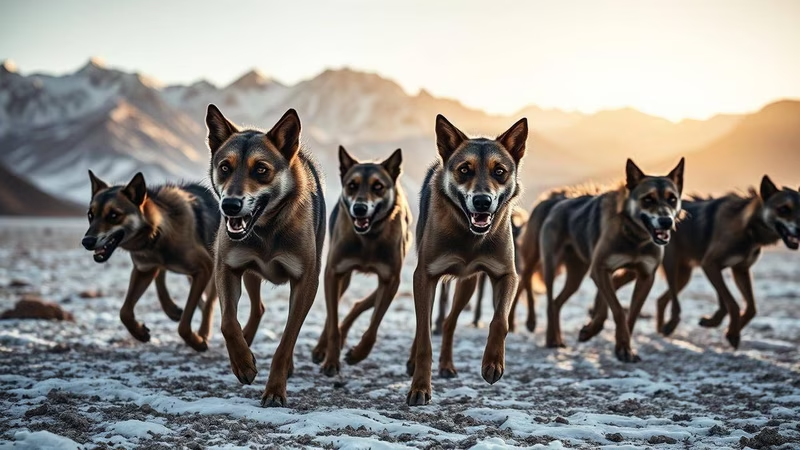
At over 11,000 feet above sea level, Ladakh—India’s cold desert “roof of the world”—is a land of stark beauty and rare wildlife. But beneath its serene surface, an ecological crisis is unfolding. **Feral dogs in Ladakh**, once few and far between, now number an estimated **45,000**. These unmanaged canines are hunting endangered species like snow leopards and Pallas’s cats, disrupting food chains, and even posing direct threats to local communities .
What began as a few stray dogs scavenging near monasteries and military outposts has exploded into a full-blown conservation emergency. Experts warn that if left unchecked, this invasion could irreversibly alter one of Earth’s most unique high-altitude ecosystems. The root cause? Human activity—particularly unchecked tourism and irresponsible waste disposal.
Table of Contents
- The Ecological Crisis Unfolding in Ladakh
- Why the feral dogs in Ladakh Population Exploded
- How Feral Dogs Are Decimating Native Wildlife
- Rising Attacks on Humans and Livestock
- What Can Be Done? Conservation and Policy Solutions
- Conclusion: Saving Ladakh’s Fragile Balance
- Sources
The Ecological Crisis Unfolding in Ladakh
Ladakh’s ecosystem is finely tuned to extreme cold, low oxygen, and sparse resources. Species like the snow leopard and Tibetan wolf evolved over millennia to thrive in this balance. But feral dogs—descendants of abandoned or unsterilized domestic pets—are disrupting this equilibrium.
Unlike native predators that hunt to survive, feral dogs often kill opportunistically or in packs, targeting vulnerable prey like young ibex, marmots, and nesting birds. Even more alarming, they now **outnumber native carnivores** in many regions, giving them a competitive edge for food and territory .
Conservation biologist Dr. Tsewang Namgail calls this “a silent invasion”—one that’s happening faster than scientists can respond .
Why the feral dogs in Ladakh Population Exploded
The surge in feral dogs isn’t natural—it’s man-made. Three key factors are driving their rapid multiplication:
- Unmanaged Tourism: Ladakh saw over 300,000 tourists in 2024. Many leave behind food waste, which feeds dog packs and enables year-round survival .
- Poor Waste Infrastructure: Open dumpsites near Leh and villages act as 24/7 buffets for dogs, supporting large, stable colonies.
- Lack of Sterilization Programs: Unlike urban India, Ladakh has minimal animal birth control infrastructure. One unspayed female can produce over 50 descendants in 3 years.
As roads expand and military presence grows, so do human settlements—and with them, dog populations. What was once a seasonal issue is now a permanent threat.
How Feral Dogs Are Decimating Native Wildlife
The impact on biodiversity is severe and multi-layered:
1. Direct Predation
Camera trap studies have documented feral dogs chasing and killing young Tibetan antelopes (chiru), Himalayan marmots, and ground-nesting birds like the black-necked crane—a vulnerable species .
2. Competition with Snow Leopards
Snow leopards require vast territories to hunt. Dog packs not only steal their kills but also drive them away from prime habitats. In some valleys, leopards have vanished entirely since dog numbers surged.
3. Disease Transmission
Feral dogs carry rabies, distemper, and parvovirus—diseases that can wipe out entire populations of wild carnivores with no immunity. In 2023, an outbreak of canine distemper killed several Tibetan wolves in the Changthang region .
[INTERNAL_LINK:indian-wildlife-conservation-challenges] This mirrors broader challenges across India’s protected areas, where human-wildlife conflict is intensifying.
Rising Attacks on Humans and Livestock
The threat isn’t just ecological—it’s personal. Villagers report increasing aggression from dog packs:
- Children walking to school have been chased and bitten.
- Shepherds lose dozens of sheep and goats annually to dog attacks.
- In 2024, a woman in Nubra Valley required hospitalization after a pack surrounded her home .
These incidents fuel resentment toward conservation efforts, creating a dangerous divide between communities and wildlife protection goals.
What Can Be Done? Conservation and Policy Solutions
Experts agree: a multi-pronged strategy is essential.
1. Sterilization and Vaccination Drives
Mass ABC (Animal Birth Control) programs, like those run by the Ladakh Animal Welfare Society, must be scaled up with government support. Sterilizing 70% of a dog population can stabilize it within 2–3 years.
2. Waste Management Reform
Tourist zones need sealed, dog-proof waste bins and scheduled waste collection. Some eco-resorts are leading the way—others must follow.
3. Community-Led Monitoring
Training local youth as “wildlife sentinels” can help track dog movements and protect key habitats. In Spiti Valley, a similar model reduced dog incursions by 60% .
For global best practices on managing free-roaming dogs in sensitive ecosystems, see the guidelines from [EXTERNAL_LINK:https://www.iucn.org/].
Conclusion: Saving Ladakh’s Fragile Balance
The **feral dogs in Ladakh** crisis is a stark reminder that even the most remote places are not immune to human impact. What begins as a simple act—dumping leftover food or abandoning a pet—can cascade into an ecological disaster.
But there’s hope. With coordinated action from tourists, local communities, NGOs, and the government of Ladakh, this trend can be reversed. Protecting snow leopards and Pallas’s cats isn’t just about saving animals—it’s about preserving the soul of the Himalayas. The time to act is now, before the silence of extinction replaces the wind across the high desert.
Sources
- Times of India: On the roof of the world, feral dogs hunt down Ladakh’s rare species
- WWF India: Ladakh Biodiversity and Threats Assessment
- Ministry of Tourism, India: Ladakh Tourist Arrivals Data 2024
- Journal of Arid Environments: Feral Dog Impact on High-Altitude Fauna (2023 Study)
- Wildlife Institute of India: Canine Disease Outbreaks in Trans-Himalayan Ecosystems
- Snow Leopard Conservancy India Trust: Community-Based Conservation Models
- IUCN: Feral Dogs and Biodiversity Conservation: Global Guidelines