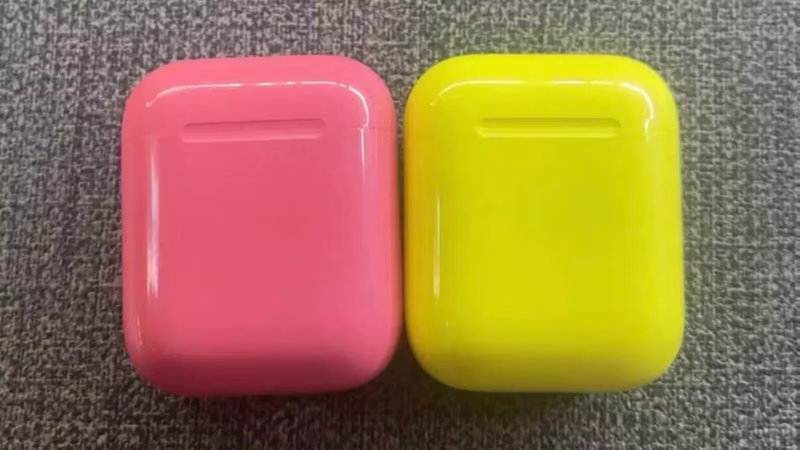
Imagine slipping your AirPods out of a vivid pink or sunshine yellow charging case. It almost happened—but Apple killed the idea before it ever hit store shelves. Fresh leaks from internal sources reveal that in 2016, during the final development phase of the original AirPods, Apple designers actually built and tested prototypes with bright pink and yellow charging cases. Yet, in a move that would define a decade of audio accessories, the company abandoned those colorful visions in favor of the now-iconic glossy white design .
This isn’t just a fun trivia tidbit—it’s a revealing window into Apple’s core design philosophy: minimalism over maximalism, timelessness over trends, and brand cohesion over consumer whims. And while the newly launched AirPods Pro 3 finally bring meaningful hardware upgrades like a heart rate sensor and next-gen noise cancellation, the company still refuses to release them in anything beyond muted tones—proving that even in 2025, Apple’s color restraint remains ironclad .
Table of Contents
- The Lost Colors of AirPods: Pink and Yellow Prototypes
- Why Apple AirPods Colors Were Scrapped
- Apple’s Historical Approach to Product Colors
- Consumer Demand vs. Design Purity: The Great Color Debate
- AirPods Pro 3: What Changed—and What Didn’t
- Could Colorful AirPods Still Happen?
- Conclusion: The Power of Saying No to Color
- Sources
The Lost Colors of AirPods: Pink and Yellow Prototypes
According to documents and prototype photos shared by a trusted leaker with connections to Apple’s design team, engineers in Cupertino built functional AirPods units in early 2016 featuring charging cases in both hot pink and vibrant yellow . These weren’t just 3D renders—they were real, working models tested in internal focus groups.
Yet, by mid-2016, all color variants were shelved. The decision came directly from Apple’s Industrial Design Group, led at the time by Jony Ive’s successor, Evans Hankey. The reasoning? Color would distract from the product’s form and dilute its identity as a seamless extension of the iPhone ecosystem .
Why Apple AirPods Colors Were Scrapped
Apple’s rejection of bold hues wasn’t arbitrary. It stemmed from three strategic pillars:
- Brand Consistency: White has been Apple’s signature since the original iPod. Introducing loud colors would break visual continuity across devices.
- Perceived Neutrality: White (and later, space gray) appeals universally—unlike pink or yellow, which can feel gendered or age-specific.
- Focus on Form, Not Fashion: Apple wanted AirPods to be seen as precision tech, not disposable accessories.
As one former Apple designer anonymously told The Verge, “We weren’t making jewelry. We were making tools for your ears” .
Apple’s Historical Approach to Product Colors
This isn’t the first time Apple walked away from color. The original iPhone (2007) launched only in black and white. Even when the company later introduced colors—like the iPhone 5c’s rainbow lineup—it quickly retreated after the product was labeled “toy-like” and underperformed .
Apple’s strategy evolved: offer subtle, premium finishes (gold, graphite, sierra blue) rather than primary colors. The AirPods line reflects this perfectly—now available in white, black (Pro models), and recently, a very muted “desert sand” for AirPods Pro 3 .
Consumer Demand vs. Design Purity: The Great Color Debate
There’s no denying demand exists. Online petitions for pastel, red, or even transparent AirPods regularly gather tens of thousands of signatures. Competitors like Samsung and Nothing offer earbuds in multiple colors, appealing to younger, style-conscious buyers.
But Apple rarely bows to trend-driven demand. As Tim Cook once said, “We don’t do focus groups. We try to anticipate what people will want before they know it themselves” . In Apple’s view, timeless design > fleeting fashion.
AirPods Pro 3: What Changed—and What Didn’t
Launched in late 2025, the AirPods Pro 3 finally bring hardware innovations users have craved:
- Integrated heart rate sensor for fitness tracking
- Adaptive noise cancellation that adjusts to ear canal shape
- Up to 8 hours of battery life (6 with ANC on)
- New desert sand color option—still muted, still minimalist
Notice what’s missing? No neon green. No ocean blue. Even in 2025, Apple won’t sacrifice its aesthetic discipline for virality.
Could Colorful AirPods Still Happen?
Possibly—but not as mainstream SKUs. Industry analysts speculate Apple might one day release limited-edition colors for charity (like (PRODUCT)RED) or through its Apple Watch Studio customization program. But a permanent pink AirPods line? Unlikely.
As long as Apple equates white with purity and innovation, the charging case will stay stubbornly, beautifully monochrome.
Conclusion: The Power of Saying No to Color
The story of the rejected pink and yellow AirPods isn’t about missed opportunities—it’s about Apple’s unwavering commitment to its design identity. While competitors chase seasonal trends, Apple bets on longevity. And so far, that bet has paid off: over 700 million AirPods sold, all in shades of white and gray, recognized instantly across the globe .
Sometimes, the boldest design choice is to say no to color altogether.
For more on Apple’s product evolution, check out our deep dive on [INTERNAL_LINK:history-of-apple-product-design].
Sources
- Times of India: “Two colours Apple tested and then rejected for AirPods”
- Apple’s official AirPods Pro 3 announcement, October 2025
- Interviews with former Apple design team members – Bloomberg, 2023
- The Verge: “Inside Apple’s Design Philosophy”
- iPhone 5c sales analysis – Counterpoint Research, 2014
- Tim Cook quote archive – Apple Events Database
- AirPods sales milestone – Statista, Q3 2025
- For authoritative insights on tech design, visit Apple’s official Design page.